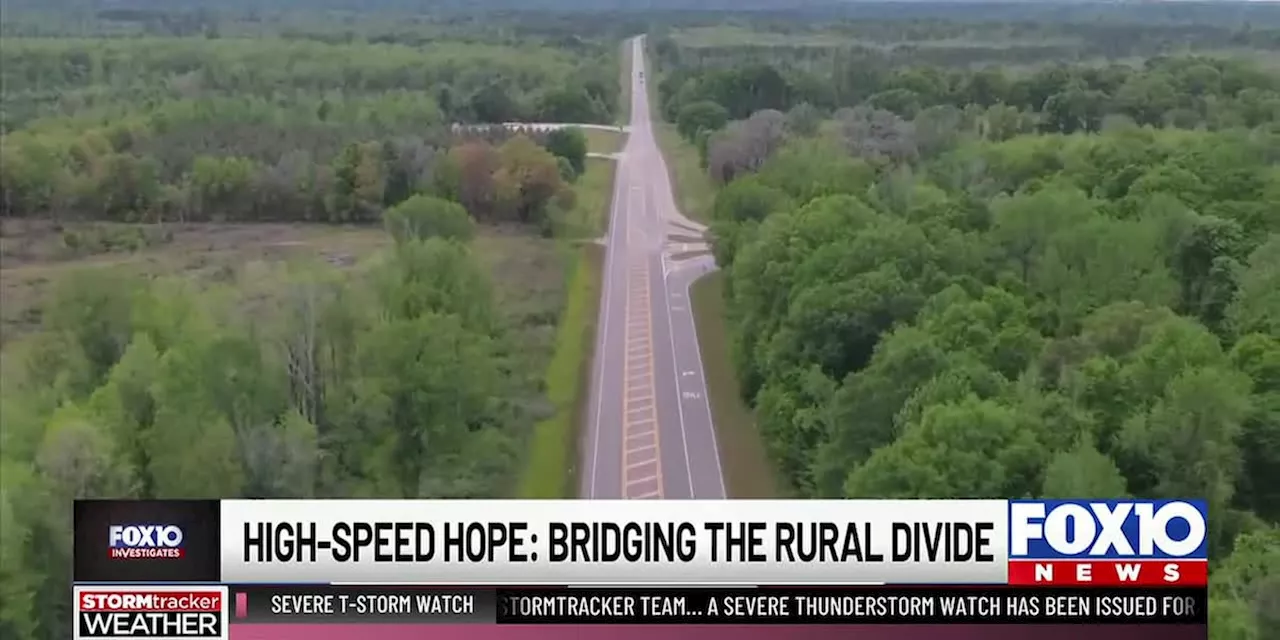
Washington County Towns Fight Against Broadband Blackout
Rural communities in Washington County, Alabama, including Millry and Chatom, are confronting an urgent broadband crisis that is disrupting lives and businesses today. Despite ongoing efforts, access to reliable high-speed internet remains scarce, leaving hundreds of residents struggling to connect in an increasingly digital world.
Millry, a small town of just over 500 people known historically for its role in Alabama’s logging industry, is making slow progress. Fiber optic lines recently reached portions of the area, bringing faster and more stable internet to some homes and businesses.
Lonnie Guy, a lifelong Millry native who owns Nana and Papa’s Ice Cream and Sandwich Shop, recalls the days when dial-up internet barely functioned amid farm chores. He now describes a sharp improvement since fiber optic service was laid to his home roughly 11 miles west of town, resulting in “faster load times, better speeds, and more reliable internet.”
However, Chester Caulder, general manager of Millry Communications, the town’s local internet provider, warns the path to widespread fiber coverage is steep. “We average about 4.7 households per mile of fiber constructed,” Caulder said, underscoring the challenges rural providers face with scattered populations and high infrastructure costs.
“If I can get fiber to you, I can deliver the full speed you purchase,” Caulder confirmed. But with customers spread thinly across wide rural areas, expanding fiber remains slow and expensive.
Chatom Residents Frustrated as Broadband Delays Drag On
Just a few miles south in Chatom, broadband access frustrations escalate as internet availability stalls. The town, home to more businesses and a larger population than Millry, still grapples with limited connectivity and slow internet speeds, severely affecting communication and commerce.
Landis Waite, a lifetime resident of Chatom, described daily internet struggles that have become the norm. “Internet’s always been pretty much bad,” he said, reporting that web pages can take hours to load and service outages are frequent.
Though fiber optic lines began installation years ago, impatient residents like Waite say progress is glacial. On social media, locals complain about ongoing internet and even ATM outages, highlighting the widespread impact of the broadband deficit.
“When my internet’s down, I ain’t getting no notifications from nobody. No texts, no calls. I gotta go out to the yard,” Waite said, painting a stark picture of isolation in a supposedly connected era.
For many in Chatom, reliable internet is more than convenience—it’s essential for everyday communication. Waite lamented, “I gotta walk down to my grandma’s house just to get a hold of her cause I can’t call her off Wi-fi.”
Why High-Speed Internet Matters Now More Than Ever
These challenges in Washington County echo a broader national issue: rural broadband access lags far behind urban centers, hampering business growth, education, healthcare, and personal safety. The digital divide remains a pressing crisis across much of rural America.
With more services moving online, lack of broadband isolates communities economically and socially. From local shops in Millry to households in Chatom, residents demand swift expansion of high-speed internet to keep pace with the 21st century.
Millry Communications represents local efforts to close this gap, but infrastructure costs and dispersed populations slow progress. Support from state and federal programs targeting rural broadband development may be critical to accelerate deployment in remote areas.
What’s Next for Washington County?
Residents and officials alike await faster progress as fiber optic installation continues. Expansion timelines remain uncertain, but community voices are growing louder, pressing for urgent action to end broadband deserts.
For towns like Millry and Chatom, the arrival of reliable high-speed internet promises to revive local economies, improve education access, and restore vital connections cut by ongoing digital isolation. This story will develop as deployments advance and new infrastructure funding becomes available.
Montana residents and rural communities nationwide watch these developments closely, as similar broadband battles unfold from coast to coast.