The secretive world of Freemasonry is opening up as members from across the UK share how the ancient organization has transformed their lives through deep friendship, unwavering support, and powerful charity work. For decades shrouded in mystery and conspiracy theories, the 170,000-member fraternity is now revealing the real face behind its centuries-old traditions.
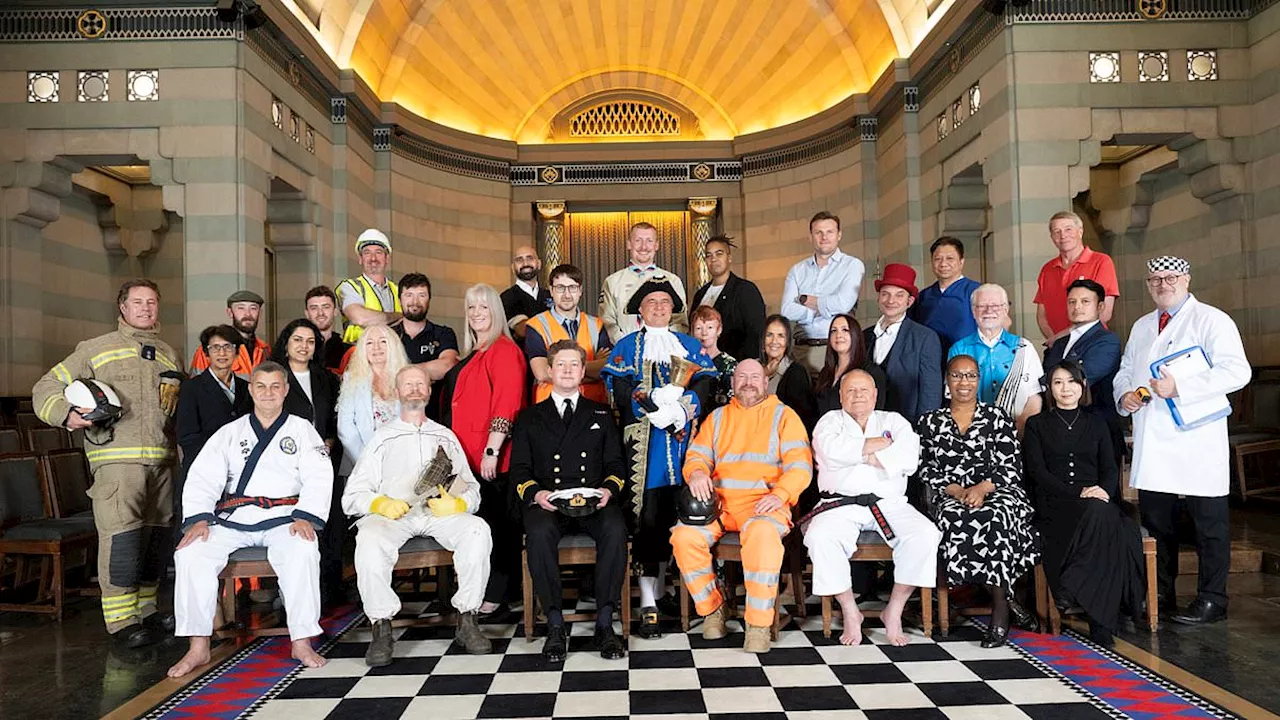
In an unprecedented glimpse inside the Grand Temple of the United Grand Lodge of England, 30 diverse men and women spoke candidly about how Freemasonry, often dismissed as secretive and obscure, serves as a vital lifeline for mental health, community belonging, and meaningful action. From firefighters and train drivers to dentists, actors, and an electric vehicle salesman, these members defy stereotypes, showing a brotherhood and sisterhood inclusive of all ages, backgrounds, and identities.
Freemasonry’s Real Impact on Mental Health and Community
Matthew Wintle, a first responder from Chichester, explained how the lodge offers peace and a mental refuge amid the chaos of his demanding job. “It’s like coming to church. We’re mental health first aiders who look out for each other,” he said. His sentiment echoed throughout the group, with many emphasizing the fraternity as a support network combating loneliness, depression, and even dementia.
Ben Evans, a train driver from Penzance, shared his experience of facing homophobia growing up but finding acceptance within the lodge. “Freemasons are the most open-minded people I’ve met,” he said, noting how the brotherhood supported his humanitarian work in Ukraine.
Similarly, Jayson Read, a horse feed manufacturer, credited Freemasonry with turning his once-chaotic life around through purpose and global friendship networks.
Breaking Stereotypes: Freemasons Are Diverse and Inclusive
Contrary to common myths about secret handshakes and shadowy rituals, members reveal the fraternity’s core values: moral growth, charity, and fellowship. Women and men, straight and gay, young and old, all share the same mission, debunking the image of Freemasonry as a closed or suspicious club.
Cherise Shade, a protection officer from Birmingham and one of the youngest women in her lodge, described being encouraged as “the future” in an organization growing more inclusive by the year. Mia Cameron-Dungey, a Navy team leader and former lodge master, highlighted how women are no longer “hidden secrets” but a vital and visible part of modern Freemasonry.
Massive Charity Efforts and Community Service
How do 30 members impact thousands? Through relentless charity work and local projects, such as supporting youth groups and fundraising for disaster relief. Josh Lee-Taylor, a scout leader from Nottingham, emphasized their youth-focused initiatives, donating both money and volunteer hours.
The group’s philanthropic reach stretches globally, with lodges like the one led by Michael Duque in London serving Filipino communities comprising nearly 30,000 members worldwide. From healthcare to education and emergency relief, these Freemasons mobilize quickly, often among the first to respond to national crises.
Why It Matters Now
At a time when social isolation, mental health challenges, and division are rampant in societies worldwide—including here in Montana and across the US—this unveiling of Freemasonry’s positive influence comes as a timely reminder of the power of community and service. The organization exemplifies how ancient traditions can adapt, offering real-world support without losing meaning or relevance.
For Americans curious about fraternal organizations and those seeking meaningful connections, this insider look reveals Freemasonry as a dynamic, evolving network focused on making “good men and women better.”
What’s Next for Freemasons?
Freemasonry plans to further increase transparency and membership diversity, especially among women and younger members. New student lodges opening in the UK hint at a reinvigoration effort that could inspire similar moves in America’s historic lodges. Meanwhile, ongoing charity campaigns and mental wellness support will remain central as Freemasons continue championing goodwill amid global uncertainty.
“Freemasonry has helped me grow – my confidence, everything,” said Matt Marshall, a building developer who credits the fraternity with lifting him through mental health struggles during the pandemic.
This week’s revelations mark a turning point where Freemasons no longer hide in shadows but stand proud, united by purpose rather than secrecy. For those wary of conspiracy theories, the truth is clear: Freemasonry is about friendship, charity, and shared humanity—values universal and urgently needed today.