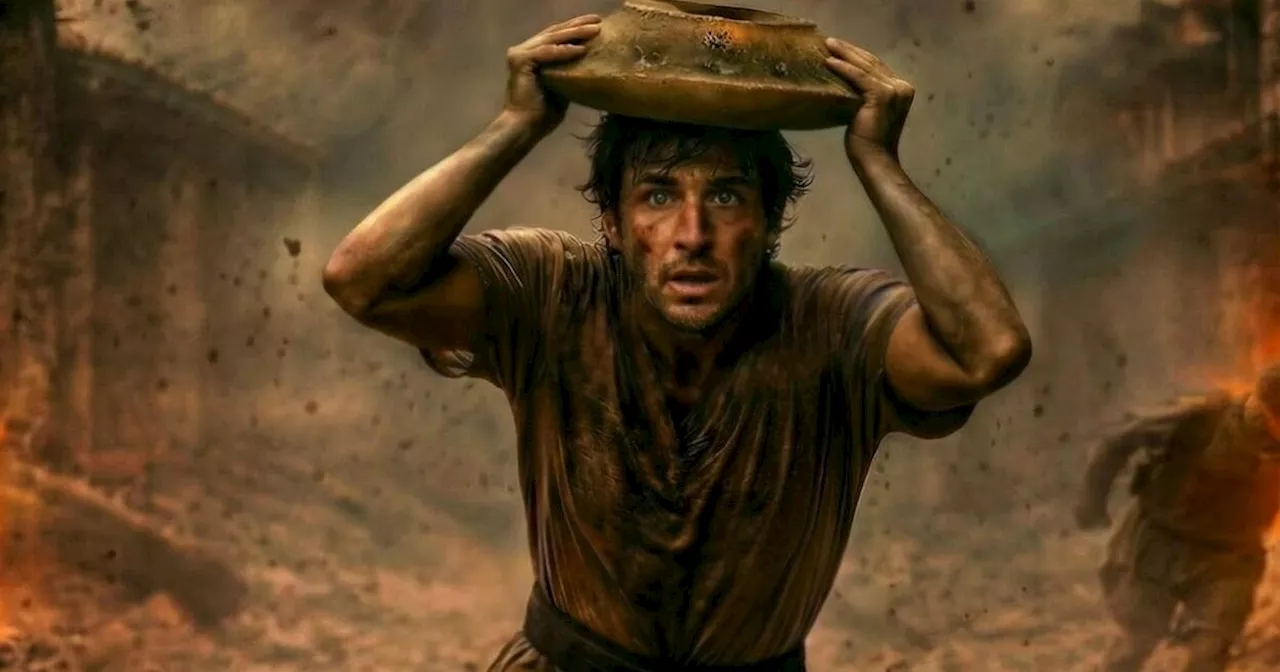
AI Reconstruction Unveils Ancient Pompeii Victim’s Face
Archaeologists have used artificial intelligence to digitally reconstruct the face of a man who died fleeing the catastrophic AD 79 eruption of Mount Vesuvius, shedding new light on one of history’s most infamous natural disasters. The digital portrait captures an older man clutching a terracotta mortar—likely used as an improvised shield against falling volcanic debris—as he tried to escape the doomed ancient city of Pompeii.
The Pompeii Archaeological Park, in collaboration with the University of Padua, revealed this unprecedented digital recreation based on excavation data near the Porta Stabia necropolis, just outside Pompeii’s city walls. The victim was found with personal belongings including an oil lamp, a small iron ring, and 10 bronze coins, offering rare insight into the daily life and desperate final moments of residents caught in the eruption’s deadly aftermath.
Mount Vesuvius’ Deadly Impact Caught in Digital Detail
Pompeii remains one of the world’s most significant archaeological sites, famously buried under layers of ash and pumice that preserved people and structures for almost 2,000 years. This victim, interpreted as among the first to perish during a heavy fall of volcanic debris known as lapilli, highlights the human toll that extended beyond the city gates. Archaeologists emphasize many victims likely died outside the city while trying to reach safer ground along the then-coastline of the Bay of Naples.
The victim’s terracotta mortar is thought to be a desperate tool for protecting his head, a detail supported by ancient writings such as those by Roman author Pliny the Younger, who recounted residents using available items to shield themselves during the disaster.
AI Powers New Historical Insights with Emotional Impact
This digital face reconstruction combined skeletal remains with cutting-edge photo-editing and AI technologies. Pompeii Park Director Gabriel Zuchtriegel highlighted AI’s crucial role: “
The vastness of archaeological data is now such that only with the help of artificial intelligence will we be able to adequately protect and enhance them
.” He stressed AI’s potential to revolutionize classical studies, adding that the technology also helps make such discoveries more accessible and emotionally gripping for the public.
Italian Culture Minister Alessandro Giuli applauded the approach: “
Investigations conducted with these excavations demonstrate that innovative methodologies, used with care, can give us new historical perspectives
.” Earlier signs of new discoveries at Pompeii this year include a 2,000-year-old love note and an illustrated gladiator fight scene, reinforcing the richness of ongoing archaeological work.
Why This Matters Now
This breakthrough offers Americans and Montanans a vivid reminder of how technology is reshaping our understanding of ancient history, blending science with human stories of tragedy and survival. As AI-powered archaeology becomes more common, expect more captivating revelations that bring history alive—offering lessons about resilience and humanity across the ages.
For now, this digital resurrection of a Pompeii victim’s face invites us to reflect on the moment a terrifying volcanic eruption sealed an entire city’s fate, and on the lives lost in the blink of an instant.