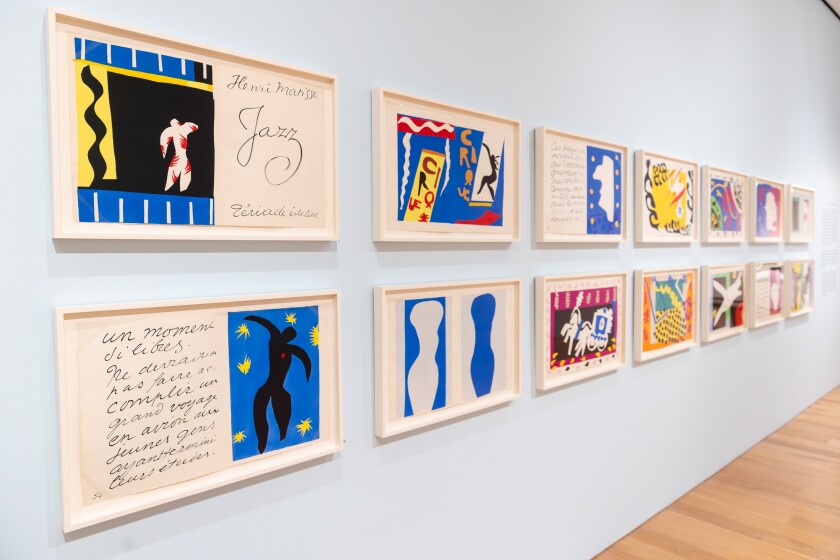
The Art Institute of Chicago (AIC) has unveiled a captivating new exhibition showcasing the late works of renowned artist Henri Matisse. Titled “Matisse’s Jazz: Rhythms in Color,” the exhibition focuses on Matisse’s innovative cut-outs created during the 1940s, a period when he experienced a remarkable resurgence in creativity despite being in his seventies. This exhibition runs through June 1, 2024, offering a unique glimpse into the artist’s evolution.
While not a comprehensive retrospective, the exhibition features all 20 color plates from Matisse’s 1947 artist book, “Jazz,” which serves as the centerpiece. Organized by Emily Ziemba, a research curator in the museum’s department of prints and drawings, the show provides a focused look at Matisse’s artistic journey leading up to this significant period. Visitors can also explore a selection of works from the museum’s extensive collection of Matisse, including pieces that are rarely displayed.
The Art Institute’s connection to Matisse dates back to 1922, when it acquired its first piece, a print. The museum has since added works annually, including The Seamstress (1900), which was donated in 2022 by gallerist Richard Gray and his wife, Mary. The exhibition highlights Matisse’s iconic cut-outs, which consist of vibrant shapes cut from gouached paper, a technique he developed after undergoing major surgery in 1941. This method became his primary artistic expression until his passing in 1954.
The 20 plates from “Jazz” were meticulously reproduced by the Tériade printing atelier in Paris using hand-painted color stencils. These striking images, depicting circus scenes and mythological figures, continue to resonate with freshness and creativity nearly 80 years after their inception. The original edition of “Jazz” included 250 copies, alongside an additional 100 copies of just the color plates. Remarkably, the Art Institute purchased its copy for just $375 shortly after its release.
In addition to the “Jazz” plates, the exhibition concludes with another major cut-out, “Oceania-The Sea” (1948), which was screenprinted by textile designer Zika Ascher on a large linen sheet measuring 5.5 by 12.5 feet. The show also features artist books and earlier artworks that highlight recurring themes in Matisse’s oeuvre, particularly his depictions of odalisques, or reclining nudes. Notable works include the bronze sculpture Seated Nude (1922-29, cast 1951) and the lithograph Large Odalisque in Striped Pantaloons (1925).
The exhibition cleverly foreshadows Matisse’s later innovations, with pieces like “Daisies” (1939) showcasing an early use of cut-out techniques. The simplified and vibrant rendering of a figure hints at the experimental approach he would fully embrace with his cut-outs.
Ziemba noted the significance of this exhibition, stating, “We haven’t done a Matisse project in our [print and drawings] galleries ever, so I just think it was naturally time.” This exhibition serves as a fitting companion to current displays focusing on Matisse’s modernist counterpart, Pablo Picasso, further enriching the dialogue between these two titans of modern art.
As visitors engage with Matisse’s vibrant legacy, “Matisse’s Jazz: Rhythms in Color” promises to be a memorable experience, celebrating the late artist’s enduring impact on the world of art.