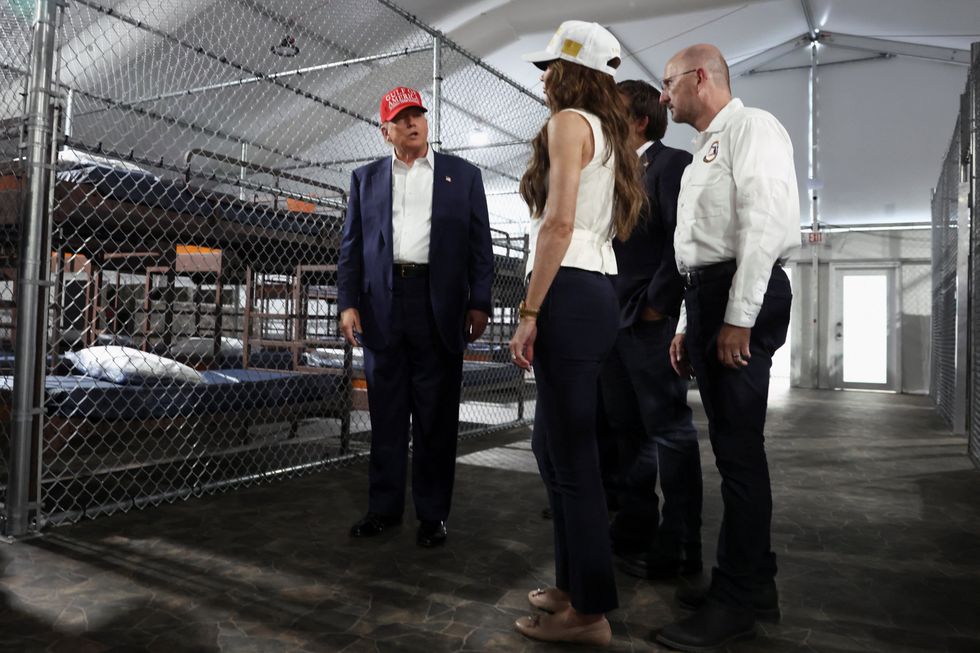
The U.S. Immigration and Customs Enforcement (ICE) is advancing a controversial plan to detain more than 80,000 immigrants in industrial storage facilities, a move that critics label as dehumanizing. According to a draft solicitation reviewed by the Washington Post, ICE intends to establish seven large-scale warehouses capable of holding between 5,000 and 10,000 individuals each, alongside 16 smaller facilities with a capacity of up to 1,500 detainees. These facilities would be located near major logistics hubs in states including Virginia, Texas, Louisiana, Arizona, Georgia, and Missouri.
ICE Acting Director Todd M. Lyons has expressed a vision for the new approach, stating, “We need to get better at treating this like a business. Like Prime, but with human beings.” This statement reflects a shift toward viewing immigration detention as a logistical challenge rather than a humanitarian issue.
Critics of the plan highlight significant ethical and practical concerns. Experts in commercial real estate warn that warehouses, typically designed for storage and shipping, are unsuitable for human habitation. These facilities often lack essential features such as adequate ventilation, temperature control, and access to sanitation infrastructure.
Advocates like Tania Wolf from the National Immigration Project have condemned the proposal, asserting, “It’s dehumanizing. You’re treating people, for lack of a better term, like cattle.” Current statistics indicate systemic issues within ICE’s operations, as the agency presently holds over 68,000 individuals, with nearly 48 percent lacking any criminal convictions or pending charges.
The situation at existing facilities has raised alarms. For instance, Fort Bliss, ICE’s largest current facility, reportedly operated with less than two-thirds of its contracted security personnel, according to government inspectors. Former ICE Chief of Staff Jason Houser warned that staffing the proposed large facilities could be problematic, necessitating specialized training and federal security clearances. He noted, “The ability to operate the facilities safely is always limited by staffing.”
The administration has already allocated a $30 million contract for the design of these facilities. This decision has drawn backlash from the Prairie Band Potawatomi Nation, whose leadership withdrew from involvement in the project after their business partner pursued the contract against the tribe’s wishes. Tribal Chairman Joseph “Zeke” Rupnick emphasized the tribe’s commitment to aligning economic interests with their values.
This warehouse initiative follows the administration’s broader $45 billion expansion of the detention system, which has included reviving dormant prisons, repurposing military bases, and constructing remote tent encampments. Since the start of this year, the administration has deported over 579,000 people.
As the plan unfolds, it raises crucial questions about the treatment of migrants and the ethical implications of viewing human lives through a logistical lens. The move is not only a significant shift in immigration policy but also a reflection of the ongoing debates surrounding the U.S. detention system.