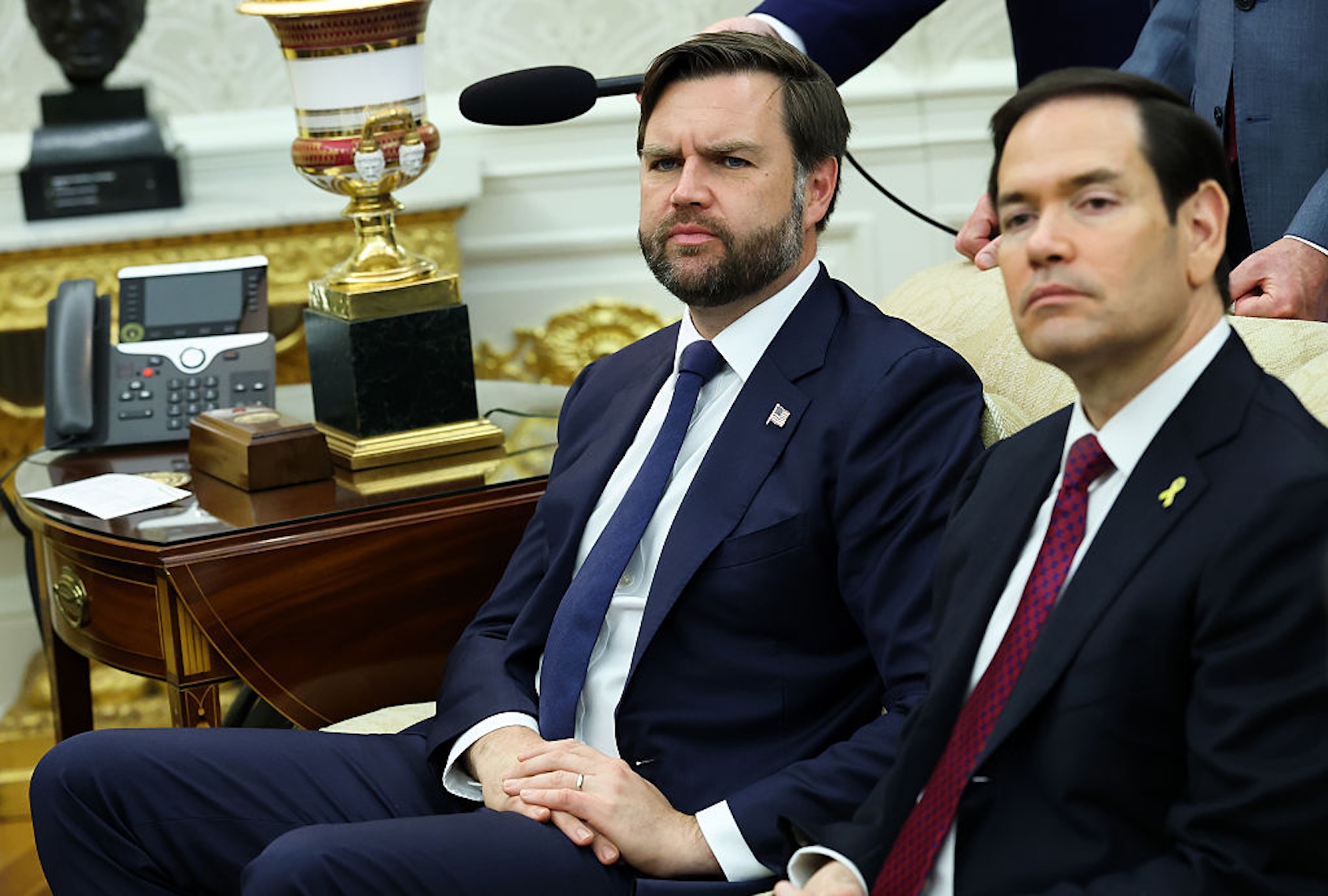
The ongoing military actions in Iran are revealing deep divisions within the Republican Party, particularly between Vice President JD Vance and Secretary of State Marco Rubio, both of whom are positioning themselves for the 2028 presidential nomination. As President Donald Trump pursues his controversial strategies, the lack of a coherent plan has led to a growing rivalry between these two prominent figures.
Traditionally, U.S. presidents have made an effort to consult Congress before engaging in military action, often seeking political cover for their decisions. In the case of Trump’s recent actions in Iran, it is evident that this customary approach has been disregarded. The absence of a clear strategy has prompted Republicans to reassess their party’s stance on military intervention, a dynamic that historically has put Democrats at a disadvantage.
The current situation echoes the lead-up to the first Iraq war in August 1990, when Iraq invaded Kuwait. After failed diplomatic attempts, the United Nations issued an ultimatum for withdrawal. President George H.W. Bush sought congressional approval, resulting in a narrow Senate vote of 52-47, with significant bipartisan support. The subsequent military success led to a backlash against Democrats who opposed the war, impacting their political ambitions for years to come.
As Trump’s military engagement with Iran escalates, Vance and Rubio are navigating their paths in a landscape fraught with potential pitfalls. Rubio has historically championed a hawkish foreign policy, pushing for military action despite widespread public discontent regarding the conflict in Iran. His alignment with Trump has strengthened his position within the administration, especially as the party consolidates around the president’s leadership.
In contrast, Vance has distanced himself from outright support for military actions, embodying a more isolationist approach characterized by the “America First” philosophy. Despite being seen as a frontrunner in public opinion polls, Vance is cautious about openly opposing Trump’s military endeavors, aiming to maintain his support among the party’s base.
At a recent gathering at Mar-a-Lago, Trump reportedly inquired about donor preferences for the 2028 nomination. Rubio received unanimous backing, highlighting his perceived status as Trump’s successor. This dynamic places Rubio in a precarious position; should military actions falter, he may bear the political consequences.
Rubio’s recent speech at the Munich Security Conference emphasized a shift in foreign policy, moving away from traditional ideals towards a more aggressive stance. He described a strategy of “destroy and deal,” as explained by Emma Ashford of the Stimson Center. This approach prioritizes American military dominance and instilling fear in other nations, a stark departure from previous administrations.
As the conflict unfolds, Vance’s strategy appears to be one of cautious observation. He is not publicly opposing the military initiatives; instead, he seems to be waiting for the outcomes to inform his political positioning. This delicate balance allows him to align with Trump’s base while also appealing to a segment that is wary of military entanglements.
Both Vance and Rubio are at a crossroads, navigating the complexities of their party’s foreign policy and its implications for their political futures. The lessons learned from the Iraq wars underscore the risks of tying political fortunes to military outcomes. As the situation in Iran develops, both leaders must tread carefully to avoid the pitfalls that have historically plagued politicians who misjudge public sentiment regarding military conflicts.
In this political landscape, the stakes are high for Vance and Rubio, with their rivalry intensifying as they prepare for a potential showdown in the 2028 race. The unfolding events in Iran may very well determine not just the future of U.S. foreign policy, but also the political trajectories of these two ambitious Republicans.