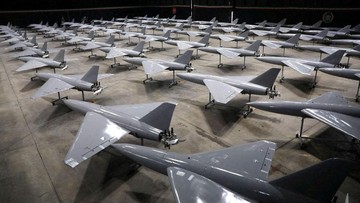
The ongoing conflict between the United States, Israel, and Iran has intensified as of March 15, 2024, marking the 15th day of hostilities. Iran has employed its low-cost Shahed drones to conduct strikes against U.S. and Israeli targets, resulting in significantly increased operational costs for the American military. This tactic has shifted the dynamics of the conflict, emphasizing a strategy of attrition that is raising concerns among defense analysts.
Iran’s use of Shahed drones, which are significantly cheaper than traditional military equipment, has allowed the nation to execute sustained attacks without incurring the same financial burden typically associated with conventional warfare. The Pentagon has reported that the costs of defending against these drone strikes are mounting. Estimates indicate that U.S. defense expenditures could rise by as much as $1 billion over the course of this engagement.
The strategic implications of Iran’s drone warfare extend beyond mere financial concerns. Analysts suggest that this approach may serve to exhaust U.S. military resources and complicate operational strategies. By leveraging inexpensive technology, Iran’s military can sustain its offensive capabilities while forcing the U.S. and Israeli forces to adapt to new threats.
Global defense experts have noted that the effectiveness of the Shahed drones highlights a shift in modern warfare tactics. The ability to deploy large numbers of relatively inexpensive drones has changed the cost-benefit analysis of military engagements. As a result, countries with limited resources can inflict significant damage without the need for sophisticated weaponry.
In response to the escalating situation, the U.S. has ramped up its military presence in the region. Additional air defense systems have been deployed to protect key assets and personnel. Furthermore, the U.S. government is considering strengthening its alliances with regional partners to counteract Iran’s drone capabilities.
The Biden administration has emphasized the need for a coordinated defense strategy, focusing on intelligence sharing and joint military exercises with allies. This collaborative approach is seen as essential for mitigating the risks posed by drone warfare and maintaining regional stability.
As the conflict continues, the implications of Iran’s drone strategy will likely reverberate through international military communities. The ongoing hostilities serve as a reminder of the evolving nature of warfare and the need for adaptive strategies in the face of emerging threats. The situation remains fluid, and stakeholders are closely monitoring developments as both sides assess their next moves in this protracted confrontation.