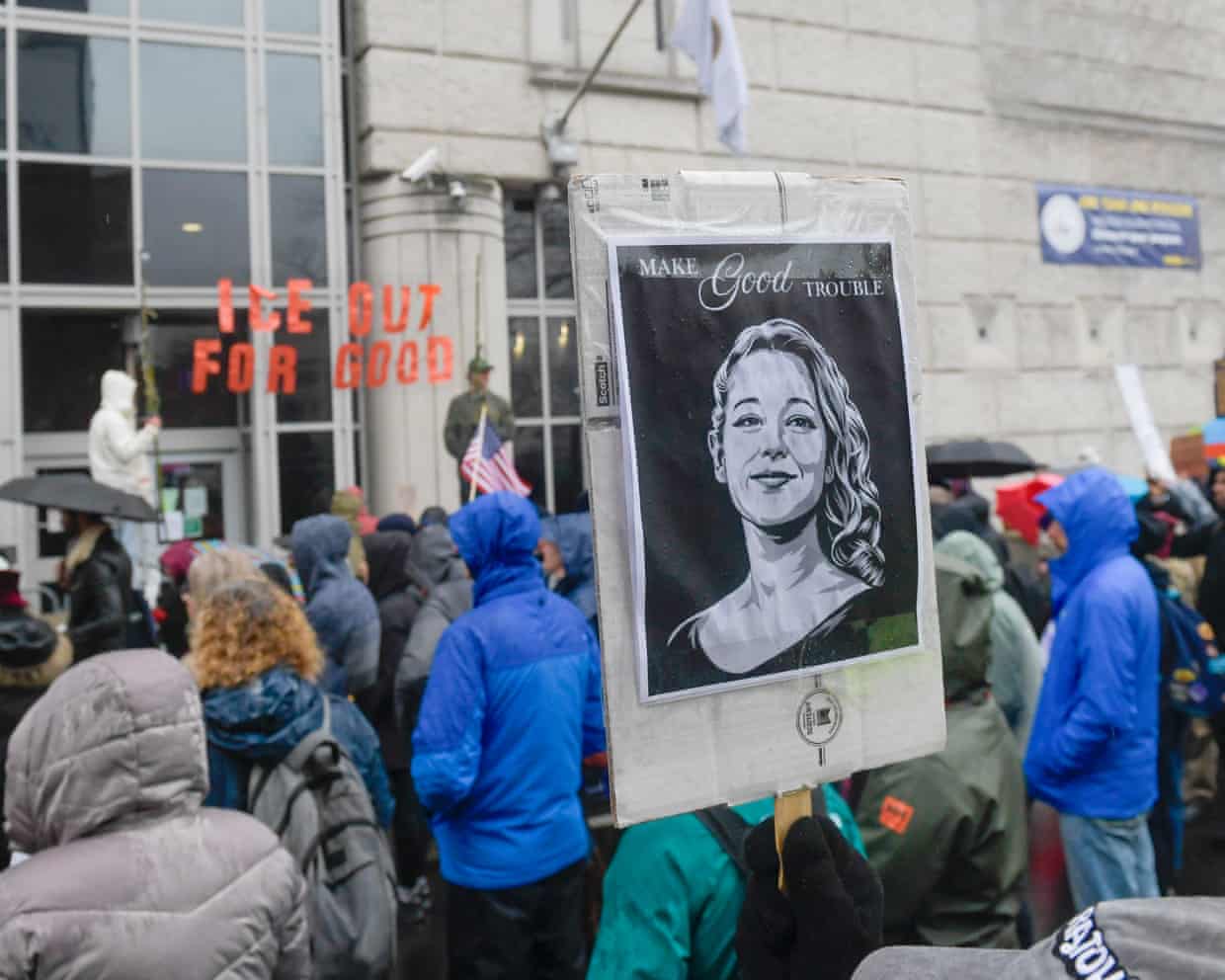
Demonstrations erupted across the United States on a rainy Saturday as hundreds protested against the killing of Renee Nicole Good by Immigration and Customs Enforcement (ICE). The protests, which began in Philadelphia and spread to cities including Minneapolis, were driven by calls for an end to ICE operations and condemnation of government actions toward both domestic and foreign communities.
In Philadelphia, two distinct protests marched from City Hall to the federal detention center. The morning gathering, organized by the No Kings coalition, saw a predominately older, white crowd. In contrast, the afternoon event, spearheaded by the local chapter of the Democratic Socialists of America, attracted a more racially diverse group. Despite differences in composition and proposed solutions, both groups united in their demand for ICE to withdraw from communities and for an end to Donald Trump‘s military actions in Venezuela.
“From Venezuela to Minneapolis, all we’re seeing is a regime that is scrambling, willing to kill its own citizens, willing to kill foreign citizens, to maintain its power,” stated Deborah Rose Hinchey, co-chair of the Philadelphia chapter of the Democratic Socialists of America. These protests were part of a larger movement, with over a thousand events planned nationwide in response to three recent ICE-related shootings, one of which was fatal.
The protests were ignited by the killing of Good in Minneapolis on February 28, 2024, and coincided with escalating tensions surrounding U.S. policies regarding Venezuela. Major national organizations, including Indivisible and the American Civil Liberties Union, called for the ICE Out for Good weekend of action, reflecting a growing anger toward federal immigration enforcement.
In Minneapolis, protests drew thousands, with demonstrators chanting “Fuck ICE, ICE out!” in response to the agency’s actions. Local representatives Ilhan Omar, Kelly Morrison, and Angie Craig attempted to enter an ICE facility but were reportedly denied access, further fueling discontent among protesters.
The situation intensified as vehicles believed to be driven by ICE agents reportedly drove into crowds in Hartford, Connecticut, leading to three arrests. Protests continued to escalate across the nation, with significant gatherings reported in cities like Boston, San Francisco, and Portland.
On March 2, 2024, local authorities in Minnesota reported that 30 protesters were arrested for “property damage” during demonstrations the previous night. The Minneapolis police union expressed support for ICE, contrasting with local Democratic leaders who have voiced their opposition to federal enforcement tactics.
In Philadelphia, participants expressed deep concerns about the implications of ICE operations. Anna, a history teacher who attended the morning march, highlighted the impact of systemic violence on her predominantly Black students. “They see this and realize there’s just another force out there,” she remarked.
Longtime activist Ellen voiced frustration over years of ICE actions that have affected local communities, stating, “It’s been years and years since they have been committing outrageous acts against our friends and neighbors. Now they’re murdering Americans along with harassing and detaining innocent immigrants.”
The protests also highlighted broader societal issues, with demonstrators calling attention to the financial resources allocated to immigration enforcement compared to essential services for citizens. Francesca, a member of the national DSA’s political committee, noted the increasing public discontent over economic inequalities. “There is always money for war,” she asserted, emphasizing the need for prioritizing social welfare over military actions.
As protesters rallied in solidarity, organizers expressed optimism that these events would continue to mobilize public sentiment against what they characterize as a totalitarian regime. “The more the American public sees exactly what this regime is doing, the more we’re going to see days like today, with thousands of people in the street,” Hinchey concluded.
The protests, which began on March 2, are set to continue into the following days, reflecting a strong and persistent demand for change in U.S. immigration policy and foreign intervention practices.