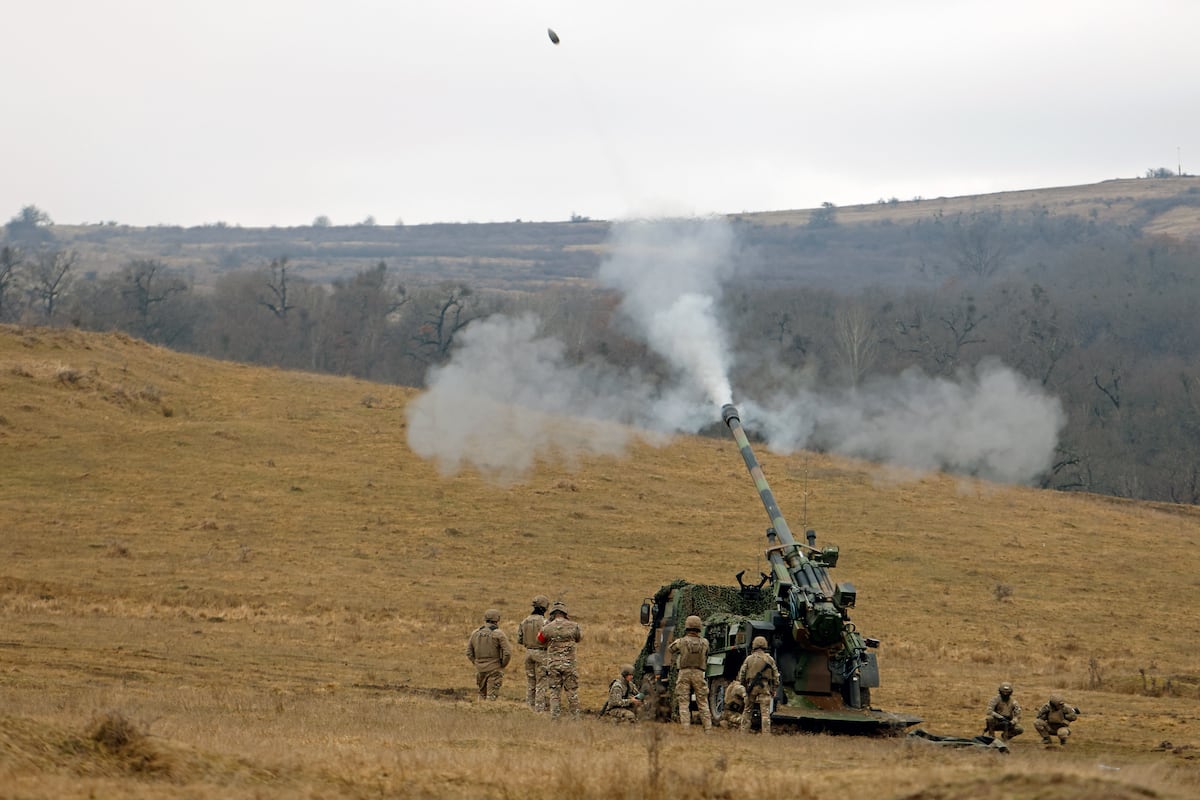
NATO artillery units conducted a significant multi-national training exercise across European training grounds from January 26 to February 13. The drill, part of the U.S.-led initiative known as Dynamic Front, aimed to enhance the interoperability of artillery units from 23 participating nations, simulating scenarios akin to the ongoing conflict in Ukraine.
During this extensive exercise, NATO forces tested their capabilities to strike targets and defend against a variety of drone and missile threats. The scenario challenged allied crews to execute up to 1,500 strikes while intercepting between 600 and 1,200 aerial threats daily, reflecting the scale and complexity of modern warfare.
Enhancing Artillery Coordination
Brig. Gen. Steven Carpenter, commander of the 56th Multi-Domain Command Europe, emphasized the importance of these massed artillery exercises. In a press briefing, he stated that the goal is to create a deterrent effect through continuous, overwhelming firepower. Carpenter noted that the intent is to ensure “strikes are so unrelenting” that potential adversaries would hesitate to initiate attacks.
One notable achievement from this year’s exercise was the improvement in command coordination. Participating units established their command systems and coordinated strikes in just one-sixth of the time required in previous iterations. This significant reduction reflects the effectiveness of the training and preparation undertaken by the allied forces.
Technological Integration
Central to the success of the exercise was the use of the Artillery Systems Cooperation Activities (ASCA) software. This encrypted system serves as NATO’s digital framework for integrating different national artillery and command-and-control systems. ASCA also enables real-time sharing of targeting data across borders, allowing troops stationed in various countries to collaborate effectively.
U.S. military officials have indicated that the ASCA system is continuously refined based on feedback from exercises like Dynamic Front. Over a dozen NATO nations have integrated this technology into their operational frameworks, enhancing their collective defensive capabilities.
The exercise not only served to validate artillery interoperability but also reinforced the commitment of NATO allies to work together in addressing contemporary security challenges. As tensions persist in various regions, such training exercises play a crucial role in ensuring that member nations remain prepared and capable of responding to potential threats.