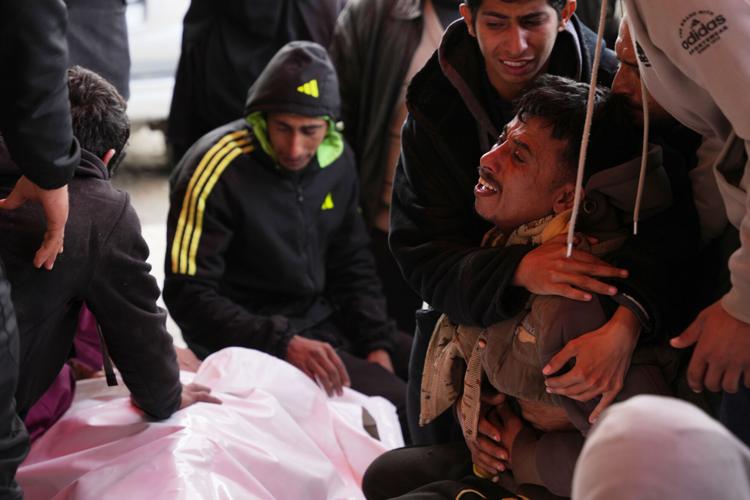
Israeli airstrikes on Wednesday resulted in the deaths of at least 11 Palestinians in Gaza, including two 13-year-old boys, three journalists, and a woman. This violence marks one of the deadliest days in the Gaza Strip since the ceasefire between Hamas and Israel began on October 10, 2023. Reports from hospitals indicated that the fatalities were concentrated in various locations, highlighting the ongoing toll of the conflict on civilians.
Among the deceased were three Palestinian journalists who were struck while covering a displacement camp in central Gaza. Mohammed Mansour, a spokesperson for the Egyptian government committee managing the camp, confirmed that the journalists were documenting the committee’s activities when they were targeted. Israel’s military claimed to have identified individuals operating a drone that posed a threat to their troops, suggesting a justification for the strike.
The tragic loss of life included the two boys, who were killed in separate incidents. One boy was hit by Israeli drones in the Bureij refugee camp, while the other was shot by troops in Bani Suheila. The father of one victim, Moatsem al-Sharafy, was seen in a heartbreaking video mourning his child’s death. According to his mother, Safaa al-Sharafy, the boy had left home to gather firewood, saying, “He went out in the morning, hungry. He told me he’d go quickly and come back.”
International Reactions and Ongoing Violence
The violence in Gaza has drawn international attention. The Committee to Protect Journalists reported that more than 200 Palestinian journalists have been killed since the conflict began in 2023. The tragic death of one of the journalists, Abdul Raouf Shaat, a contributor to Agence France-Presse, has led to calls for a thorough investigation. The agency described Shaat as “much loved” among colleagues and demanded accountability for his death.
In addition to the journalists, a Palestinian woman was shot by Israeli forces in the Muwasi area of Khan Younis, and three brothers were killed by tank fire in the Bureij camp. According to the Gaza health ministry, over 470 Palestinians have been killed by Israeli fire since the ceasefire came into effect, with at least 77 fatalities occurring near the ceasefire line that separates Israeli-controlled areas from the majority of Gaza.
The first phase of the ceasefire aimed to facilitate the return of hostages and involved exchanges of detainees. While most hostages have been returned to Israel, the family of Ran Gvili, a police officer killed during the initial attack by Hamas on October 7, 2023, continues to seek clarity regarding his remains. Gvili’s mother, Talik Gvili, expressed her determination to keep her son’s memory alive, stating, “We will not give up on anyone.”
Escalating Conflict in Southern Lebanon
On the same day, Israeli forces conducted multiple airstrikes in southern Lebanon, targeting locations they claimed were used by the militant group Hezbollah for storing weapons. The military reported that it struck four border crossings in Lebanon’s northeastern Hermel region, as well as facilities in three villages. The Lebanese health ministry reported that at least 19 individuals, including journalists, were injured in the strikes, which have been condemned by Lebanese officials as “systematic aggression.”
These airstrikes represent part of Israel’s ongoing military operations in the region, which have intensified since a ceasefire ended the previous conflict with Hezbollah. The situation remains volatile, with fears that renewed hostilities could escalate further.
As the conflict continues to unfold, both the humanitarian impact on civilians and the safety of journalists remain pressing concerns for the international community. The situation in Gaza and its surrounding regions reflects the complexities and challenges inherent in achieving lasting peace.