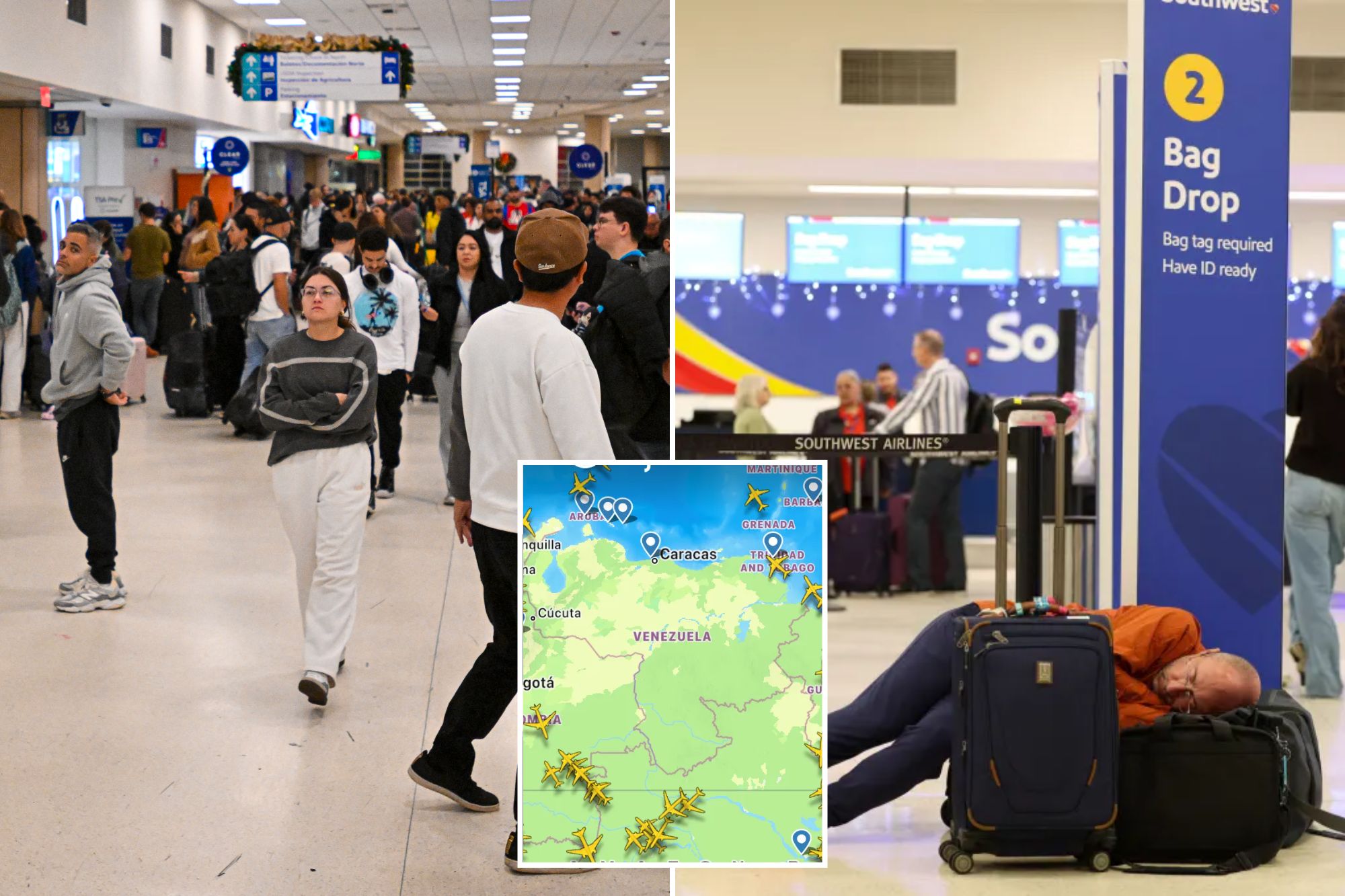
A US military operation on March 9, 2024, led to the capture of Venezuelan President Nicolás Maduro, significantly disrupting air travel across the Caribbean. The operation resulted in widespread flight cancellations, affecting hundreds of travelers during a peak holiday period. According to data from FlightRadar24.com, no airline flights were permitted to cross Venezuelan airspace, leading to complications for airlines operating in the region.
Major airlines canceled numerous flights to and from various destinations, including Puerto Rico, the Virgin Islands, and Aruba, among others in the Lesser Antilles. Passengers faced considerable disruption, with the Federal Aviation Administration (FAA) imposing temporary restrictions. Many airlines responded by waiving change fees for those needing to reschedule their travel plans.
By Saturday evening, US Transportation Secretary Sean Duffy announced that restrictions would be lifted at midnight EST, allowing airlines to resume normal operations on Sunday. In preparation for the influx of stranded travelers, Southwest Airlines added six extra round-trip flights to Puerto Rico and eight additional round-trips on Monday. The airline also scheduled two extra flights to Aruba.
At the Queen Beatrix International Airport in Aruba, officials anticipated a return to normalcy following a day of flight cancellations that left many travelers stranded. In Barbados, Prime Minister Mia Mottley addressed the issue, noting that the conflict had severely impacted both air and sea ports in the region.
Travelers in Puerto Rico faced significant challenges. Lou Levine, who was scheduled to return to Washington, D.C., with his family, discovered their flight had been canceled upon waking up on Saturday morning. After unsuccessful attempts to contact JetBlue, the Levines managed to reach the airline via social media, ultimately securing a new flight that extended their holiday by a week. Despite feeling fortunate for his employer’s flexibility, Levine expressed concern over the financial burden of unexpected expenses, such as pet care and car rentals.
The disruptions occurred during a busy travel season, with AAA projecting that approximately 122.4 million Americans would travel at least 50 miles from home during the holiday period. A spokesperson for AAA, Aixa Diaz, highlighted the Caribbean as a popular destination, noting that many travelers aimed to enjoy the warm weather before returning to work and school.
The Luis Muñoz Marín International Airport in San Juan, Puerto Rico, reported that nearly 60% of all flights were canceled due to the military activity in Venezuela. The announcement on social media indicated that foreign airlines and military aircraft were not subject to the same restrictions. While Air Canada continued its flights to the Caribbean, WestJet canceled its flights to Aruba as a precaution.
On March 9, JetBlue announced the cancellation of approximately 215 flights due to airspace closures linked to military actions. Other airlines, including Dutch carrier KLM, also canceled flights, affecting thousands of passengers but planned to resume service on March 10 to various Caribbean destinations.
The flight disruptions extended beyond air travel, impacting those booked on Caribbean cruises. Cruise operator Virgin Voyages stated that travelers unable to reach San Juan in time for their cruise departures would receive a full credit for a future trip.
As airlines work to restore services and assist affected passengers, the situation continues to evolve. Travelers are advised to stay informed about updates and to monitor airline communications for further changes in flight schedules.