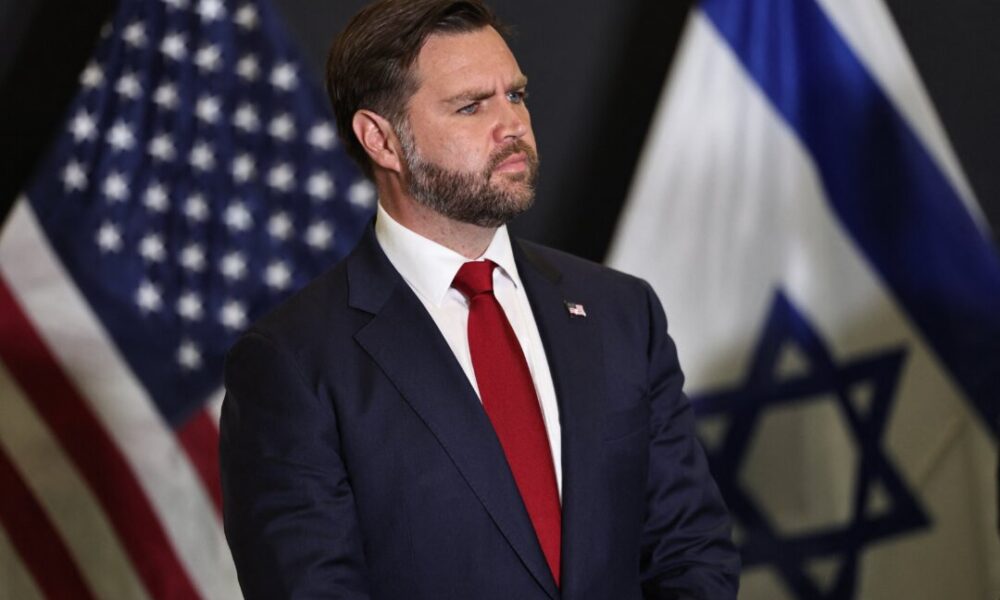
URGENT UPDATE: U.S. Vice President JD Vance has condemned a controversial new bill from Israel aimed at applying Israeli law to the West Bank, labeling it an “insult.” This statement comes just hours after the bill received preliminary approval from the Knesset on October 22, 2023.
While visiting Israel, Vance expressed his disapproval, stating, “If it was a political stunt, it is a very stupid one, and I personally take some insult to it.” His remarks reflect escalating tensions surrounding the bill, which has drawn significant international attention.
Vance emphasized that former President Donald Trump would oppose the annexation of the West Bank, asserting, “The West Bank is not going to be annexed by Israel. The policy of President Trump is that the West Bank will not be annexed. This will always be our policy.”
This development is critical, as it signals potential shifts in U.S.-Israel relations, especially given the strong ties historically held between the two nations. The timing of Vance’s remarks, coming during a high-stakes diplomatic visit, raises questions about the future of U.S. foreign policy in the region.
The bill’s approval marks a significant moment in Israeli politics, with lawmakers pushing for a change that could redefine the status of the West Bank. Many observers fear that such actions could further exacerbate tensions and complicate peace efforts in an already volatile region.
As this situation evolves, the implications for both Israeli and Palestinian communities remain uncertain. Vance’s statements may signal a more proactive stance from the U.S. government regarding Israeli policy changes. The political landscape is shifting, and all eyes will be on upcoming votes and international reactions.
What happens next will be crucial: Will the Israeli government move forward with the annexation? How will the Biden administration respond? Stay tuned as we continue to monitor this developing story and provide updates on the latest diplomatic implications.