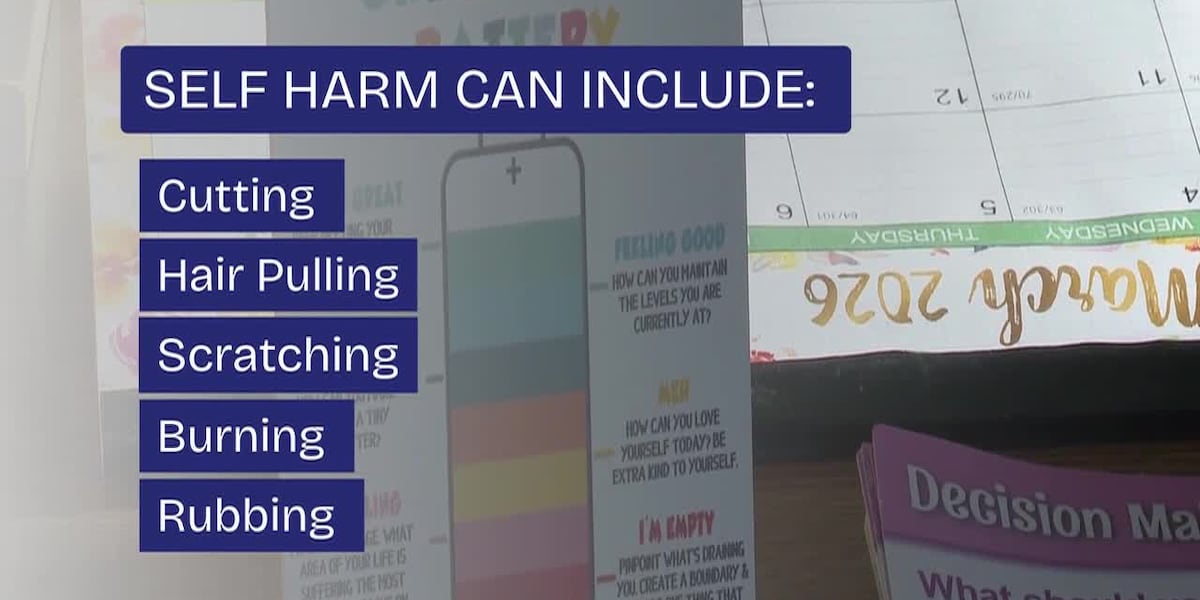
March marks Self-Harm Awareness Month, a time to shed light on the complexities surrounding non-suicidal self-injury (NSSI). Contrary to common assumptions, self-harm does not always indicate suicidal intent. School counselor Christina Bixman emphasizes that many individuals who engage in self-injury do so as a coping mechanism rather than a sign of wanting to end their lives.
Self-harm encompasses various behaviors, including cutting, hair pulling, and scratching. Anything that intentionally causes bodily harm falls under the umbrella of NSSI. It often emerges alongside other mental health challenges such as anxiety, depression, and bipolar disorder. Bixman explains, “Self-injury is a coping skill. It’s not a good one, not a safe one, but a coping skill nonetheless.” Understanding the underlying issues that lead to self-harm is crucial for effective intervention.
Addressing the Root Causes
Treatment for self-harm varies significantly among individuals. Elizabeth Collier, a physician and psychiatrist at Camden Clark Medical Center, highlights the importance of understanding each person’s unique circumstances. “Getting them on board and talking about what’s really the root cause of what’s going on, why they’re engaging with this,” she notes. Collier works with patients aged 18 and older who are at severe risk of harming themselves or others.
In her practice, Collier employs distraction techniques, encouraging individuals to redirect their impulses toward healthier activities. She also emphasizes the value of involving support networks. “Getting other people involved so that they can go to them for support instead of engaging in the self-harm,” she advises. This collaborative approach can significantly enhance recovery prospects.
Both Bixman and Collier stress the importance of reaching out for help. “As soon as you get that out there, things start to get easier because you can share that burden with somebody else,” Bixman states. Taking that initial step to disclose feelings can lead to more effective treatment options and emotional relief.
Resources for Support
For those struggling with self-harm, resources are available to provide assistance. The 988 suicide hotline offers immediate support, while texting 741741 connects individuals to trained crisis counselors. These services aim to provide a lifeline for those in distress, helping guide them toward healthier coping mechanisms.
As Self-Harm Awareness Month progresses, it is essential to recognize that self-injury is a complex issue that requires understanding and compassion. By addressing the root causes and encouraging open conversations, individuals can find a path toward healing and recovery.