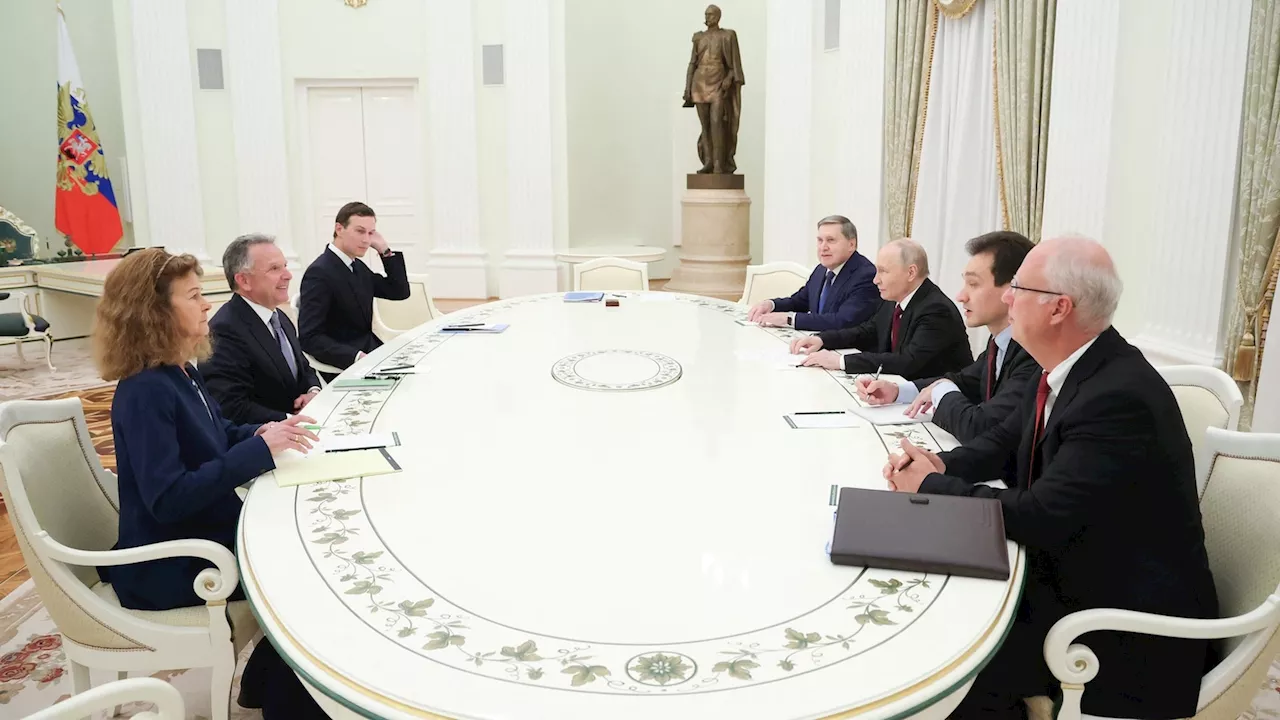
UPDATE: President Donald Trump has confirmed that U.S. Special Envoy Steve Witkoff and his son-in-law Jared Kushner held a “reasonably good meeting” with Russian President Vladimir Putin on December 2, 2025, amid ongoing tensions over the war in Ukraine. However, no significant breakthroughs were reported following the lengthy discussions in the Kremlin.
During a press briefing in the Oval Office on December 3, 2025, Trump stated, “What comes out of that meeting? I can’t tell you… It’s a war that should have never been started.” The high-stakes negotiations took place as both sides continue to grapple with the urgent need for peace amid nearly four years of conflict.
Witkoff and Kushner’s discussions with Putin were closely watched, with Kremlin economic envoy Kirill Dmitriev and aide Yuri Ushakov present. Trump noted that the Russian leader expressed a desire to end the war, stating, “Their impression was that he would like to see the war ended.” But the lack of immediate results raised concerns about the feasibility of a peace deal.
In a significant move, Witkoff and Kushner have invited Rustem Umerov, the Ukrainian National Security and Defense Council Secretary, to Miami for further peace talks this Thursday. This invitation follows their marathon discussions with Putin, which, although characterized as constructive, did not yield a concrete agreement.
Ushakov, speaking to Russian media after the meeting, remarked that while some American proposals were “more or less acceptable,” no consensus was reached. “We agreed on some things… while others caused criticism,” Ushakov stated, highlighting the ongoing complexities surrounding the negotiations.
As tensions rise, Ukraine’s President Volodymyr Zelenskyy has scheduled a meeting with European leaders in Brussels to analyze the implications of the Kremlin discussions. Following these talks, Umerov and army chief Andrii Hnatov are set to prepare for crucial meetings with the U.S. envoys.
Geopolitical analysts emphasize that the success of any peace plan hinges on two main issues: territorial concessions and security guarantees. U.S. Secretary of State Marco Rubio, though not part of the Moscow delegation, conveyed that “some progress” had been made but cautioned, “we’re still not close enough.” He identified Moscow’s demand for Ukrainian troop withdrawals from the contested Donbas region as a critical sticking point.
The situation remains fluid, with numerous parties involved in the negotiations. Observers believe that a lack of compromise from the Kremlin could hinder any potential peace deal. “The Kremlin remains unwilling to make the compromises necessary for a settlement Kyiv can live with,” warned John Hardie, Deputy Director at the Foundation for Defense of Democracies.
Trump’s continued engagement in the peace process is seen as pivotal, as he is “the only leader in the world that can talk to both sides and make a deal, if a deal is possible,” Rubio asserted. However, he emphasized that the resolution ultimately lies with Ukraine and Russia, stating, “It’s not our war… It’s up to them.”
As of now, the world watches closely to see whether these recent diplomatic efforts will lead to a breakthrough in ending the conflict, or whether the war will continue to escalate. The coming days will be crucial as negotiations evolve and new developments unfold. Stay tuned for further updates on this urgent situation.