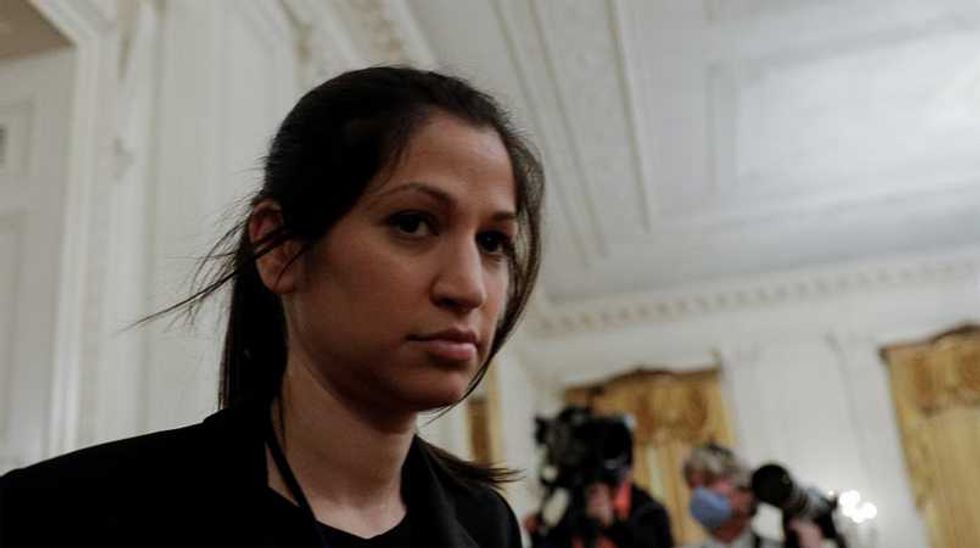
URGENT UPDATE: Controversy erupts as Katie Miller, wife of former Trump adviser Stephen Miller, faces significant backlash for her comments regarding immigrant children. The uproar follows a Guardian report, published just 10 days ago, detailing the harrowing experiences of children thrust into caregiving roles after their parents were detained by ICE.
The article highlighted that a surge of ICE arrests has left many teenagers with the burden of adult responsibilities, often as their families are torn apart. The headline read, “US immigration crackdown forces teens to caretake after parents are detained,” shedding light on the emotional and practical challenges these children face.
In response to the report, Miller took to social media, stating, “They can also just self-deport and go with their parents. What kind of parent just abandons their children?” This comment ignited a firestorm of criticism online. Users pointed out the harsh reality that many affected children are U.S. citizens born in the country, rendering self-deportation not just impractical but impossible.
Murray Wells, a commenter on X, sharply criticized her remark, saying, “Parents are just taken from streets and job sites. It’s kidnapping by ICE, not abandonment by parents. They warned us about you.” Others echoed similar sentiments, with comments reflecting disbelief at Miller’s lack of empathy for families facing separation.
One user replied, “Sorry… you’re referring to parents being captured and deported as ‘abandoning their children’?” highlighting the fundamental misunderstanding of the situation at hand. Another user, known as Trumputin, noted, “They came here to provide for their families, and so it’s a given that they will stay in order to work and provide.”
The conversation intensified, with users questioning Miller’s perspective. DeeBunker asked, “What kind of person cheers on the separation of families while preaching the value of having children?” Such responses point to a growing frustration over the tone-deaf nature of Miller’s comments amid a national crisis affecting vulnerable families.
As the debate rages on social media, it underscores a broader conversation about immigration policy and its impact on families across the United States. The emotional weight of this issue resonates with many, as it touches on fundamental human rights and the well-being of children caught in the crossfire of immigration enforcement.
WHAT’S NEXT: The fallout from Miller’s comments continues to evolve, with potential implications for public discourse surrounding immigration policy. Activists and advocates are expected to rally around this issue, further amplifying the voices of those affected by these policies.
Stay tuned for more updates as this story develops.