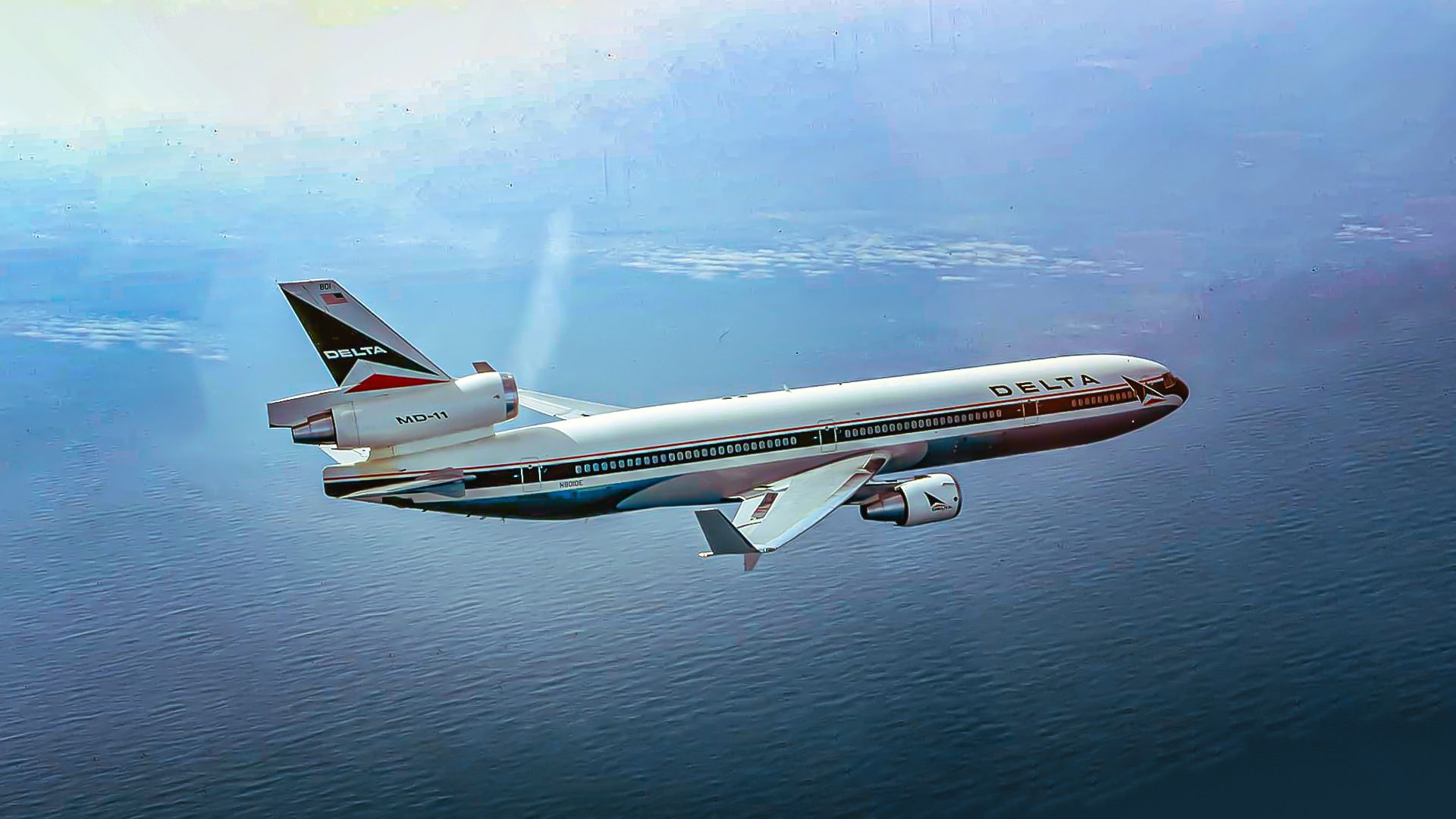
The McDonnell Douglas MD-11, a prominent three-engine aircraft, played a significant role in aviation history. It was the last major design of its kind, introduced during a pivotal time when airline economics were starting to favor more efficient twin-engine models. The MD-11, a modernized version of the DC-10, featured a stretched fuselage, updated avionics, and winglets, offering airlines enhanced range and improved fuel efficiency. Despite these advantages, the aircraft eventually became a transitional model, with several major airlines incorporating it into their fleets in the early 1990s before retiring it sooner than anticipated.
The operational life of the MD-11 illustrates the shifting dynamics within the aviation industry. Although it was initially embraced for its ability to handle long-haul missions with substantial cargo and passenger capacity, the rise of twin-engine aircraft such as the Boeing 777 and Airbus A330 led to its gradual decline. This article examines seven airlines from North America, Europe, and Asia that exemplify the MD-11’s impact, showcasing its journey from initial enthusiasm to retirement.
American Airlines: A Transitional Workhorse
American Airlines operated a fleet of 18 MD-11 aircraft, utilizing them as high-capacity long-range jets during a period of global network expansion. The airline introduced the aircraft in 1991, recognizing its efficiency for international routes without the need for larger jets like the Boeing 747. The MD-11 became a vital part of American’s operations, offering modern cockpit features and strong cargo capabilities.
However, by 2001, operational economics began to shift against the tri-jet design. The advantages of fuel-efficient twin-engine models became more pronounced, leading to the retirement of American’s MD-11 fleet. This transition marked a critical point in the airline’s strategy, as it moved towards more flexible and cost-effective aircraft.
China Airlines: A Selective Approach
For China Airlines, the MD-11 fleet comprised only four aircraft, which were integrated to boost long-haul operations when demand warranted. The jets were introduced in 1992 and retired by 2002, reflecting a trend among airlines to adopt limited MD-11 fleets for specific operational needs. This strategy allowed China Airlines to manage its fleet complexity while capitalizing on the MD-11’s dual capabilities for passenger transport and cargo.
The airline’s short-lived use of the aircraft highlights how quickly market demands and technological advancements can necessitate a shift in strategy, particularly as twin-engine aircraft became more competitive in terms of range and efficiency.
Delta Air Lines: Longevity in Service
Delta Air Lines’ experience with the MD-11 showcases a blend of ambition and persistence. The airline introduced the aircraft in 1990 and continued operating a fleet of 17 MD-11s until 2005. The aircraft provided Delta with a modern solution for international routes, enabling efficient passenger and cargo transport.
Despite its initial success, industry trends toward fleet simplification and the rise of twin-engine jets pressured Delta to retire the MD-11. This decision reflected a broader industry transition, as airlines sought to streamline operations and reduce costs in a rapidly evolving market.
Finnair: Geographic Alignment
Finnair’s operation of seven MD-11 aircraft from 1990 to 2010 illustrates how well the aircraft fit into the airline’s geographic strategy. Based in Helsinki, Finnair leveraged the MD-11’s capabilities for long-haul flying, optimizing its use for high-demand routes. The aircraft’s efficiency allowed Finnair to strengthen its intercontinental identity while maintaining manageable fleet complexity.
As competitive pressures mounted and fuel economics shifted, the decision to retire the MD-11 in 2010 reflected a common trend among airlines to adopt newer, more fuel-efficient models. The transition marked Finnair’s entry into the modern twin-engine era.
Garuda Indonesia: Short-lived Operations
Garuda Indonesia operated a modest fleet of five MD-11s between 1991 and 1998. The airline used the aircraft for specific long-haul and high-capacity needs during a time of economic volatility. While the MD-11 offered substantial capacity, it also posed challenges in terms of operating costs and maintenance.
As the industry began favoring simpler twin-engine long-haul jets, Garuda Indonesia quickly exited the MD-11 program. The decision reflected the difficulties of sustaining a small tri-jet fleet amid changing market dynamics and operational requirements.
Japan Airlines: Strategic Capacity Management
Japan Airlines (JAL) operated ten MD-11 aircraft from 1993 until 2004. The fleet allowed JAL to strategically manage long-haul capacity while maintaining flexibility in its operations. The MD-11’s combination of passenger and cargo capabilities made it a valuable asset for JAL’s international routes.
However, as twin-engine models gained efficiency and range, JAL’s operational use case for the MD-11 diminished. The decision to retire the aircraft in 2004 reflected a broader industry trend towards operational simplicity and cost-effectiveness.
KLM Royal Dutch Airlines: Iconic Commitment
KLM Royal Dutch Airlines stands out as the most prominent operator of the MD-11, maintaining a fleet of ten aircraft until 2014. This long-term commitment showcased the aircraft’s reliability and performance when integrated into a disciplined network. KLM utilized the MD-11 effectively, capitalizing on its capacity for trunk markets while adapting to various long-haul missions.
Despite its successful integration, KLM ultimately faced the same pressures that influenced other airlines. As twin-engine jets became increasingly appealing, the airline made the decision to retire its MD-11 fleet, marking the end of an era for the aircraft.
The legacy of the McDonnell Douglas MD-11 endures through its varied operational histories with these airlines. Each case reflects a unique response to evolving market dynamics and technological advancements, underscoring the aircraft’s role in shaping the landscape of modern aviation.