Giant Octopus Fossils Discovered Unlock Secrets of Cretaceous Ocean Predators
Newly uncovered fossils from northern Japan reveal ancient octopuses with massive jaws that suggest body sizes far exceeding today’s giants, rewriting what scientists know about prehistoric marine ecosystems. Paleontologists using cutting-edge AI-powered digital fossil-mining techniques uncovered these rare remains locked within 100 million-year-old concretions from the late Cretaceous period.
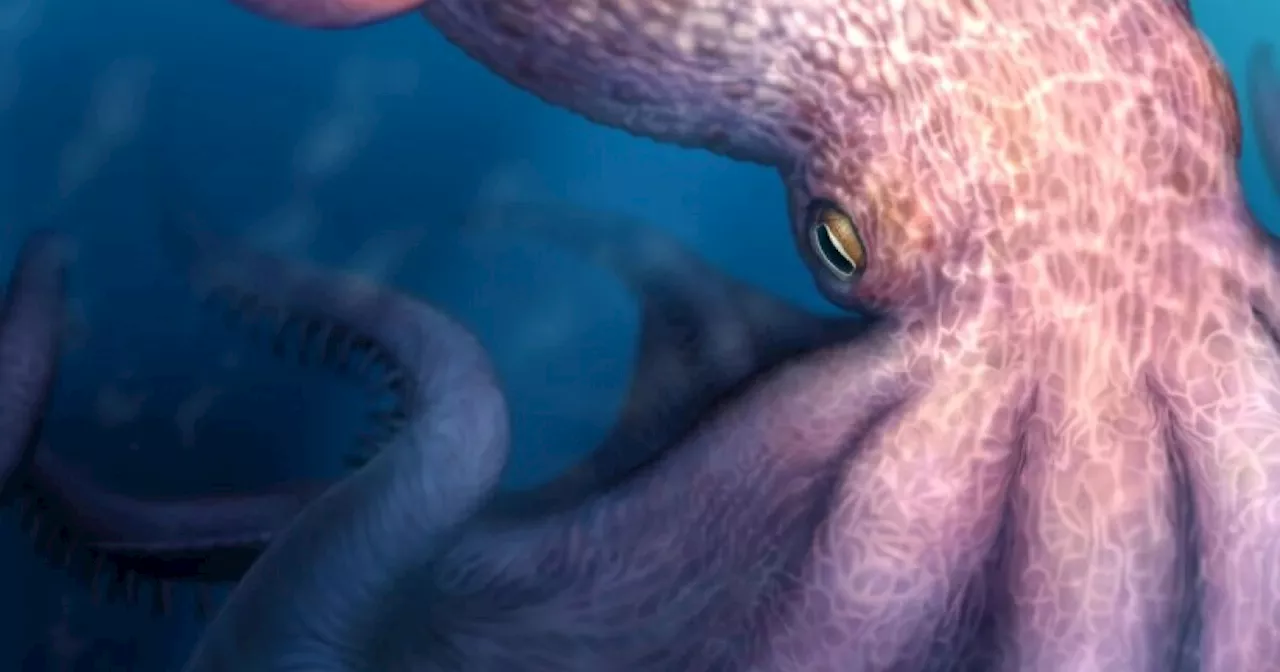
The discovery exposes the existence of octopuses nearly 60 feet long — longer than a school bus — fiercely hunting through ancient oceans that teemed with apex predators like the mosasaur. “These jaws are the biggest on record for any octopus,” says lead researcher Dr. Christian Mutterlose from Ruhr University Bochum, highlighting that the fossils offer a unique window into cephalopod evolution and their role as active carnivores.
Revolutionary Fossil Analysis Reveals Hard-To-Find Octopus Remains
The octopus is mostly soft tissue, making fossil preservation exceedingly rare. The breakthrough came when Dr. Daichi Iba of Hokkaido University and Dr. Mutterlose applied a layer-by-layer slicing technique, combined with advanced AI 3D reconstructions, to concretions formerly thought impenetrable. Inside, they found the robust, fossilized lower and upper jaws — structures similar to bird beaks — used to crush hard-shelled prey like shrimp, bivalves, lobsters, and nautilus-like creatures.
“The fossilized beaks bore numerous chips and scratches, evidence of relentless predation on tough exoskeletons,” explains Mutterlose. The right jaws showed more wear than the left, implying the octopuses favored one side, indicating a developed brain and neural sophistication akin to modern octopus intelligence.
Ancient Ocean Ecosystem Filled With Predators Larger Than Anticipated
Previously underestimated, these gigantic octopuses likely rivaled the ferocity of mosasaurs and other massive predators dominating the Cretaceous seas. The findings parametrize their probable body size using jaw morphology, confirming these creatures would have dwarfed even the giant Pacific octopus known today.
“Our research suggests advanced predatory behavior and neurological traits had deep evolutionary roots among early octopuses,” states Iba. This challenges long-held views of cephalopod evolution and expands our understanding of ancient marine food webs where these colossal octopuses thrived.
Why This Discovery Matters to Science and Montana Readers
For readers in Montana and across the United States, this scientific breakthrough underscores the vast unknowns still hidden beneath the seas, showing how new technologies can transform fossil hunting and deepen knowledge of biodiversity through Earth’s history. As Montana harbors rich paleontological sites of its own, this reminds us of the interconnected global stories of prehistoric life and the ongoing quest to uncover our planet’s evolutionary past.
Researchers now aim to further explore these fossil concretions and refine their digital fossil-mining methods, hoping to unearth more cephalopod remains and fully map ancient ocean predator hierarchies. This evolving research promises to keep reshaping our view of prehistoric life and the extraordinary beings that once ruled the seas.
“Just a few fossil findings may shed very new light on the evolution of the biosphere,” says Dr. Mutterlose, emphasizing the profound impact of this discovery.
Stay tuned as Montana Insider continues to follow emerging research in paleontology and marine evolution, bringing you the latest on discoveries that connect the ancient past with today’s scientific frontier.