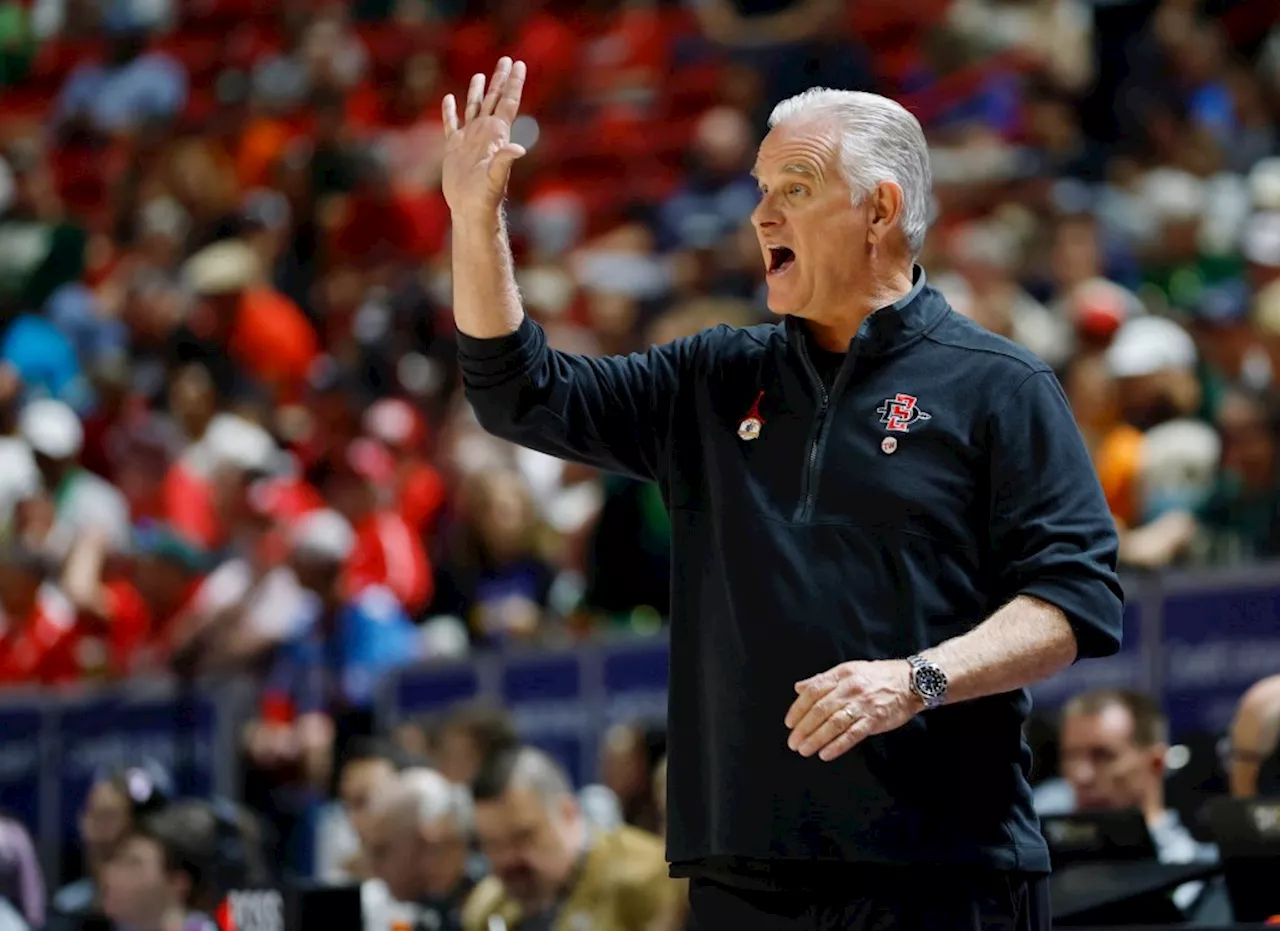
San Diego, NV – The San Diego State Aztecs are scrambling to keep pace with an escalating college basketball arms race as top players flood the transfer portal chasing multi-million dollar deals from power conference programs.
Aztecs head coach Brian Dutcher confirmed the team recently lost six key players this spring alone—Miles Byrd, Magoon Gwath, BJ Davis, Pharaoh Compton, Taj DeGourville, and Miles Heide—who are collectively slated to earn between $9 million and $10 million in contracts at new schools in leagues such as the Atlantic Coast and Big East.
“We had a $12 million roster last year, but we didn’t have to pay $12 million,” Dutcher said. “The power conferences just have more money than anybody. That’s the reality of college basketball now.”
Power Conferences Soaring, Aztecs Struggle to Compete
The Aztecs find themselves in a rare position — a program with power-conference pedigree but operating on a mid-major budget. Schools backed by lucrative TV contracts are blowing past $20 million payrolls, leaving mid-majors like SDSU forced to innovate rather than spend.
Only one high-profile transfer joined the Aztecs recently — Reese Dixon-Waters from USC — marking a reversal in trends. In the previous two decades, SDSU attracted 26 power conference transfers and only lost one, but since the surge in Name, Image, and Likeness (NIL) deals and revenue-sharing, the pattern flipped drastically, bleeding top talent upward.
“We’re competing with the New York Yankees of college basketball, and we’re more like the Tampa Bay Rays,” Dutcher quipped, emphasizing the financial gulf. “We’re panning for gold while they’re operating excavation machinery.”
New Recruiting Philosophy Embraces Undervalued Talent
With emerging multi-million dollar deals at powerhouses like North Carolina State, Virginia, Oregon, and Providence, San Diego State is shifting focus. Coach Dutcher now targets overlooked or unconventional prospects: a physical 6-11 hometown center returning from surgery, a 6-4 guard from Division III, and a young Italian pro player, David Torresani, overlooked in Euro leagues.
“I’ve adapted to a lot of eras of basketball,” the 66-year-old coach said. “I’m embracing this one. We will put a team together next year Aztec fans will be proud of.”
Torresani, a speedy point guard, joins alongside fellow European recruit Nikola Skoric, marking a major strategic departure from SDSU’s historical California-centered recruiting pipeline.
Exploding Payrolls and NCAA Transfer Portal Shake College Hoops
Some 20 to 25 men’s basketball programs nationwide will enter the 2026-27 season with payrolls north of $20 million — a near 35% surge from last year. According to basketball analytics expert Evan Miyakawa, spending on transfers is skyrocketing, with power conference general managers estimating $1.5 to $3 million-plus salaries even for borderline starters.
The result is a widening talent chasm: transfers “bleed” upward from mid-major to power conferences, raising the average transfer rating from 60.3 at mid-majors to 75.9 at power schools. The Aztecs absorb below-average players in return, forcing them to scout diligently for hidden gems.
High Hopes Despite Massive Roster Overhaul
For next season, SDSU retains just four players from the previous team and faces the challenge of molding chemistry amid extensive roster turnover. The nonconference schedule includes multiple power conference foes, promising a grind that will test the Aztecs’ resilience.
“Time will tell,” Dutcher said. “You think you have a good team on paper, but until you get them all here and on the same page, you don’t really know.”
With the NCAA basketball landscape reshaped by exploding NIL payouts and rich media deals, mid-major programs like San Diego State are forced to rethink everything — doing more with less or risk falling behind in what some call a new college hoops arms race.
San Diego State’s evolving recruitment strategy will be one to watch this fall, as they strive to remain competitive amid soaring basketball payrolls and relentless talent poaching by the nation’s richest programs.