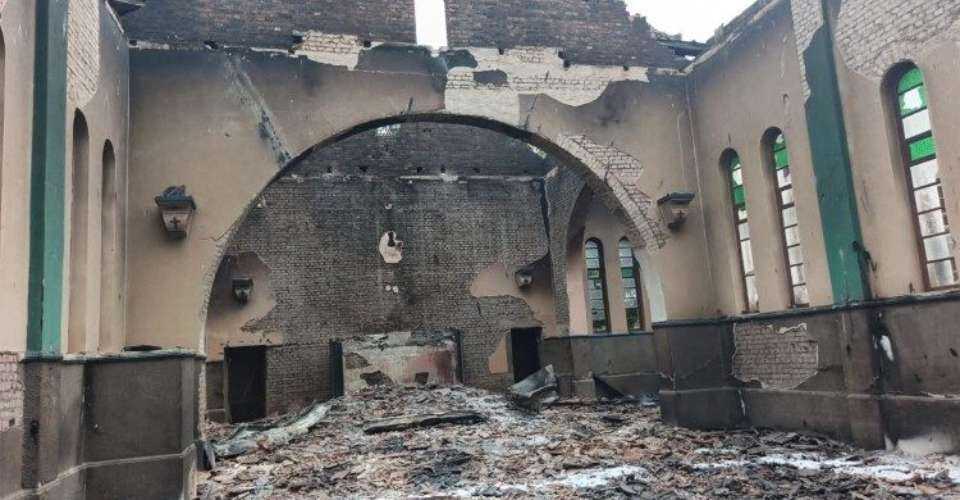
Islamic State Extremists Destroy Historic Catholic Church in Northern Mozambique
Meza, Mozambique — Armed extremists linked to the Islamic State group launched a devastating attack on the historic St. Louis de Montfort Church in the northern province of Cabo Delgado on April 30, destroying the church, its offices, and the residence where Piarist missionaries served the local parish. The violent assault also vandalized a church-run kindergarten school, leaving the community in shock.
The attack, confirmed by the Islamic State-Mozambique on May 1, marks a chilling escalation in the extremist group’s sustained campaign against both Christian and Muslim communities in Mozambique since 2017. The group’s efforts have increasingly targeted Christian-majority areas in Cabo Delgado, with this recent strike representing a symbolic and strategic blow to the Catholic presence in the region.
Historic Church Reduced to Rubble in Terror Attack
The St. Louis de Montfort Church, established in 1946 and a vital spiritual center for Catholics in this predominantly Muslim northern province, was “reduced to rubble,” according to Bishop António Juliasse Ferreira Sandramo of the Diocese of Pemba. Speaking through the pontifical charity Aid to the Church in Need (ACN), Bishop Juliasse described the scene as one of “terror,” where civilians were forcibly made to witness inflammatory speeches inciting hatred before the attackers departed at nightfall.
“Homes, infrastructure, all destroyed, and the historic parish reduced to rubble,”
the bishop said, urging Catholics worldwide for solidarity with the victims in Meza. He emphasized the resilience of the local faithful despite nearly a decade of persistent violence targeting religious sites in Cabo Delgado.
Islamic State-Mozambique’s Pattern of Religious Violence
Data from the Armed Conflict Location & Event Data Project (ACLED) identifies the church attack as part of a repeated tactic by Islamic State-affiliated extremists aimed at attracting international attention. While church attacks make up less than 6% of violent events in the region, this latest assault in Meza stands out for its scale and symbolic impact.
The U.S. Commission on International Religious Freedom has previously reported the group’s sustained campaign of brutality, including the burning of 18 churches just this year in Cabo Delgado’s Chiúre district and the beheading of six Christians in Ancuabe, underscoring a pattern of targeted religious persecution.
Human Toll and Broader Implications
Repeated attacks on parishes and removal of Catholic clergy from northern Mozambique have driven entire communities from their homes, largely dismantling the Catholic Church’s infrastructure in the province. The Diocese of Pemba has seen persistent destruction of churches, reflecting rising insecurity and the extremists’ intent to erase religious freedom in the area.
Though the Piarist missionaries serving the parish survived the attack, the psychological scar remains deep among survivors. Bishop Juliasse’s call for solidarity emphasizes global awareness and prayer as vital responses to these ruthless acts aimed at eroding faith through violence.
Why This Matters Now
This latest attack is more than a local tragedy — it exemplifies the growing threat of extremist violence to religious minorities worldwide. The destruction of historic places of worship like St. Louis de Montfort Church signals the urgent need for international attention and action to protect religious freedoms and support vulnerable communities.
For readers in Montana and across the United States, this incident highlights the global reach of extremist violence and reinforces the importance of defending human rights and religious freedom everywhere.
Humanitarian organizations and faith groups worldwide are monitoring the situation closely. The unfolding crisis in Cabo Delgado requires urgent solidarity and sustained support to help survivors rebuild their shattered communities and fortify resilience against extremist aggression.
The attacks in Mozambique serve as a stark reminder that the fight against religious intolerance and violence is far from over — making global vigilance and compassion a necessity for all.