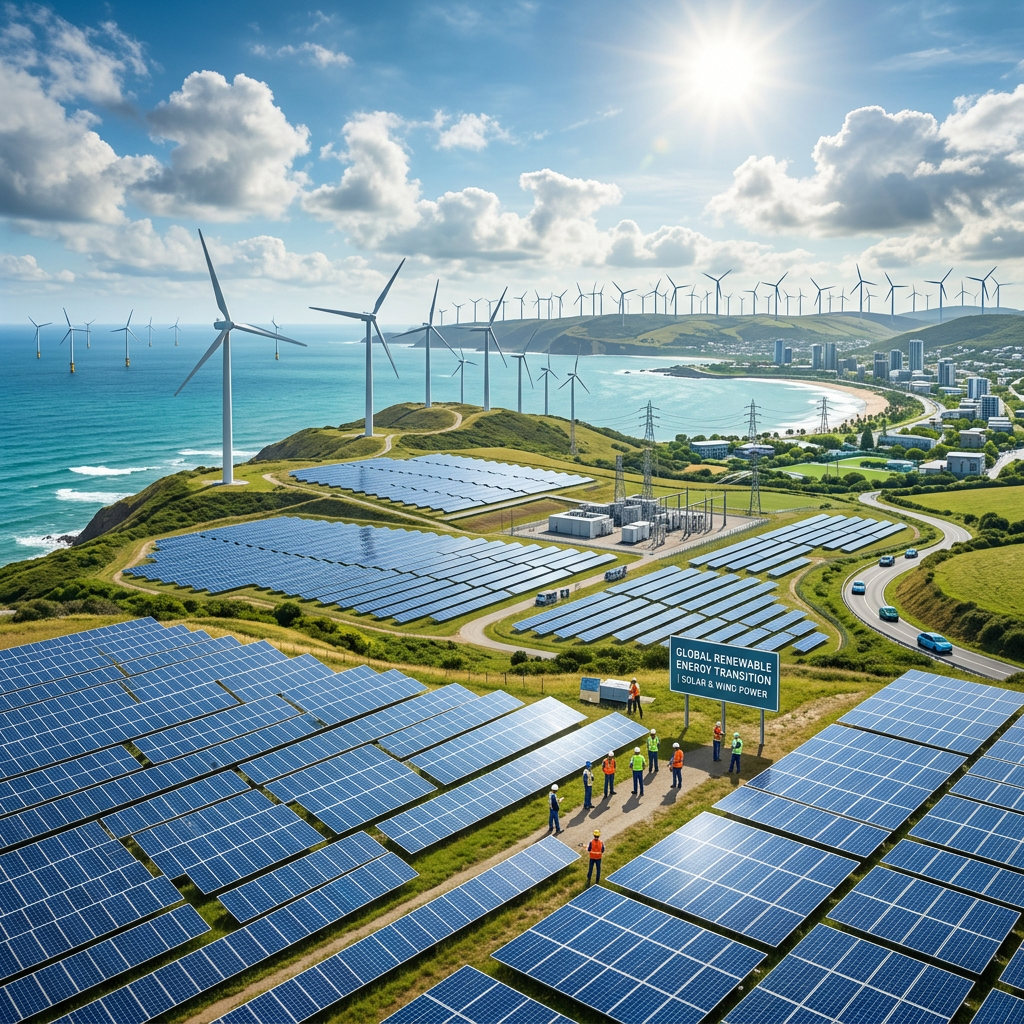
IRENA Sounds Alarm: Renewable Energy Shift Needed Now to End Global Crisis
The International Renewable Energy Agency (IRENA) has just released a critical policy advisory demanding an immediate global pivot to renewable energy sources to confront the escalating energy crisis sparked by supply shocks in the Middle East.
With conflicts disrupting global oil and gas flows, IRENA’s report warns that continued fossil fuel dependence is causing sharp price spikes impacting food systems, transportation, and economic stability worldwide—including the United States. The agency urges governments to act now to secure energy resilience with solar, wind, and battery technologies.
“Energy security cannot wait,” the advisory stresses, highlighting the urgent need for countries to implement short-, medium-, and long-term measures to build stable systems.
Immediate Actions: Protect Essentials and Cut Diesel Costs
In the next zero to six months, IRENA calls on governments to protect vital services like healthcare and farming by fast-tracking decentralized renewable installations, including solar PV and battery mini-grids in remote regions. These systems significantly lower reliance on costly diesel fuel, a lifeline for vulnerable communities facing price surges.
Alongside infrastructure, the advisory pushes for public campaigns to encourage energy-saving habits and the removal of trade barriers blocking imports of critical renewable equipment such as solar panels and batteries. These steps aim to accelerate deployment and reduce the economic burden on consumers.
Medium Term: Funding, Flexibility, and Clean Transport
Over the coming six to twelve months, nations must establish dedicated task forces to ensure continuous financing and proper grid updates to support renewable energy projects.
Increasing system flexibility by expanding battery storage and smarter electricity demand management will be pivotal to handle variable renewable power efficiently. The report also recommends boosting clean heating methods like heat pumps and biogas and fast-tracking approvals for electric vehicle (EV) charging infrastructure, heralding a cleaner transport future.
Long-Term Strategy: Stable Policies and Domestic Manufacturing
Looking ahead one to three years, IRENA stresses the importance of clear, stable policy frameworks that attract renewable investments and support building domestic supply chains to reduce import dependency.
Critically, any continuing financial subsidies for fossil fuel sectors should be conditional on measurable progress toward renewable targets, ensuring public funds drive real transition.
Renewables Prove Economically Superior and Crisis-Resistant
The advisory highlights that by 2024, around 91 percent of new renewable projects were cheaper than fossil fuel alternatives, with solar power costs plunging 87 percent and battery storage falling 93 percent since 2010. This economic edge makes renewable energy an essential strategic and financial move for nations.
Recent data from 2025 and early 2026 confirm that countries leading in renewables—such as the European Union, Spain, Portugal, China, Pakistan, and India—have weathered the energy turmoil far better, saving billions and reducing exposure to volatile fuel prices.
China’s minimal dependence on oil and gas, combined with explosive adoption of electric vehicles in both China and Vietnam, demonstrated a critical shield against rising prices. Indian and Pakistani moves toward solar-powered electric cooking cuts household energy expenses, showcasing renewables’ human impact.
Why This Matters for Montana and the US
For Montana and the rest of the United States, IRENA’s report underscores the urgency to scale domestic renewable energy projects and infrastructure. As global fuel prices ripple through supply chains and transportation costs, investing in solar, wind, and battery technologies locally can safeguard communities and economies.
Montana—rich in renewable resources like wind and solar—stands to benefit immensely from embracing this accelerated clean energy transition, creating jobs, lowering household energy bills, and protecting the state from global supply shocks.
What’s Next: Immediate Policy Shifts and Community Action
Decision-makers across the US must heed IRENA’s call by fast-tracking renewable deployment, removing regulatory hurdles, and boosting public engagement in energy conservation. The window to avoid deeper energy instability is closing fast, and renewables are the only proven path to reliable, affordable energy security.
IRENA’s urgent advisory makes clear: The energy crisis demands rapid renewable action today—not tomorrow—to protect economies, communities, and the environment from ongoing fossil fuel shocks.
“A faster renewable energy transition is essential to ensure affordable, reliable, and secure energy for everyone,” the report concludes.
Stay tuned to Montana Insider for ongoing coverage as this critical global energy shift unfolds and impacts Montanans and Americans nationwide.