BREAKING: Former South Korean President Yoon Suk Yeol has been sentenced to life in prison for his controversial imposition of martial law in December 2024. This shocking verdict comes as Judge Jee Kui-youn declared Yoon guilty of rebellion, marking a significant moment in South Korea’s political landscape.
The court found that Yoon had unlawfully mobilized military and police forces to execute a power grab aimed at the liberal-led National Assembly. His actions, described as a threat to democracy, could have had dire consequences for the nation, warranting the severe punishment. A special prosecutor had even sought the death penalty, but analysts anticipated a life sentence given the lack of casualties during Yoon’s brief, six-hour martial law decree.
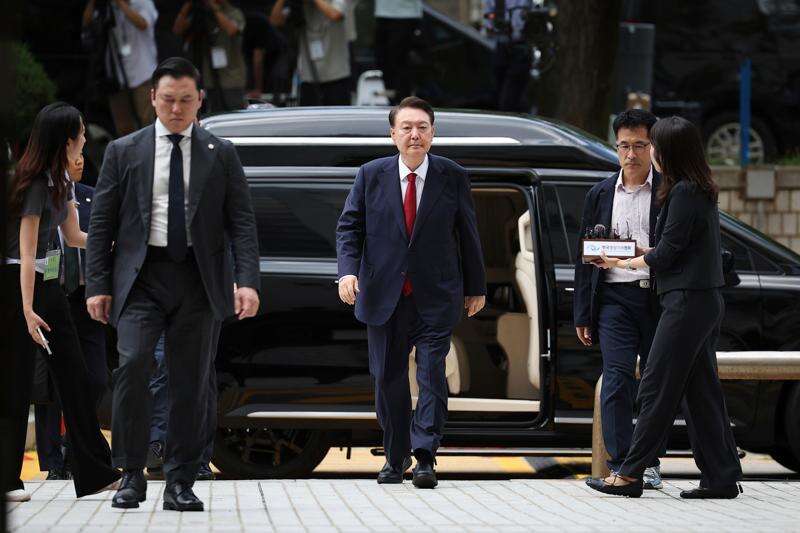
As Yoon arrived at the Seoul Central Court, a heavy police presence monitored the scene, with supporters rallying outside the judicial complex. Their chants grew louder as the prison bus transporting him passed by, highlighting the deep divisions in public opinion. Meanwhile, critics demanded the harshest penalties for Yoon’s actions, reflecting widespread concern over the implications for South Korea’s democratic integrity.
Yoon’s martial law decree was swiftly lifted after lawmakers managed to break through a military blockade and unanimously voted against it. The former president, who has faced multiple criminal trials since his impeachment on December 14, 2024, has been in custody since July 2025. His rebellion charge carries the most severe consequences, and the court’s decision marks a pivotal moment in his ongoing legal battles.
In addition to Yoon, several former military and police officials have been convicted, including ex-Defense Minister Kim Yong Hyun, who received a 30-year prison sentence for his role in enforcing the martial law. Prime Minister Han Duck-soo was also sentenced to 23 years for attempting to legitimize the decree and falsifying records.
This ruling not only impacts Yoon’s political future but also raises questions about the integrity of South Korea’s legal system and its commitment to democratic principles. The nation has not executed a death row inmate since 1997, leading many to view the life sentence as a compromise in a society increasingly divided over capital punishment.
As Yoon prepares to appeal the verdict, the political landscape in South Korea remains tense. Observers are closely watching how this decision will influence upcoming elections and the future of governance in the region.
Stay tuned for updates on this developing story as the implications of Yoon’s sentencing unfold, shaping South Korea’s political discourse for years to come.