This weekend, as Hollywood celebrates its best films during Oscar night, theaters across the globe are introducing a much less celebrated entry: the horror film Undertone. Directed by Ian Tuason, this supernatural thriller has quickly gained notoriety for its lackluster execution and abrupt conclusion, leaving audiences bewildered and unimpressed.
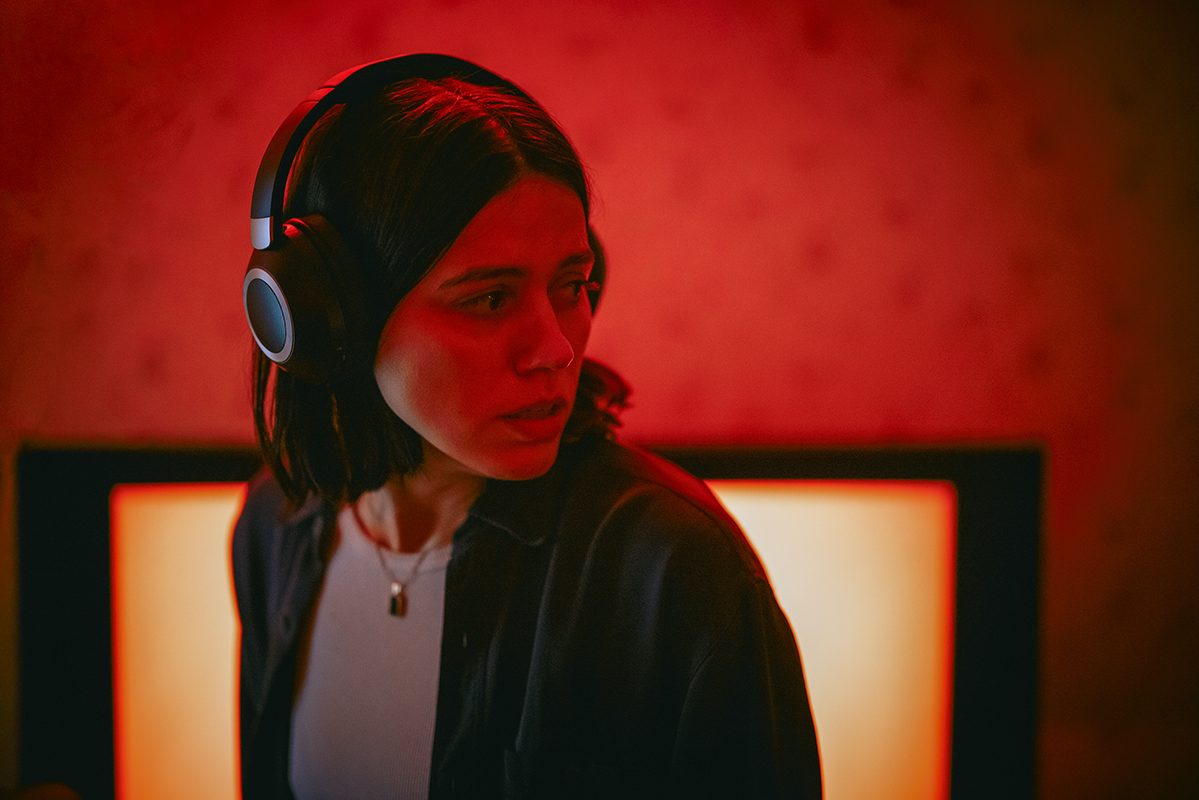
At a recent screening, viewers experienced an almost unanimous reaction when the film ended unexpectedly after just 90 minutes. The abrupt cut to credits elicited a wave of groans, gasps, and amused chuckles, encapsulating the audience’s collective sentiment of confusion: “Was that it?” The film follows the journey of Evy, played by Nina Kiri, a podcaster who delves into eerie audio recordings in her quest for the supernatural.
Evy spends most of the film in anticipation, trying to decipher mysterious audio files sent to her podcast partner, Justin, voiced by Adam DiMarco. Throughout the film, viewers are led to believe that these recordings hold the key to a chilling mystery. However, much like Evy, audiences are often left hearing little more than mundane sounds, which fail to deliver any real sense of horror.
The premise centers around a married couple, Jessa and Mike, whose recordings serve as the film’s focal point. Mike sets out to prove that Jessa talks in her sleep, a claim she initially dismisses with laughter. As the recordings progress, a more sinister presence emerges, leading to the revelation that something unsettling occurs while Jessa sleeps. The film teases listeners with the idea of a haunting voice but ultimately falls short of delivering on its suspenseful promise.
Despite its shortcomings, Undertone manages to engage the audience through its sound design. The film creatively employs everyday noises—a whistling kettle or an incessant ringtone—imbuing them with a sense of dread. These techniques seek to enhance the storytelling through audio. Yet, the lack of a substantive payoff leaves viewers longing for more.
Evy’s character grapples not only with the mysteries of the audio files but also her own emotional turmoil as a caregiver to her comatose mother. Kiri’s performance carries the film’s emotional weight, but even her portrayal lacks the fear necessary to drive the narrative to a thrilling conclusion. Instead, the film’s pacing leads to long stretches of silence, punctuated by fleeting moments of potential terror that ultimately fizzle out.
The film’s reliance on audio as its primary medium is a bold choice, but it does not fully translate into a captivating experience. While it may draw comparisons to the popular Paranormal Activity franchise, Undertone diverges by eliminating the visual horror elements that have defined those films. Instead, it attempts to build suspense around the unseen, yet fails to establish a compelling narrative that would engage viewers beyond its sound design.
As the credits roll, the audience is left with a resounding silence, punctuated only by murmurs of disbelief. Undertone has received a rating of R and is currently playing in theaters nationwide. Film enthusiasts looking for a gripping horror experience may find this latest offering falls short of expectations. For those interested in exploring the film further, tickets are available through platforms such as fandango.com.