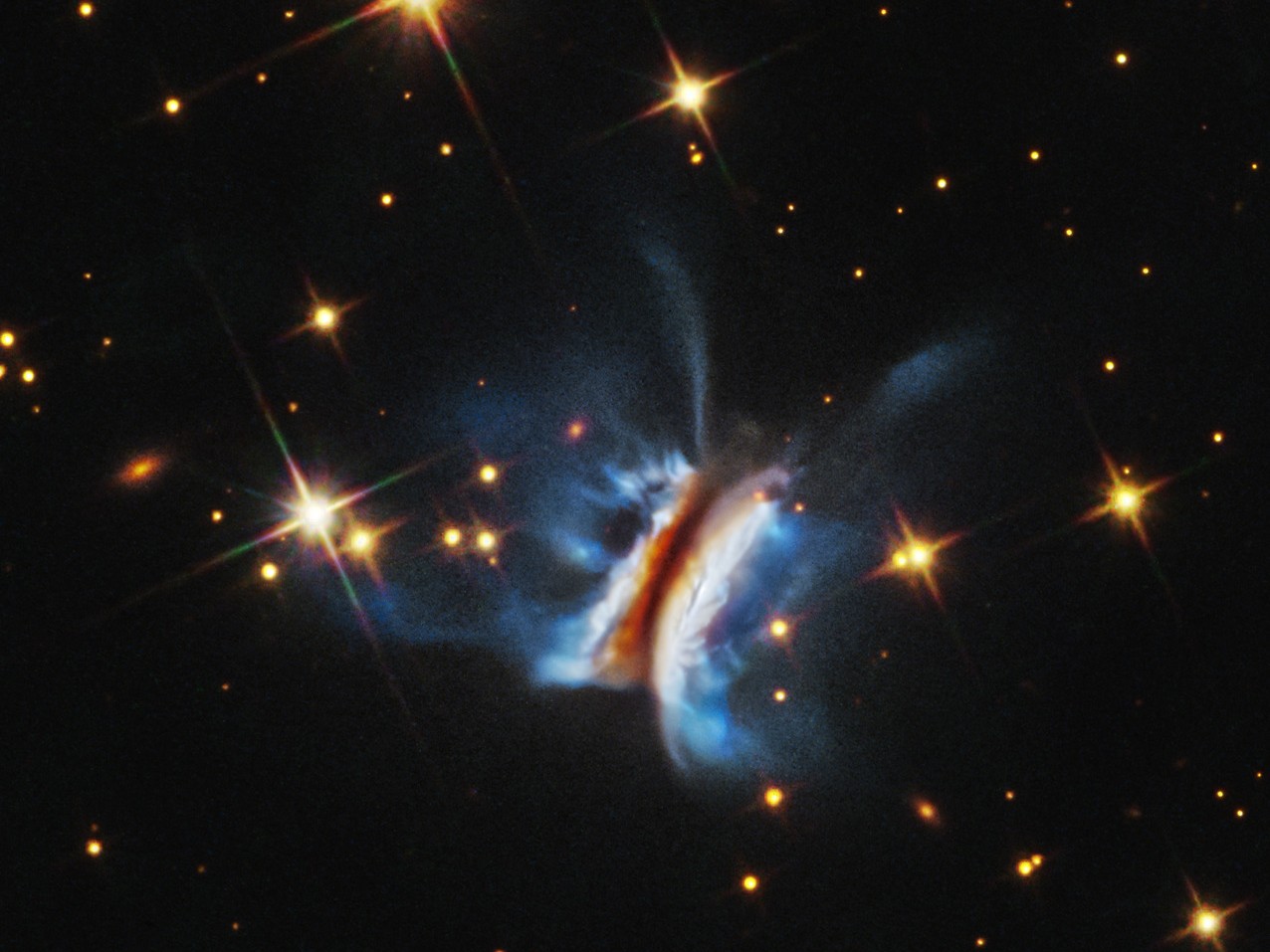
NASA’s Hubble Space Telescope has unveiled significant turbulence in a massive region believed to be one of the largest observed birthplaces of planets. This discovery, detailed in a recent study published in the Astrophysical Journal, sheds light on the complex processes involved in planetary formation.
The targeted area, located in the Orion Nebula, is known as a stellar nursery. It is here that new stars and planets are born from clouds of gas and dust. The observations made by Hubble reveal intricate turbulence that could influence the conditions required for planet formation. This turbulence is generated by the powerful forces of young stars as they form, which can disrupt the surrounding material.
Kristina Monsch, a researcher at the Center for Astrophysics (CfA), highlighted the significance of these findings. “Understanding the turbulence in this region is essential for grasping how planets form and evolve,” she stated. The study emphasizes that such turbulence could affect the distribution of material necessary for creating planets, thereby impacting their eventual characteristics.
Hubble’s observations utilized advanced imaging techniques to capture the dynamic environment of the Orion Nebula. The data collected not only provides a clearer picture of the turbulence but also raises questions about the conditions that lead to successful planet formation.
Research from this project is expected to pave the way for further studies on planetary systems beyond our own. This is particularly relevant as astronomers look to identify exoplanets that may harbor life or have conditions similar to those on Earth. The ongoing analysis of the Orion Nebula will contribute to a deeper understanding of the universe’s formation processes.
NASA continues to expand the capabilities of the Hubble Space Telescope, which has been operational since its launch in 1990. As technology advances, the telescope remains a vital tool for astrophysical research, providing insights that were previously unattainable.
The implications of this study extend beyond mere academic interest. Understanding how planets form can influence theories about the potential for life elsewhere in the universe. It also informs our knowledge of Earth’s own place in the cosmos.
In summary, the findings from NASA’s Hubble Space Telescope represent a significant advancement in our understanding of planetary formation. As researchers delve deeper into the dynamics of the Orion Nebula, they will undoubtedly uncover more about the fascinating processes that govern the birth of planets.