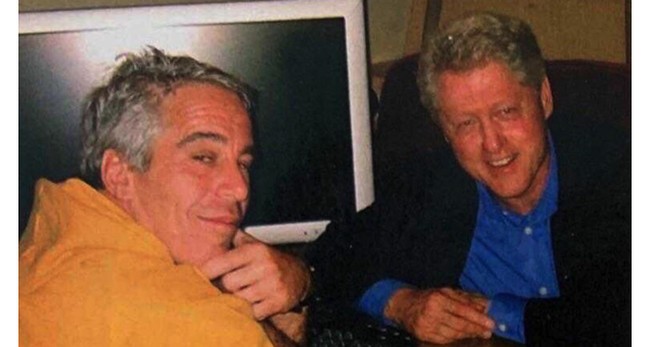
The recent release of documents from the Department of Justice related to **Jeffrey Epstein** has stirred significant controversy, especially concerning **Bill Clinton**. These files prominently feature Clinton, prompting discussions about his past associations. On NBC’s *Meet the Press*, Senator **Tim Kaine** responded to questions about Clinton’s relationship with Epstein, but his remarks quickly veered toward former President **Donald Trump**.
During the segment, NBC journalist **Kristen Welker** asked Kaine if Clinton owes the public an explanation about his ties to Epstein. Kaine replied, “If there are unanswered questions he should address them and I suspect he will.” This response has drawn attention for its apparent deflection, as it redirected focus back to Trump, despite the inquiry being about Clinton.
The Epstein documents include various photographs, one depicting Clinton in a pool with a woman whose face is obscured. This imagery has fueled speculation and debate among political commentators and social media users. Critics argue that the media is treating Clinton’s past associations with more leniency compared to the scrutiny Trump faces for unrelated photographs.
Kaine’s comments reflect a broader political strategy among some Democrats, who appear to leverage the Epstein files to challenge Trump while minimizing the implications for Clinton. This tactic has sparked accusations of hypocrisy, with many pointing out that similar scrutiny would not be afforded to Clinton.
As the political landscape continues to evolve, reactions to the release of Epstein’s documents underscore the deep divisions within political discourse. Observers note that the use of Clinton’s name in connection with Epstein may ultimately serve as a double-edged sword, potentially complicating narratives for both parties.
In the aftermath of these developments, it remains to be seen how Clinton will respond to the questions raised by the Epstein files. With the political climate charged and polarized, the implications of these revelations could have lasting effects on public perception and political strategies leading into upcoming elections.
Strong reactions to the coverage of these documents highlight the intricate relationship between media narratives and political accountability. As the story unfolds, the intersection of past actions and present political battles will likely keep both Clinton and Trump in the spotlight.