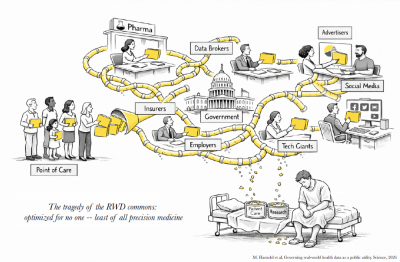
A team of researchers from the University of North Carolina (UNC) has released a paper advocating for the treatment of health data as essential national infrastructure. The proposal seeks to balance critical elements such as patient empowerment, privacy, and innovation while prioritizing the public good.
The researchers argue that health data should be governed similarly to public utilities, emphasizing its importance in enhancing healthcare delivery and outcomes. This perspective aligns with a growing recognition of health data’s potential to drive advancements in research, care, and technology. By establishing a framework for governance, the initiative aims to ensure that data is used effectively and ethically.
Rationale Behind the Proposal
According to the paper, which was published in a reputable academic journal in October 2023, the current approach to health data management is inadequate. The authors highlight that health data is often siloed between organizations, limiting its utility for broader public health initiatives. They propose a model where data is shared transparently and securely among stakeholders, including healthcare providers, researchers, and policymakers.
The research emphasizes the need for robust safeguards to protect patient privacy. By implementing standardized protocols and governance structures, the proposal aims to reassure patients about the security of their personal health information. The researchers believe that this approach could lead to increased patient trust and engagement in sharing their data for collective benefit.
Potential Impacts on Healthcare Innovation
The authors further suggest that treating health data as a public utility could catalyze innovation in the healthcare sector. With better access to comprehensive datasets, researchers and healthcare professionals could develop more effective treatments and interventions. This could significantly enhance the quality of care that patients receive.
One of the key arguments presented in the paper is that a collaborative approach to health data could lead to breakthroughs in areas such as disease prevention, personalized medicine, and public health surveillance. Enhanced data sharing could enable rapid responses to health crises and improve overall population health management.
The paper calls for a multi-stakeholder dialogue involving government agencies, healthcare organizations, and patient advocacy groups. By engaging diverse perspectives, the authors believe that a well-rounded governance framework can be developed that addresses various concerns while maximizing the benefits of health data utilization.
The researchers at UNC conclude that the time is ripe for a paradigm shift in how health data is perceived and managed. Their proposal seeks to redefine health data as a shared resource, integral to the nation’s infrastructure and essential for fostering innovation and improving health outcomes for all citizens.
As discussions around health data governance continue to evolve, this initiative from UNC could serve as a foundational step towards a more equitable and effective healthcare system. The focus remains on ensuring that health data is accessible, secure, and utilized in a manner that benefits society as a whole.