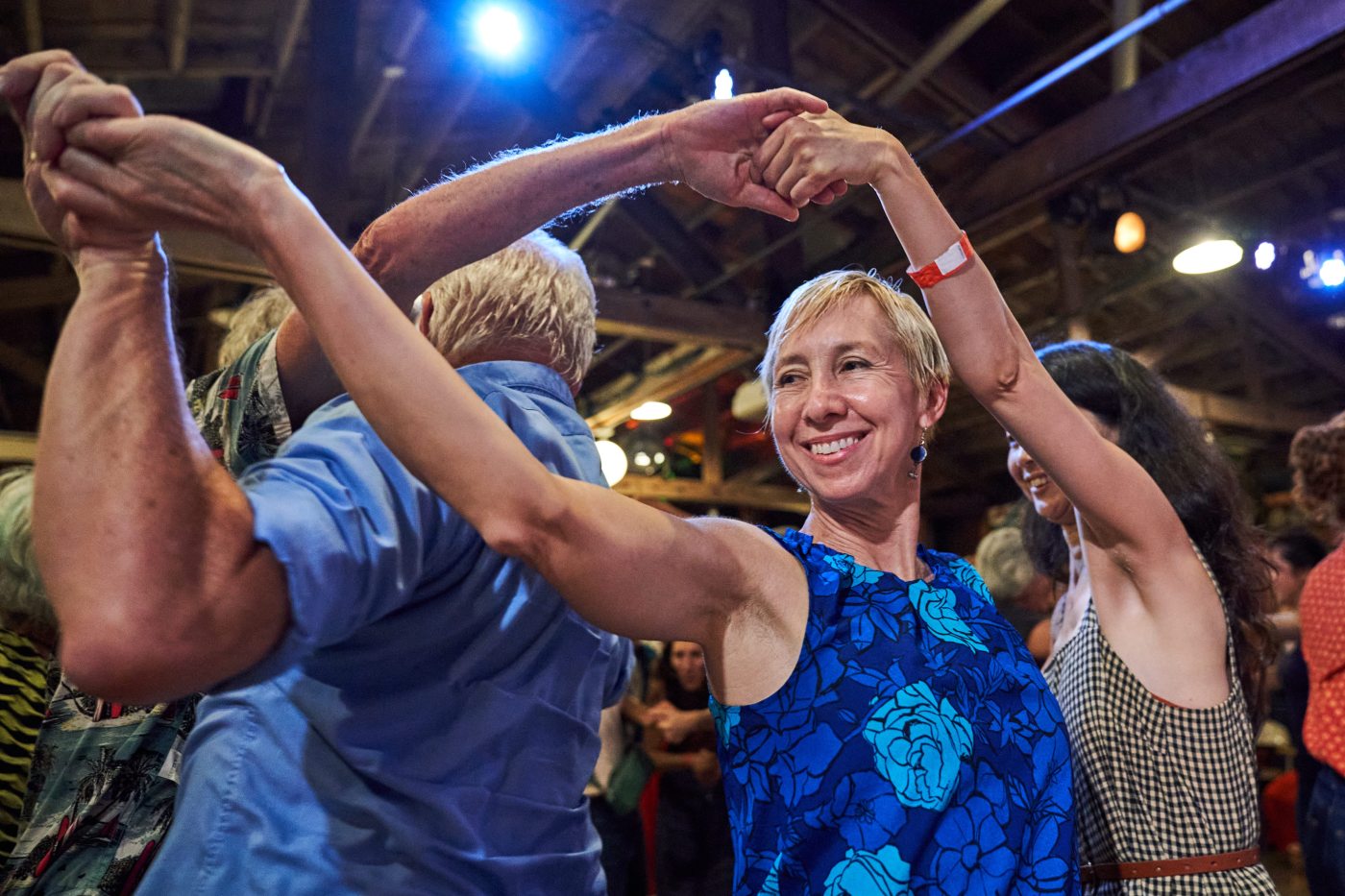
The traditional art of square dancing is experiencing a revival in the Bay Area, as showcased during the recent festival, Dare to Be Square West. Held at the Ashkenaz Music & Dance Community Center in Berkeley on November 8, 2025, the event attracted a diverse crowd eager to embrace this time-honored form of dance.
As the festival concluded, dancers filled the room, engaging in lively movements while responding to the calls from Tony Mates, a caller who traveled from Seattle to lead the festivities. “Take your partner and promenade!” he instructed, as participants formed lines and shifted rhythmically. The atmosphere was electric, blending joy and nostalgia, reminiscent of a bygone era.
The resurgence of square dancing is noteworthy, with local clubs such as the Lucky Steppers and South Bay Squares hosting regular events across the region. This is the first time the Dare to Be Square festival has been held in more than a decade, indicating a growing interest in this communal activity.
Evie Ladin, an Oakland musician and dance caller, noted the uptick in new participants, especially among younger generations. She remarked, “We’re seeing a serious influx of new dancers, including high school and college students. They are looking for something with human contact that requires little prior knowledge to jump in.” This sentiment resonates with many, as the dance offers a break from digital interactions.
The history of square dancing is deeply rooted in American culture. Influenced by early settlers and various cultural traditions, it was designated the national folk dance by Congress in 1982. Today, nearly half of U.S. states recognize it as their official dance, including California, which shares the title with Western swing.
Despite its rich heritage, square dancing has faced an image challenge. Some perceive it as outdated or associated with awkward school experiences. Mike Pogue, a club caller for the Rockin’ Jokers, acknowledged this perception but emphasized the dance’s enduring appeal. “The 1970s were a peak time for square dancing, and while interest waned with the rise of the internet and streaming services, we’re witnessing a comeback,” he stated. The Rockin’ Jokers, based in San Jose, have seen their membership grow from 30 in 2021 to about 100 today.
Square dancing’s appeal extends beyond just the steps. It fosters community and connection. Ladin described it as “friendship set to music,” noting that casual relationships and even marriages have blossomed from these gatherings. She humorously referred to square dancing as “old-time Tinder,” highlighting its social aspect.
The festival atmosphere is further animated by the creativity of callers who guide dancers with engaging and rhythmic instructions. “You’re calling in a way that tells people what to do right before they have to do it,” Ladin explained. “It just flows really smoothly.”
For those interested in experiencing this vibrant community, regular square dances are held in various locations. The Hillside Club in Berkeley hosts dances on the third Friday of each month, while the Polish Club in San Francisco features events on the second Friday. The Rockin’ Jokers dance every Wednesday at the Cambrian Park United Methodist Church in San Jose.
As square dancing continues to evolve, its essence remains the same: a celebration of movement, music, and community. The energy felt on the dance floor, as described by Ladin, is akin to that of a rave, creating a shared experience that releases endorphins and fosters connections among participants.
The recent success of the Dare to Be Square West festival exemplifies the spirit of square dancing as it reclaims its place in contemporary culture. As more individuals discover the joy of this traditional dance, it is poised not only for survival but for a bright and engaging future.