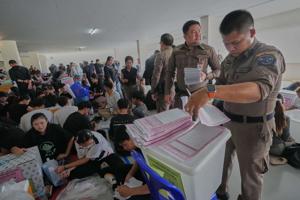
The Bhumjaithai Party, led by Prime Minister Anutin Charnvirakul, has emerged as the frontrunner in Thailand’s general election held on March 24, 2024. With approximately 87% of the votes counted, unofficial results indicate that Bhumjaithai has secured 195 seats in the 500-member House of Representatives. Despite this commanding lead, the party may require coalition partners to establish a governing majority.
As the election results unfold, the Bhumjaithai Party stands out in a fragmented political landscape. The party’s success can be attributed to a campaign focused on pragmatic policies aimed at addressing pressing national issues, including public health, infrastructure, and economic stability. The party’s platform resonated with voters seeking effective governance during a time of recovery from the COVID-19 pandemic.
While Bhumjaithai’s current seat count is substantial, it falls short of the simple majority required to govern independently. This raises the possibility of negotiations with smaller parties to form a coalition government. Political analysts suggest that potential partners may include parties that share similar policy goals or regional interests, enhancing the likelihood of a stable administration.
The election has seen a notable turnout, reflecting the public’s engagement with the democratic process. Voter participation is crucial, especially in a nation that has experienced political turmoil in recent years. The election results will have significant implications for Thailand’s future direction, particularly in the areas of economic recovery and social reform.
The Bhumjaithai Party’s performance marks a critical moment in Thai politics, as it navigates the complexities of coalition-building in a diverse political environment. The coming days will reveal whether the party can successfully align with others to secure the necessary support to form a government.
As political leaders prepare for negotiations, the country watches closely, eager to see how this election will shape Thailand’s governance in the coming years. The outcome not only affects the political landscape but also the daily lives of citizens who hope for effective leadership and sustainable development.