An international team of researchers has uncovered that primordial magnetic fields in the early universe could potentially reconcile the discrepancies surrounding the universe’s expansion rate, commonly referred to as the Hubble Tension. This gap between observed and calculated values has puzzled astronomers for years, creating a significant challenge in our understanding of cosmic evolution.
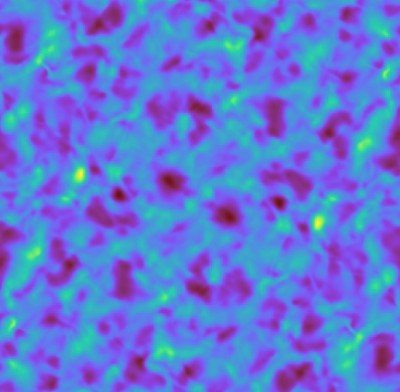
The study, published in the journal *Nature Astronomy* in March 2023, utilized advanced simulations to explore how magnetic forces operated shortly after the Big Bang. Researchers posited that these magnetic fields were not merely byproducts of the universe’s infancy but crucial players that influenced the dynamics of cosmic expansion.
Understanding the Hubble Tension
The Hubble Tension arises from the difference in measurements of the universe’s expansion rate. Observations using distant supernovae suggest a Hubble Constant of approximately 73 kilometers per second per megaparsec, while measurements based on cosmic microwave background radiation estimate it at around 67 kilometers per second per megaparsec. This inconsistency has led to debates regarding the fundamental aspects of cosmology and the underlying physics governing the universe.
The team’s findings indicate that primordial magnetic fields could account for this discrepancy by altering the behavior of matter and radiation in the early universe. These magnetic forces would have affected the rate of expansion, leading to a more accurate understanding of cosmic dynamics. According to lead researcher Dr. Emily Chen of the University of California, Berkeley, “Our simulations suggest that these magnetic fields played a significant role during the universe’s formative years, impacting the expansion rate we observe today.”
Impact on Cosmological Models
This discovery has significant implications for cosmological models. By incorporating primordial magnetic fields into existing frameworks, scientists may achieve a more unified understanding of the universe’s history. The research could lead to adjustments in models of dark energy and dark matter, components that remain largely mysterious in modern astrophysics.
The implications extend beyond theoretical physics, as understanding the correct expansion rate of the universe can influence various fields, including astronomy, physics, and even philosophy. As Dr. Chen highlighted, “Resolving the Hubble Tension is not just about numbers; it’s about understanding the very fabric of the universe.”
These findings also invite further investigation into the characteristics of magnetic fields in the universe. While the existence of such fields is established, their precise nature and impact on cosmic evolution remain areas ripe for exploration. Future research will aim to refine these simulations and gather observational data to validate the proposed mechanisms.
In summary, the revelation that primordial magnetic fields could bridge the Hubble Tension presents a promising avenue for resolving one of cosmology’s most perplexing issues. As scientists continue to delve deeper into the universe’s mysteries, this research serves as a reminder of the complexities that lie within the cosmos and the innovative approaches required to unravel them.