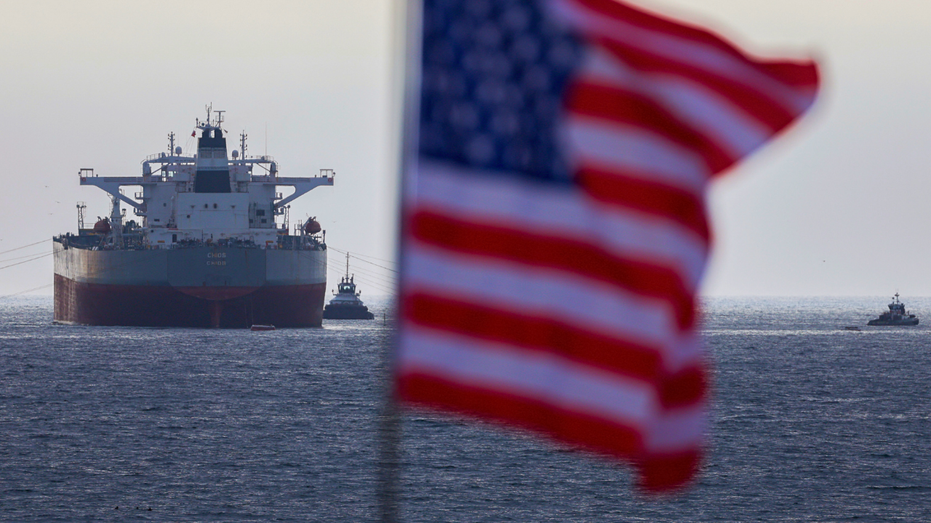
The conflict in the Middle East is causing a significant rise in oil prices, prompting the U.S. government to explore unconventional solutions. Stephen Moore, co-founder of Unleash Prosperity, emphasizes that record U.S. oil production could help mitigate the impacts of the turmoil. As tensions escalate, the White House is considering a government-backed insurance program aimed at reducing war-risk premiums for oil tankers navigating the dangerous waters of the Strait of Hormuz.
The Strait of Hormuz, a critical maritime passage that transports approximately 20 million barrels of oil daily, plays a vital role in the global energy supply, accounting for about one-fifth of the world’s liquefied natural gas. Recent military strikes, including U.S.-Israeli actions on February 27, 2026, have prompted fears of further disruptions, pressing insurers and shippers to reconsider the risks associated with transit through this corridor.
Insurance as a Tool Against Price Hikes
In light of increasing conflict, the White House is looking to insurance as a potential solution. President Donald Trump has mentioned that a government-backed insurance program could alleviate some financial pressures on private insurers and shipowners, effectively lowering costs for vessels operating in the region. This approach aims to stabilize shipping rates by mitigating the impact of rising war-risk premiums.
As geopolitical tensions rise, insurers have reacted by tightening their terms. Major maritime insurance companies, such as Gard, Skuld, and NorthStandard, have already canceled war-risk coverage for voyages through Iranian waters, leaving many vessels without necessary protection. In contrast, Lloyd’s of London maintains that coverage is still in effect for its vessels operating in the Gulf, with a combined hull value exceeding $25 billion. A spokesperson from Lloyd’s confirmed that discussions are underway with U.S. officials regarding possible options to enhance coverage.
Impact on Global Shipping and Prices
Despite the availability of some insurance, experts warn that the risks associated with traversing the Strait of Hormuz remain significant. Matt Smith, an analyst at Kpler, stresses the necessity of insurance for tankers in this region, noting, “You simply cannot pass through the Strait of Hormuz if you don’t have the insurance, given the high possibility of getting struck by a missile.” Even with insurance, the potential for attacks creates an atmosphere of uncertainty for ship crews.
In response to the escalating risks, Maersk, a leading name in global shipping, has announced it will suspend all vessel crossings through the Strait of Hormuz until further notice, indicating that service to Arabian Gulf ports could be delayed. Such decisions by major shipping companies can have immediate ripple effects, potentially leading to higher oil prices at the pump for consumers.
The extent to which American drivers feel the impact will depend on the duration of the disruptions and the stabilization of shipping and insurance markets. As the situation evolves, the world’s most crucial energy chokepoint continues to create tension for traders and consumers alike.