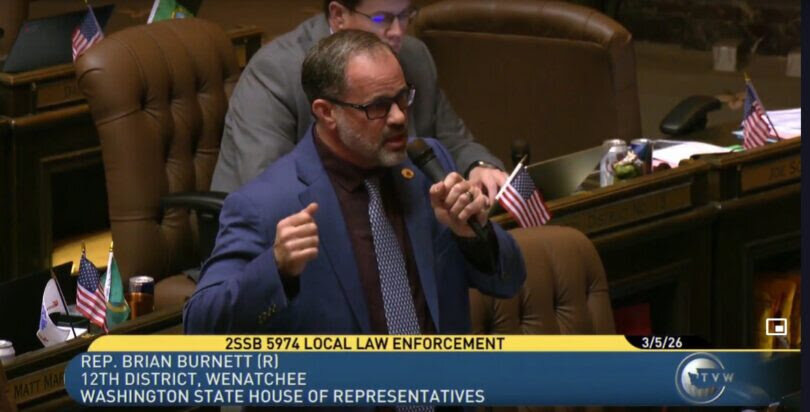
URGENT UPDATE: The Washington State House of Representatives has just approved a controversial bill that could allow the decertification of county sheriffs, raising significant concerns about voter authority and local governance. The legislation, known as 2SSB 5974, grants the Washington State Criminal Justice Training Commission the power to remove a sheriff from office if they lose their law enforcement certification.
This bill comes amid debates over law enforcement accountability and is set to have profound implications for elected sheriffs across the state. Under current Washington law, decertification typically occurs in cases of serious misconduct. However, the new measure could allow for more frequent removals, potentially declaring the sheriff’s position vacant.
Rep. Brian Burnett, a Republican from Wenatchee and former Chelan County sheriff, has vocally opposed the proposal. “This bill takes authority away from voters and puts it in the hands of an unelected board in Olympia,” he stated. Burnett emphasizes that sheriffs are directly accountable to the communities that elect them, and he warns that this shift undermines democratic principles.
Burnett’s criticism highlights a significant concern: the potential erosion of local authority. “If a sheriff violates the public trust, the voters already have a remedy through the recall process,” he added, asserting that empowering a state commission to remove elected officials could distance decision-making from local needs and issues.
The bill’s prime sponsor, Sen. John Lovick, a former sheriff from Snohomish County, argues that the legislation aims to create consistent professional standards for law enforcement leadership. Supporters believe the measure clarifies the process for removing a sheriff who loses their certification, promoting accountability within law enforcement.
However, Burnett warns that the bill could face legal challenges if it becomes law. “The constitutional validity of this proposal is going to be challenged in the courts,” he stated, emphasizing the contentious nature of the legislation.
The House approved the bill without support from Republican lawmakers, reflecting a deep partisan divide on this issue. Since the bill was amended, it must return to the Washington State Senate for concurrence before moving forward in the legislative process.
As discussions continue, the implications of this bill are critical for voters and law enforcement leaders alike. The outcome may redefine how accountability is managed within local law enforcement, making it essential for residents to stay informed about these developments.
For more information, contact Andrew Simpson at 509-433-7626 or via email at [email protected].