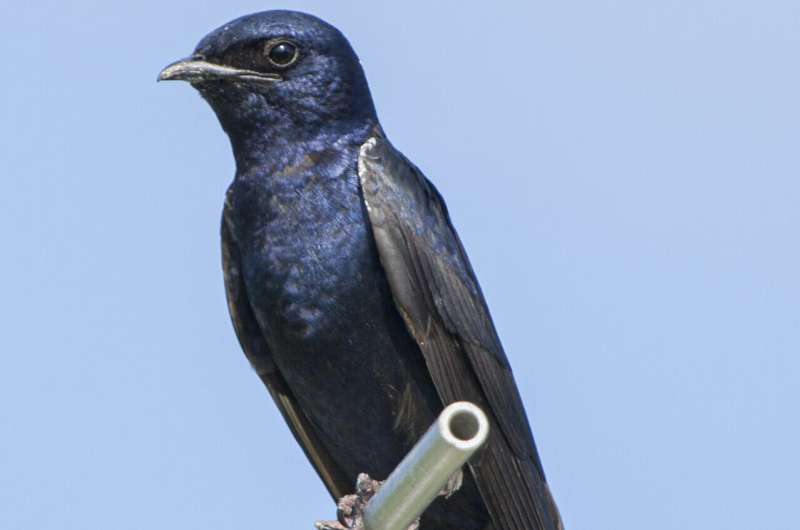
A severe winter storm known as the “Great Texas Freeze” in February 2021 resulted in the deaths of thousands of purple martins across Texas and Louisiana. A study led by biologists from the University of Massachusetts Amherst has revealed that this catastrophic event wiped out up to 27% of the breeding population of these migratory birds in the affected regions. The research highlights concerns that recovery from such losses may take decades, especially as climate change drives more frequent and severe weather events.
During a nine-day period, the Gulf Coast experienced two back-to-back deep freezes that brought heavy snowfall and frigid temperatures. This unprecedented cold snap caused significant disruptions, including power outages across Texas, and had dire consequences for local wildlife. The purple martins, which typically return from their South American wintering grounds around this time, faced devastating losses as they arrived in a drastically altered environment.
Maria Stager, an assistant professor of biology at UMass Amherst and the study’s lead author, emphasizes the challenges faced by these early-returning birds. “I hate the cold, but I love birds. That’s likely why I’m especially drawn to studying how they survive the winter,” she stated.
The purple martins are among the first migratory birds to reach the U.S. Gulf Coast each year, with adults returning as early as January. This timing, while advantageous for nesting, renders them vulnerable to rare winter storms. Climate change has made weather patterns more unpredictable, leading to concerns that such extreme events will become increasingly common.
To assess the impact of the freeze, Stager and her colleagues partnered with the Purple Martin Conservation Association (PMCA) and Louisiana State University. Together, they established a historical baseline to compare the mortality rates caused by the freeze. The PMCA, founded nearly 40 years ago, mobilized its members across North America to document the storm’s impact.
“People in the Gulf States look forward to the return of purple martins each year,” Stager remarked. “When they noticed the birds dying, they reached out to us for guidance.” Joe Siegrist, president and CEO of the PMCA, noted the significance of the situation. “When we recognized this unprecedented research opportunity, we mobilized our community to monitor storm-related mortality and preserve samples for scientific study.”
Analysis of the data gathered by citizen scientists revealed that the storm resulted in the deaths of adult purple martins at up to 52% of monitored breeding sites. Those that survived faced delayed reproductive cycles, leading to fewer chicks hatching in the spring of 2021. The repercussions of the freeze extended beyond immediate mortality; during the 2022 migration season, purple martins arrived at their breeding grounds two weeks later than usual.
By 2023, some patterns began to normalize, but recovery remains uncertain. The researchers estimated that full population recovery could take between six to seven years, provided there are no further extreme weather events. The decline in nesting success poses potential long-term impacts, as purple martins were already experiencing population decreases in Texas and Louisiana before the freeze.
Stager’s research indicates that even robust populations can be vulnerable to repeated mortality events. “People often ask me why I study cold weather when I’m interested in climate change. But if birds are to have a future, we need to understand how they survive unpredictable conditions, including unexpected cold spells,” she explained.
The findings underscore the urgent need for continued monitoring and conservation efforts to support the recovery of the purple martin population, highlighting the broader implications of climate change on migratory species. The study, published in Nature Ecology & Evolution, serves as a critical reminder of the intricate connections between climate events and wildlife survival.