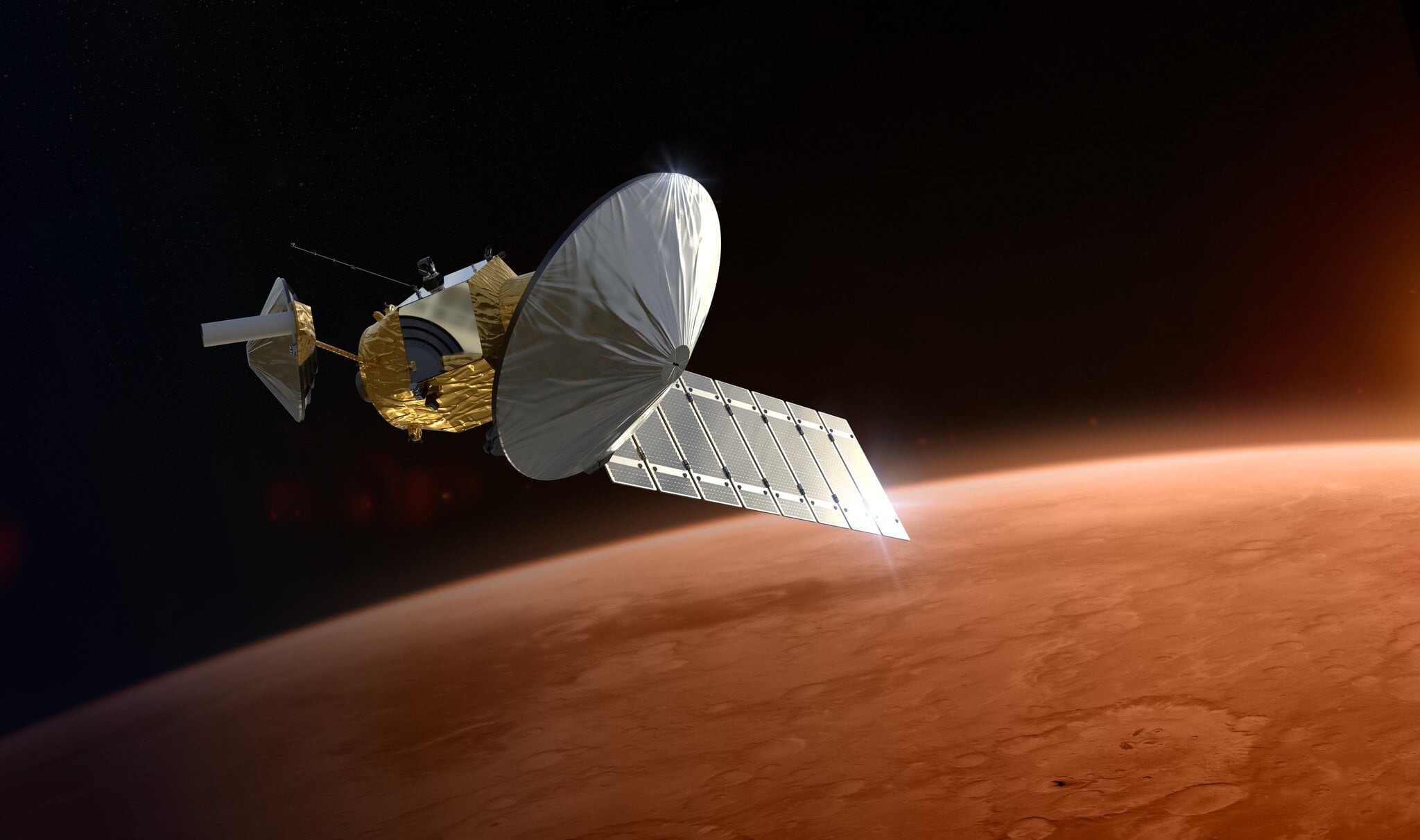
NASA has detailed its objectives for the upcoming Mars Telecommunications Network, a communications orbiter funded through the budget reconciliation bill passed in July 2025. The agency aims to enhance communications capabilities for spacecraft operating on and around Mars. This initiative is backed by a funding allocation of $700 million designed to ensure “robust, continuous communications” for various missions.
On February 24, 2024, NASA released draft objectives and requirements for the Mars Telecommunications Network, previously referred to as the Mars Telecommunications Orbiter. The spacecraft is expected to be delivered by the end of 2028, although there is no explicit requirement for its launch by that date.
Key Objectives and Requirements
NASA has outlined four primary objectives for the Mars Telecommunications Network. These include providing communications services for spacecraft expected to operate at Mars through 2035, offering positioning, navigation, and timing (PNT) services, and facilitating communications for existing Mars spacecraft. Additionally, the orbiter will be tasked with supporting missions that demonstrate entry, descent, and landing technologies on Mars.
The draft requirements stipulate that the spacecraft must operate for a minimum of five years, support data rates of up to 100 megabits per second for direct links with Earth, and maintain compatibility with NASA’s Deep Space Network. While the document does not mandate the use of optical communications links—which could provide higher data rates—it does not exclude them.
NASA is clear that the spacecraft will focus solely on communications and navigation services. Some scientists had expressed hopes for including scientific instruments on the orbiter, but budget and timeline constraints seem to have ruled this out.
Procurement Process and Eligible Companies
A procurement schedule for the Mars Telecommunications Network beyond the draft request for proposals has not yet been released. Comments on the draft objectives and requirements are due by March 10, 2024. NASA indicated that the draft and final Requests for Proposals will adhere to the provisions of the budget reconciliation act, specifically limiting eligibility to companies that received NASA funding in fiscal years 2024 or 2025 for commercial design studies related to alternative Mars Sample Return approaches.
Initially, NASA had published a procurement notice listing eight eligible companies, including Blue Origin, L3Harris, Lockheed Martin, Northrop Grumman, Rocket Lab, SpaceX, Quantum Space, and Whittinghill Aerospace. This notice was retracted the following day without explanation. Both Blue Origin and Rocket Lab have been particularly vocal about their interest in the Mars Telecommunications Network, eyeing it as a key opportunity.
Blue Origin has outlined its capabilities, stating that the Mars Telecommunications Orbiter will integrate its New Glenn launch vehicle with the Blue Ring Mars-capable spacecraft platform. Although New Glenn has launched twice, the full Blue Ring spacecraft has yet to fly, with only components tested in space.
Rocket Lab has also touted its qualifications, emphasizing its experience with deep space missions and reliable launch vehicles. In a recent blog post, Rocket Lab highlighted its development of the twin ESCAPADE spacecraft, which launched in November 2023, as well as components utilized in other Mars missions.
During a recent earnings call, Peter Beck, Rocket Lab’s CEO, reiterated the company’s commitment, stating, “We’ve made no secret of the fact that we think Rocket Lab is the strongest contender to deliver NASA’s Mars Telecommunications Orbiter program.” He expressed confidence in the company’s positioning for the competition, asserting that Rocket Lab is focused on fulfilling NASA’s objectives effectively.
As NASA moves forward with the Mars Telecommunications Network, the competition among aerospace companies will intensify, with each vying to play a crucial role in enhancing communication capabilities on the Red Planet.