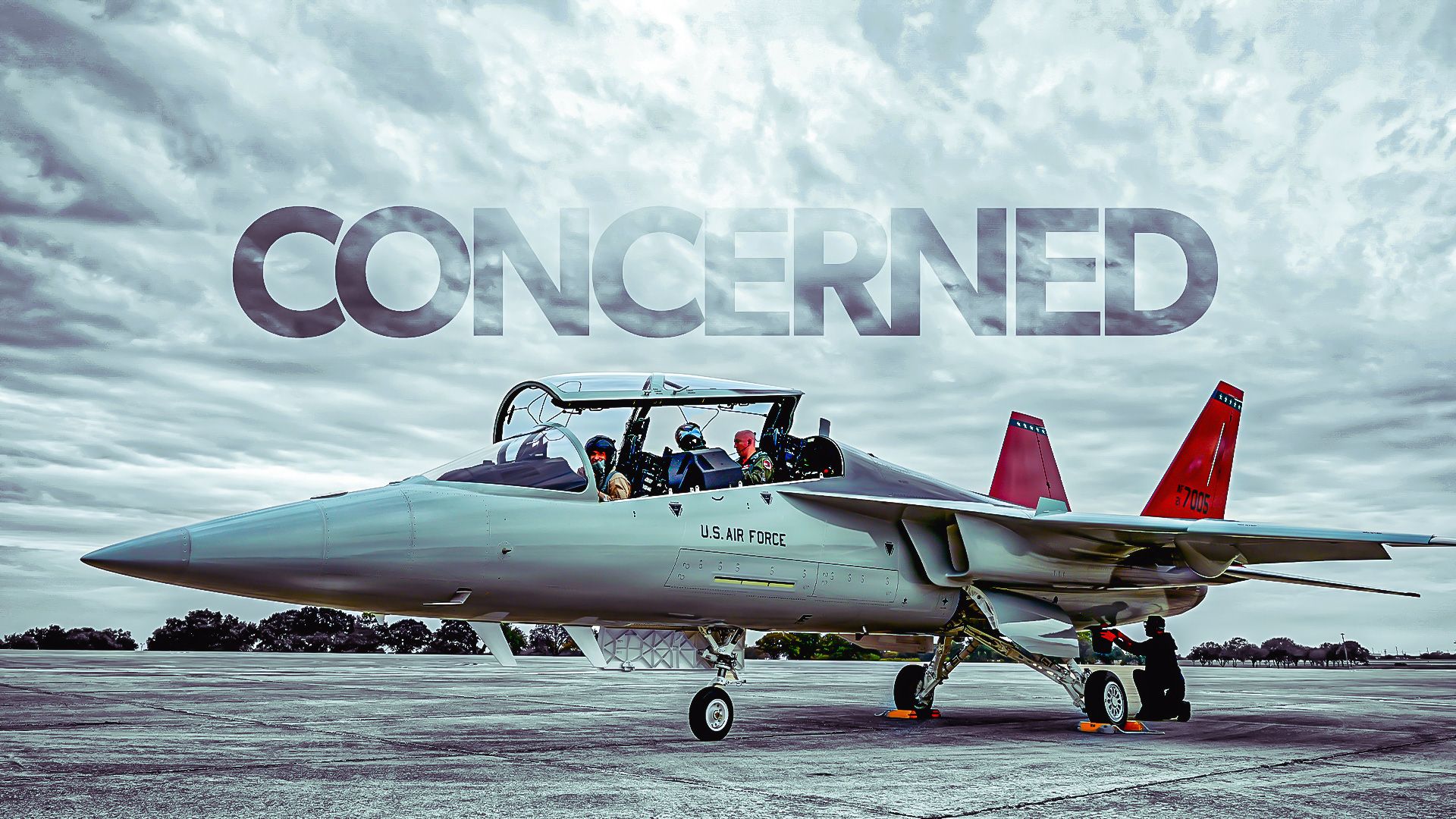
The United States Air Force (USAF) is grappling with significant challenges related to the Boeing T-7A Red Hawk, the long-awaited successor to the aging Northrop T-38 Talon trainer. Initially introduced as a modern solution for pilot training, the T-7A has encountered various setbacks that raise concerns about its readiness and effectiveness. As the program approaches a critical acquisition milestone, the USAF is scrutinizing issues related to cost overruns, engineering delays, and broader implications for pilot production.
Key Issues Surrounding the T-7A Red Hawk
The transition from the T-38, which has been in service since 1959, to the T-7A is pivotal for the USAF. The T-38’s analog design lacks the advanced capabilities of modern aircraft, making it imperative to integrate a new trainer that can effectively prepare pilots for fifth-generation fighters like the F-35 and B-21. The T-7A, developed in collaboration with Saab, was expected to address this gap with its advanced features aimed at enhancing pilot training.
However, the T-7A program has become one of the most scrutinized within the Department of the Air Force. Factors such as engineering challenges, environmental compliance, and budgetary pressures are complicating the rollout. As the T-7A is slated to form the backbone of future pilot training, any instability in its development could have far-reaching consequences for operational readiness and squadron effectiveness.
Engineering Challenges and Financial Strain
The T-7A was touted as a cutting-edge advancement due to its development through digital engineering, utilizing virtual modeling and advanced simulations. Yet, real-world testing has uncovered issues that the digital models did not predict, leading to necessary design modifications and delays. For instance, structural testing revealed the need for reinforcements in the fuselage, while multiple revisions were required for the escape system to accommodate a wider pilot weight range. These challenges have pushed initial operational capability back to 2027, significantly later than anticipated.
Financially, the T-7A program is under pressure as it approaches Milestone C, a crucial point that will determine if the aircraft can move into full-rate production. The program operates under a $9.2 billion fixed-price development contract, which has already led to Boeing absorbing over $2 billion in losses due to various challenges. The USAF’s simultaneous funding demands for other modernization programs, including the B-21 Raider and F-35 upgrades, create a competitive environment for budget allocations.
Environmental compliance also presents an additional layer of complexity. Under the National Environmental Policy Act (NEPA), the Air Force must conduct Environmental Impact Statements (EIS) before introducing new aircraft. The T-7A is scheduled for deployment at multiple bases, including Joint Base San Antonio and Columbus Air Force Base, each requiring thorough environmental reviews. The timing of these regulatory processes is crucial, as delays could further complicate the T-7A’s introduction.
As the program progresses, the USAF remains focused on ensuring that the T-7A can effectively prepare future pilots for modern combat scenarios. The embedded training system, designed to simulate complex operational environments, will be essential for developing the skills necessary in today’s high-tech warfare landscape.
The stakes are high; if the T-7A fails to deliver on its promises, the implications for pilot training and readiness could resonate throughout the Air Force for years to come. The T-7A is more than just a new aircraft; it represents a fundamental shift in pilot training doctrine, one that the Air Force cannot afford to get wrong.
In conclusion, while the T-7A Red Hawk holds the potential to modernize and stabilize pilot training for the USAF, the program’s current challenges necessitate careful management to avoid creating a new bottleneck in a system already in transition. The Air Force’s ability to navigate these complexities will be pivotal in shaping the future of its pilot training pipeline.