Astronomers have uncovered significant insights into the origins of carbon and oxygen by examining the spectra of nearby M dwarf stars. This research, led by Darío González Picos from Leiden University, sheds light on the processes through which these essential elements are generated and dispersed in the universe.
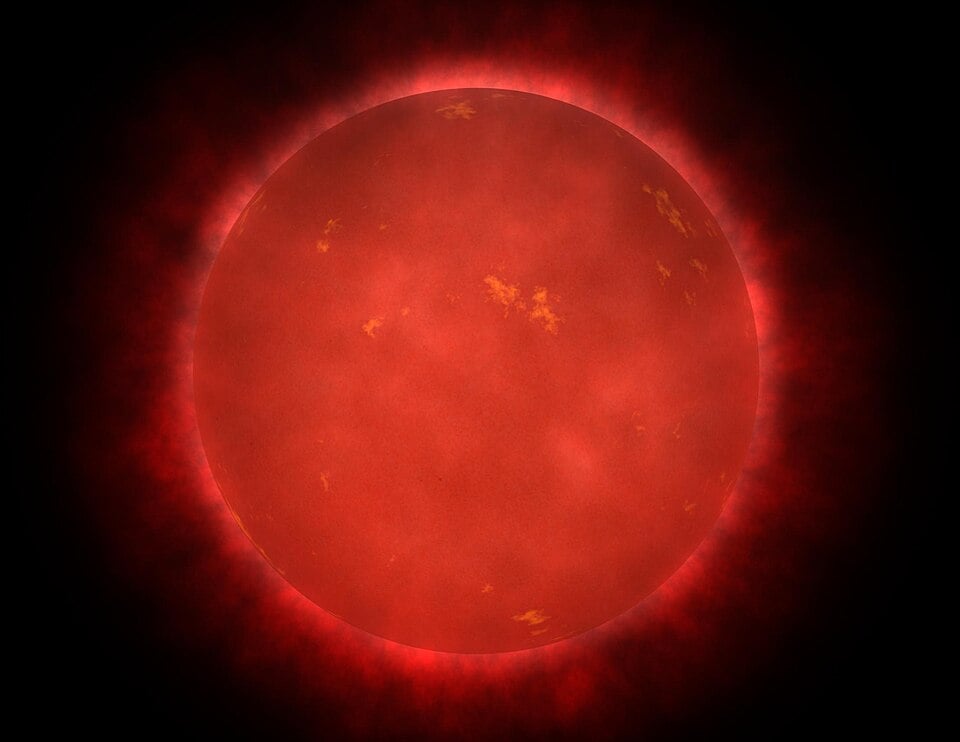
The study focused on high-resolution spectra from a dataset collected initially for the purpose of searching for exoplanets. The team analyzed the chemical signatures of 32 M dwarf stars, which are among the Galaxy’s most prevalent stars. These stars, known for their longevity during the main sequence phase, preserve the traces of their chemical evolution, providing a rich source of information about the creation of elements.
Understanding the formation of carbon and oxygen is crucial, as these elements are foundational to life on Earth. We are carbon-based beings, and oxygen is vital for respiration. The research aims to deepen our knowledge of how these elements were formed in stars and subsequently distributed throughout the cosmos.
Insights into Stellar Processes
The process of element formation in stars, known as stellar nucleosynthesis, involves complex nuclear fusion reactions. According to González Picos, “Nuclear fusion in stars is a complex process and is just the starting point of chemical evolution.” Our own Sun fuses hydrogen into helium and will continue this process for billions of years. Eventually, it will exhaust its hydrogen supply, leading to the fusion of helium into heavier elements, including isotopes of carbon and oxygen.
The current research reveals that stars with lower chemical enrichment than the Sun exhibit fewer rare isotopes of these elements. The findings align with predictions from models of galactic chemical evolution, offering a new tool for understanding the history of element formation in the universe.
The research team, including Ignas Snellen and Sam de Regt, employed data from the Canada France Hawai’i Telescope located on Mauna Kea, Hawaii. They meticulously sifted through the data archives to measure the ratios of carbon and oxygen isotopes in the atmospheres of the studied stars. These isotopes vary in their neutron counts, providing intricate details about the stars’ chemical histories.
Cultural and Scientific Significance
The implications of this research extend beyond academic interest. It contributes to a broader understanding of our cosmic origins and the processes that shaped the universe as we know it. As González Picos notes, “This cosmic detective story is ultimately about our own origins, helping us to understand our place in the long chain of astrophysical events.”
The observations were initially intended for a different purpose, namely the discovery of exoplanets. González Picos’ innovative approach to utilize the high-resolution spectra for isotope research has yielded impressive results.
This research not only enhances our comprehension of stellar chemistry but also illustrates the interconnectedness of the universe’s elements and the life forms they support. The findings may inspire further studies into the chemical evolution of stars and their role in creating the building blocks of life.
In conclusion, the exploration of M dwarf stars has opened new pathways in understanding how fundamental elements like carbon and oxygen originated and evolved. As scientists continue to unravel these cosmic mysteries, the connection between stellar processes and life on Earth becomes increasingly profound.