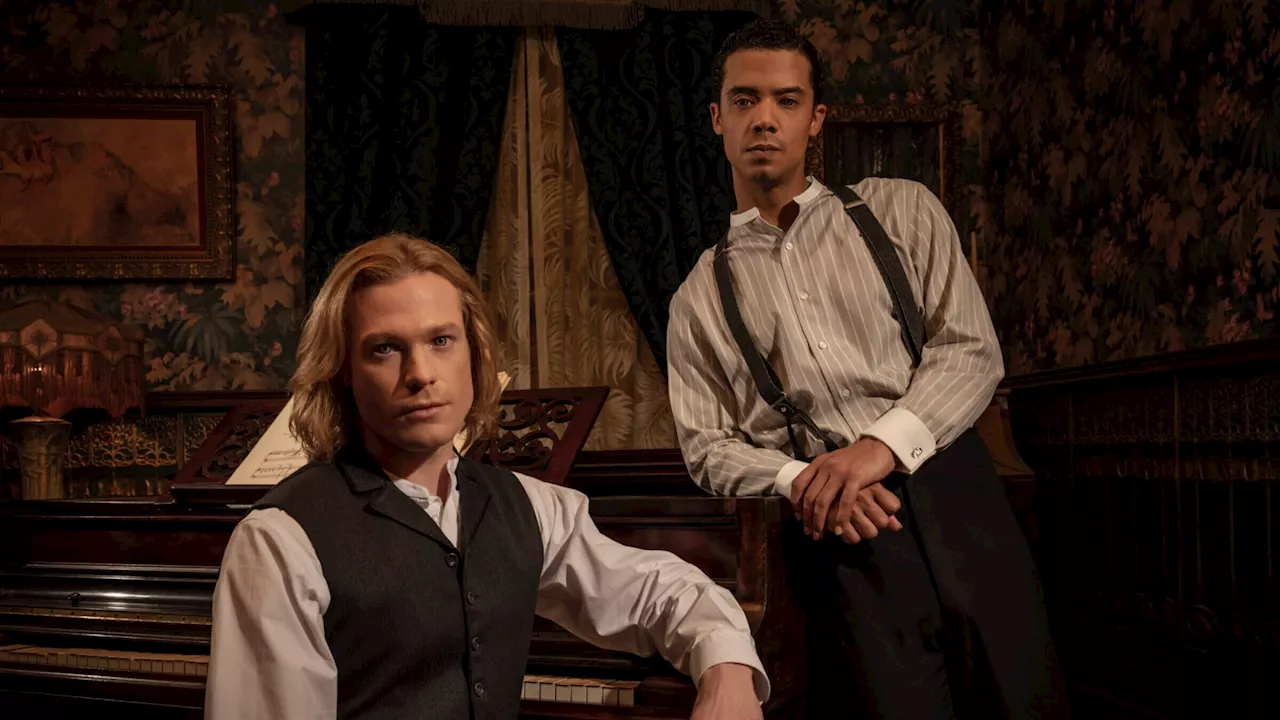
AMC’s adaptation of Interview With the Vampire has garnered significant praise for its acting and production quality, yet it has also sparked debate among fans of the original novels by Anne Rice. As the series prepares for its third season in 2026, critics point out that while the show offers a fresh take on the classic story, it diverges considerably from the source material, leading to misunderstandings of key characters.
The drama, starring Sam Reid as Lestat de Lioncourt and Jacob Anderson as Louis de Pointe du Lac, has been celebrated for its engaging storytelling and high-caliber performances. Since its debut in 2022, it has captivated audiences, presenting the complex relationship between Louis and Lestat in a way that showcases the emotional depth of their encounters. The series transforms Louis into a queer Black man in early 20th-century New Orleans, a significant departure from his portrayal as a white French slave owner in the original text. Critics note that this reimagining offers a contemporary lens through which to explore the characters’ dynamics.
Despite these positive changes, the adaptation has faced scrutiny for its fundamental misunderstandings of Louis. In AMC’s version, Louis’s internal struggle revolves around self-acceptance and his sexuality, often overshadowing the existential themes present in Rice’s novels. The character’s profound questions about morality, faith, and the meaning of existence are somewhat sidelined in favor of a narrative that emphasizes his relationships.
In the novels, Louis’s turmoil is deeply philosophical, stemming from his grappling with the implications of immortality and the moral dilemmas that arise from his vampiric existence. The emotional weight of his brother Paul’s death adds layers to his character that the television series appears to simplify. This shift alters the audience’s understanding of Louis, focusing more on his personal identity than on the broader existential questions Rice posed.
The portrayal of Lestat also shifts significantly in AMC’s adaptation. While the original Lestat is a multifaceted character who oscillates between charm and menace, the series amplifies his narcissism, presenting him as a more overtly abusive figure. This transformation not only impacts Lestat’s character but also changes the chemistry between him and Louis, as the nuanced interplay found in the novels is reduced to a more straightforward depiction of conflict.
As AMC’s series approaches its third season, which will adapt the second book in Rice’s series, concerns grow about potential further misinterpretations. The upcoming season promises to delve into Lestat’s history, including the character of Gabrielle, Lestat’s mother, who will be renamed Gabriella in the series. This change is justified by the showrunners as a nod to her Italian heritage, but it raises questions about how the character’s original traits will be preserved.
In a recent interview, showrunner Rolin Jones remarked on the need for “feminine vampiric blood,” referencing Gabriella’s role in the story. However, this description contrasts sharply with how Gabrielle is characterized in the books, where she embodies a more androgynous presence. Many fans express concern that this alteration could strip away essential aspects of Gabrielle’s identity that contribute to the depth of Lestat’s character and their intricate relationship.
While adaptations often require changes for the screen, the key issue lies in how these changes affect the core themes and characterizations that made the original work resonate with readers. AMC’s Interview With the Vampire is undeniably strong television, exhibiting some of the best performances in recent years. Yet, as the series continues, it risks losing the soul of Rice’s narrative in favor of a version that, while entertaining, may lack the depth fans cherished in the novels.
As viewers await Season 3, there is hope that the upcoming episodes will navigate these character complexities with greater sensitivity, potentially bridging the gap between Rice’s original vision and the current adaptation. In doing so, AMC could enrich the series and honor the legacy of one of literature’s most enduring vampire tales.