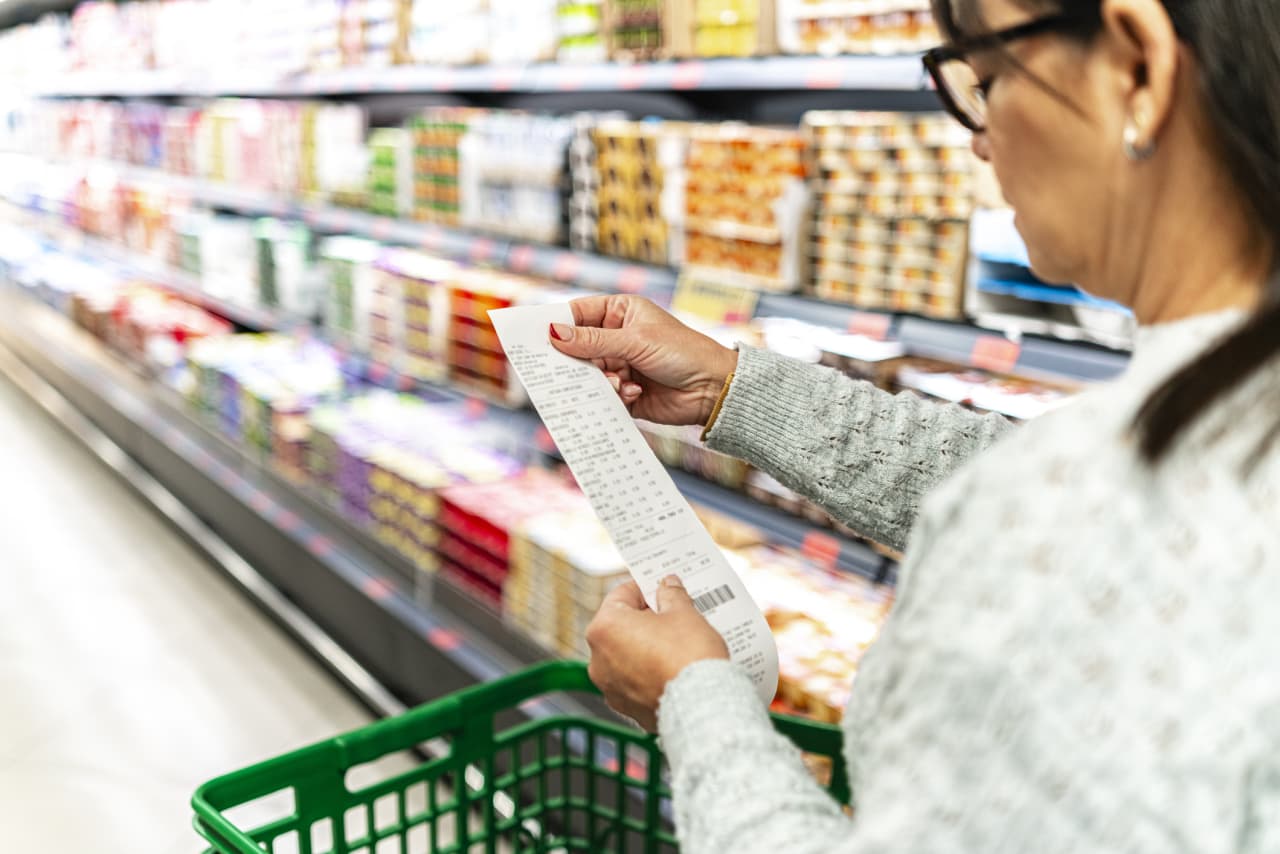
UPDATE: As inflation continues to soar, consumers are urgently seeking cost-saving solutions, with millions flocking to discount grocers like Aldi. This trend highlights a growing divide in the K-shaped economy, where financial disparities are widening among different income levels.
Newlyweds Brittany Zwier and Frank Martinez, earning over $100,000 annually, have recently switched to shopping exclusively at Aldi to stretch their budgets further. “We’ve cut back on eating out,” said Martinez. “Maybe once every three months now, we’ll go out.” This change reflects the harsh realities faced by many Americans grappling with rising costs.
According to a recent survey, the cost of living, particularly for housing and food, has become a pressing issue for families across the nation. Despite indications of a resilient economy, the average consumer is tightening their belts, with inflation forcing even higher-income households to reconsider their spending habits.
The stark divide in consumer behavior is evident as the top 10% of earners accounted for a record 49.2% of total U.S. consumer spending in Q2 2023, according to Moody’s Analytics. Economists warn that this reliance on a small segment of the population poses significant risks for future economic stability.
“The K-shaped economy means that some Americans, usually the wealthiest, are doing just fine while many struggle to keep up with rising expenses,” noted Heather Long, chief economist at Navy Federal Credit Union. She emphasized that wage gains are diminishing, while inflation continues to push basic costs higher.
For families like Michael Torres and his wife, who earn less than $50,000 per year, every dollar counts. “As much as you can save is important,” Torres said outside an Aldi in New Jersey. “If you need something, you get it.” This sentiment echoes the experiences of countless shoppers who are prioritizing essentials over luxuries.
To adapt to the current economic climate, Zwier and Martinez have also reevaluated their grocery choices, opting for more affordable options at discount stores. An Aldi spokesperson confirmed, “We’re seeing shoppers across all demographics turning to Aldi, because no one wants to pay more for groceries than necessary.” Aldi plans to expand its footprint, with 800 new stores set to open nationwide by 2028.
The impact of rising utility costs is also felt acutely by families. “We’re using less, and it costs more,” Zwier explained, illustrating the challenge of managing household expenses amid increasing prices. Experts agree that the affordability crisis is affecting consumers across all income brackets.
As this economic landscape unfolds, observers are closely monitoring consumer spending patterns. “Whether the economy slips into a recession in 2026 hinges almost entirely on the top 20%,” Long warned. If high-income households falter, the repercussions could be felt across the entire economy.
With the potential for continued inflation and a tightening job market, consumers are left to navigate a difficult financial path. As the urgency grows, the trend toward discount shopping is likely to persist, underscoring the need for practical solutions in these challenging times.
Stay tuned for further updates as this story develops. For now, the shift toward discount grocers like Aldi reflects a significant change in consumer behavior, driven by the relentless pressures of inflation.