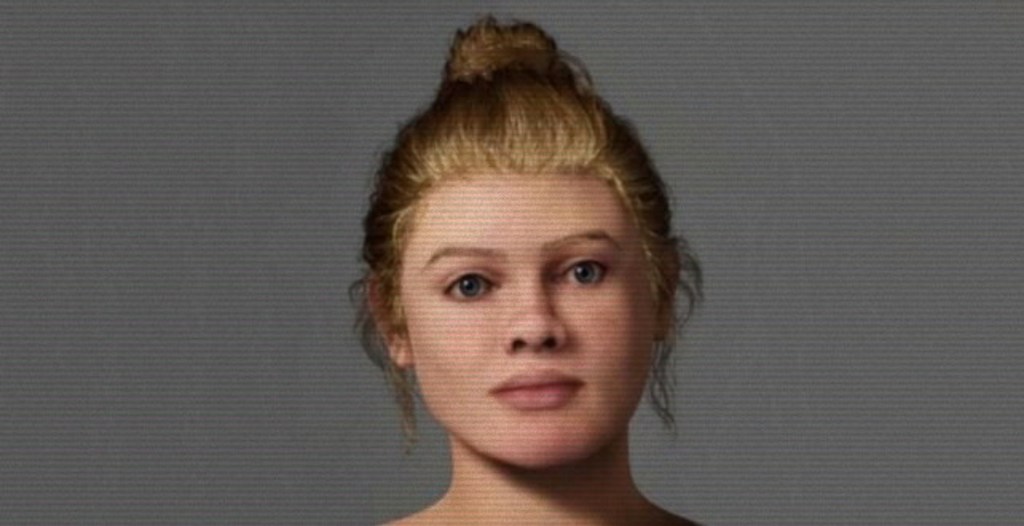
BREAKING: A decade-long mystery surrounding the identity of the “Beachy Head Woman” has been solved through groundbreaking DNA analysis. Researchers at London’s Natural History Museum have confirmed that the remains, discovered in southern England, belong to a woman who was local to the region during the Roman occupation, not an immigrant as previously speculated.
This urgent revelation, published in the Journal of Archaeological Science, challenges long-held beliefs about her ancestry and highlights the limitations of earlier scientific methods. For years, the Beachy Head Woman was believed to be the “first Black Briton” or a migrant from the eastern Mediterranean, but new DNA evidence shows no recent African ancestry.
The analysis indicates that she lived between 129 and 311 CE, likely between the ages of 18 and 25, and stood just under five feet tall. Researchers found that her genetic profile closely matches that of both ancient and modern populations in rural Roman-era Britain. Notably, she likely had light hair, blue eyes, and a skin tone that ranged from pale to dark.
This finding underscores the critical importance of advanced genetic testing in correcting historical inaccuracies that have often been influenced by societal biases. The previous reliance on craniometric analysis, a widely discredited method based on skull shape, reflects deep-rooted racism and has perpetuated flawed theories about ancestry.
In light of this major development, researchers stress that the Beachy Head Woman serves as a poignant reminder of how easily the past can be misinterpreted. By projecting modern ideas onto ancient findings, misconceptions can arise, leading to significant misrepresentations of history.
As the implications of this study reverberate, experts encourage further research to uncover more about the lives of individuals like the Beachy Head Woman. The findings prompt a call for re-evaluation of historical narratives shaped by outdated scientific practices.
This breakthrough not only reshapes our understanding of the Beachy Head Woman but also emphasizes the importance of accurate scientific inquiry in revealing the truth about our shared past. Stay tuned for more updates on this developing story, as further investigations may shed additional light on the rich history of Britain during the Roman era.