Researchers are making strides in the search for axions, a theoretical particle that may explain dark matter, by studying white dwarf stars. In a paper published in November 2025 on the open access server arXiv, astronomers employed archival data from the Hubble Space Telescope to investigate the potential cooling effects of axions on these dense remnants of stars.
The axion was initially proposed decades ago to address challenges associated with the strong nuclear force. Although early attempts to detect axions through particle collider experiments were unsuccessful, renewed interest emerged as scientists considered their role in the dark matter puzzle. The findings suggest that axions could be present throughout the universe, although they remain largely undetectable.
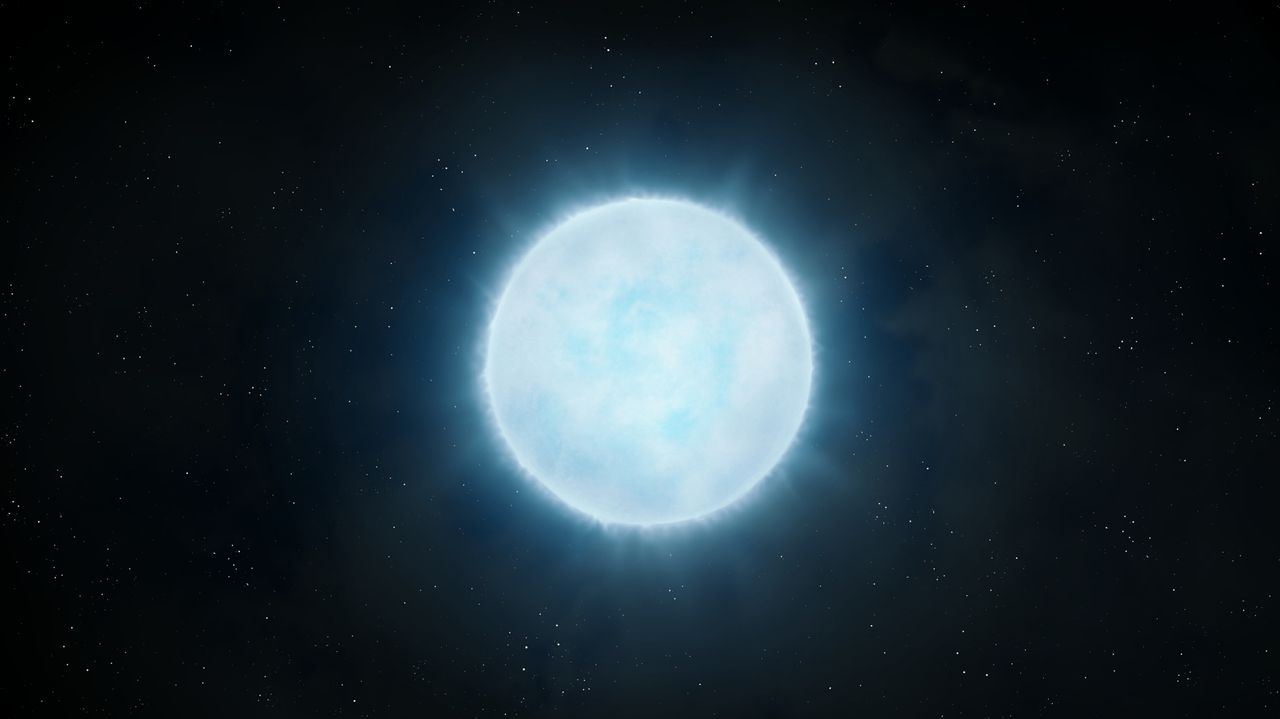
White dwarfs are particularly significant in this research. These stellar remnants can contain the mass of the Sun within a volume smaller than that of Earth. They are stabilized against collapse through a phenomenon known as electron degeneracy pressure. This occurs when a large number of free-moving electrons prevent further compression, according to the principles of quantum mechanics.
The research team theorized that axions might be produced within white dwarfs when electrons, moving at nearly the speed of light, collide. As the axions escape, they would draw energy away from the star, leading to a more rapid cooling process. To test this hypothesis, the researchers used simulations to predict how the temperature of white dwarfs would change over time, factoring in both axion cooling and normal stellar evolution.
Using data from the globular cluster 47 Tucanae, where the white dwarfs formed around the same time, the team analyzed the star population. Their investigation revealed no evidence of axion-induced cooling. Nevertheless, the results provided significant constraints on the likelihood of electrons efficiently producing axions, indicating it occurs only once in every trillion interactions.
While this outcome does not entirely rule out the existence of axions, it does suggest that the direct interaction between electrons and axions is unlikely. As a result, the search for axions will likely require more innovative detection methods.
This research highlights the ongoing efforts to understand one of the universe’s most elusive components, dark matter, and underscores the intricate relationship between theoretical physics and astronomical observations. As scientists continue to explore these profound questions, the study of old, dying stars like white dwarfs remains a vital avenue for discovery in the quest to unlock the mysteries of the cosmos.