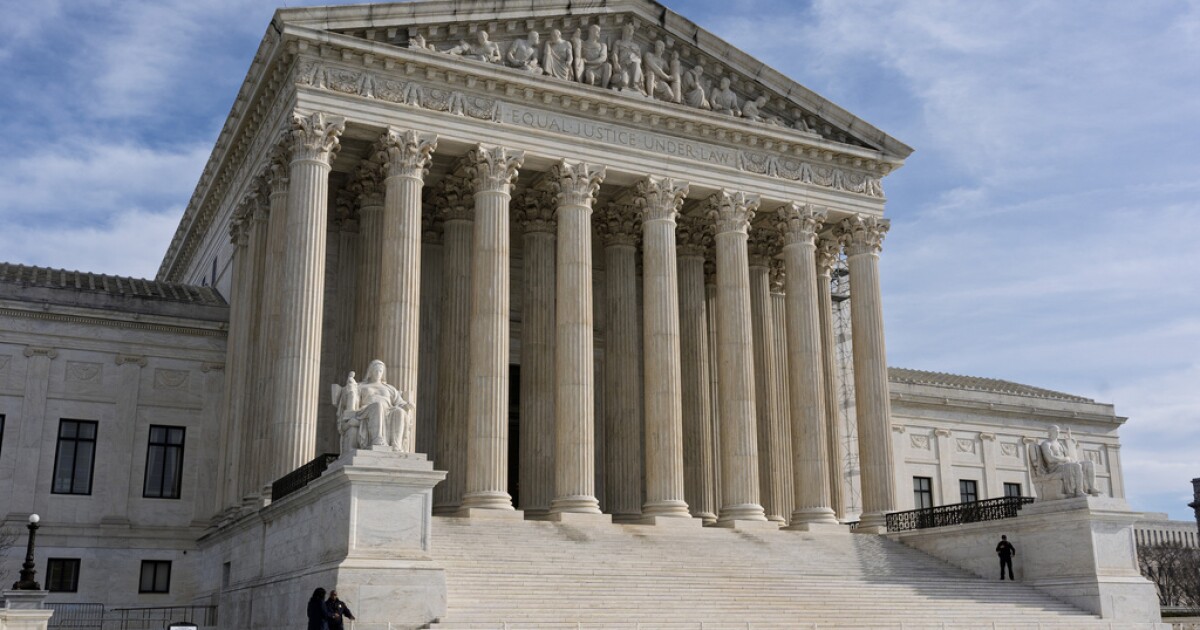
The Supreme Court is set to review a significant challenge to political party spending limits that have been in place for over two decades. The case, supported by the Republican Party and the Trump administration, questions whether federal coordinated party expenditure limits violate the First Amendment. This legal review could potentially overturn a 2001 ruling that upheld federal election laws aimed at preventing large donors from circumventing contribution caps.
The Supreme Court’s examination centers on the implications of these spending limits on free speech. Advocates for the limits, primarily from the Democratic Party, urge the Court to maintain the existing regulations, which have been designed to ensure transparency and reduce the risk of corruption in elections. A federal appeals court previously sided with the Democrats, affirming the law’s validity.
The Federal Election Commission and Republican leaders contend that the Court should adopt a critical stance toward these expenditure limits. Historically, the conservative majority on the Court has shown a tendency to invalidate various campaign finance regulations. Notably, the 2010 Citizens United decision opened the floodgates for unlimited independent spending, fundamentally altering the landscape of campaign financing in the United States.
Former Senator Russ Feingold, a Democrat from Wisconsin and a co-author of pivotal campaign finance reform legislation with former Senator John McCain, has publicly urged the Court to uphold the spending limits. In a brief submitted to the Supreme Court, Feingold’s attorneys emphasized the necessity of campaign finance regulations. They stated, “For a representative democracy to thrive, elected officials must be responsive to their constituents and avoid even the appearance of corruption.”
Feingold’s remarks highlight the ongoing debate about the role of money in politics. Proponents of campaign finance reform argue that unrestricted spending can undermine public trust in elected officials and the electoral process itself. They contend that maintaining strict limits is essential to safeguard democratic integrity.
As the Supreme Court prepares to hear this case, its outcome could have far-reaching implications for future elections and the influence of money in politics. The decision is anticipated to be closely watched, with potential ramifications for how political parties engage with their donors and candidates in the years to come.