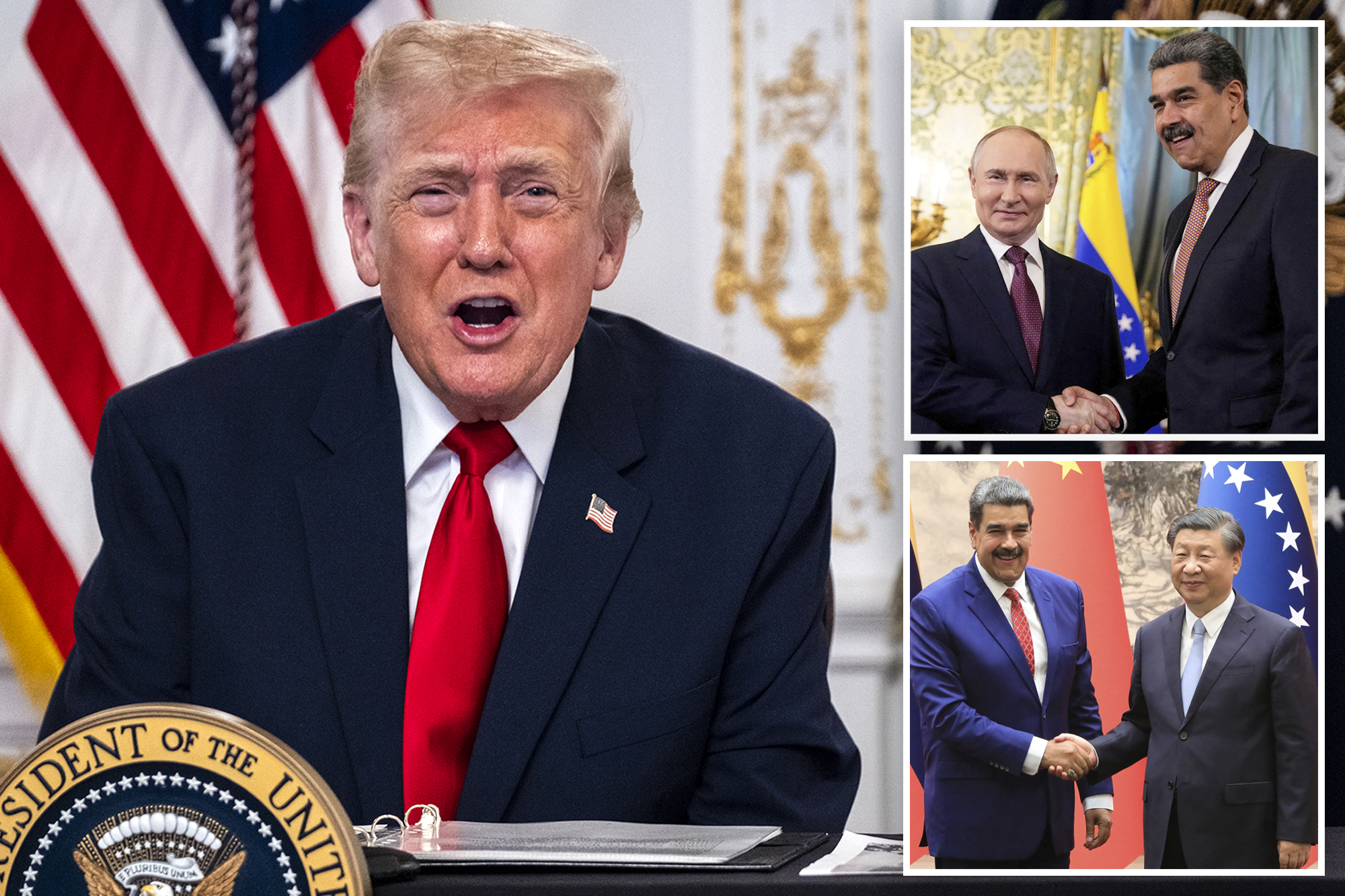
Venezuelan President Nicolás Maduro is experiencing a significant reduction in support from his long-time allies, Russia and China, as tensions escalate with the United States under President Donald Trump. Both nations, which have historically provided military equipment and financial assistance to Venezuela, appear to be retreating from their previous commitments as they confront their own economic and military challenges.
The shift in support is evident as Russia, which in the past showcased military solidarity by deploying nuclear-capable bombers to Venezuela, has not extended substantial assistance recently. Instead of substantial military aid, Moscow has only sent two oil tankers to help Venezuela manage its oil exports to China. Vladimir Rouvinski, an international relations professor at Icesi University, emphasized that these gestures are insufficient should the U.S. consider military action against Venezuela. “Russia isn’t going to help Maduro beyond what they’ve already done,” Rouvinski noted, highlighting the changing dynamics in international relations.
Russia and China’s Diminished Engagement
The apparent withdrawal of support comes after years of Venezuela cultivating ties with China, Russia, and other nations opposed to U.S. influence. Former President Hugo Chavez utilized the country’s vast oil and mineral reserves to secure over $30 billion in arms and loans from China and Russia since 2000. However, these alliances have weakened since Maduro took office in 2013, particularly as Venezuela’s oil production plummeted and civil unrest increased, exacerbated by U.S. sanctions imposed on the oil industry in 2019.
Both Russia and China are currently navigating tense diplomatic relationships with the Trump administration, making them cautious about further involvement in Venezuela. Rouvinski remarked on the intricate balance both nations are trying to maintain, stating, “They are not looking to upset the American president by making Venezuela an issue.” This hesitation reflects their desire to protect their national interests while dealing with internal challenges.
China faces a particularly significant risk if Maduro’s government collapses, given its extensive investments in Venezuela. According to the Stockholm International Peace Research Institute, Beijing’s investments amount to more than $30 billion in military supplies and support since 2000. A shift in power could lead to substantial financial losses for the Chinese government.
Maduro’s Appeals for Support
As pressure mounts from the U.S., Maduro reached out to both Russia and China for assistance. Reports from the Washington Post indicate that he directly requested defensive radars, aircraft repairs, and missiles from Russian President Vladimir Putin. Additionally, he sought enhanced military cooperation with Chinese President Xi Jinping to counter escalating threats from the U.S.
Despite Maduro’s urgent appeals, the historical parallels with Iran during the summer of conflict suggest that support may not materialize as he hopes. Both Russia and China were notably passive in their support for Tehran during that crisis, raising concerns about Maduro’s prospects for military and diplomatic assistance.
In summary, as the geopolitical landscape shifts, Maduro faces increasing isolation. The reduced support from his key allies, coupled with the pressing threat of U.S. military action, puts his administration in a precarious position. The next moves from both Venezuela and its traditional backers will be critical in determining the future stability of the region.