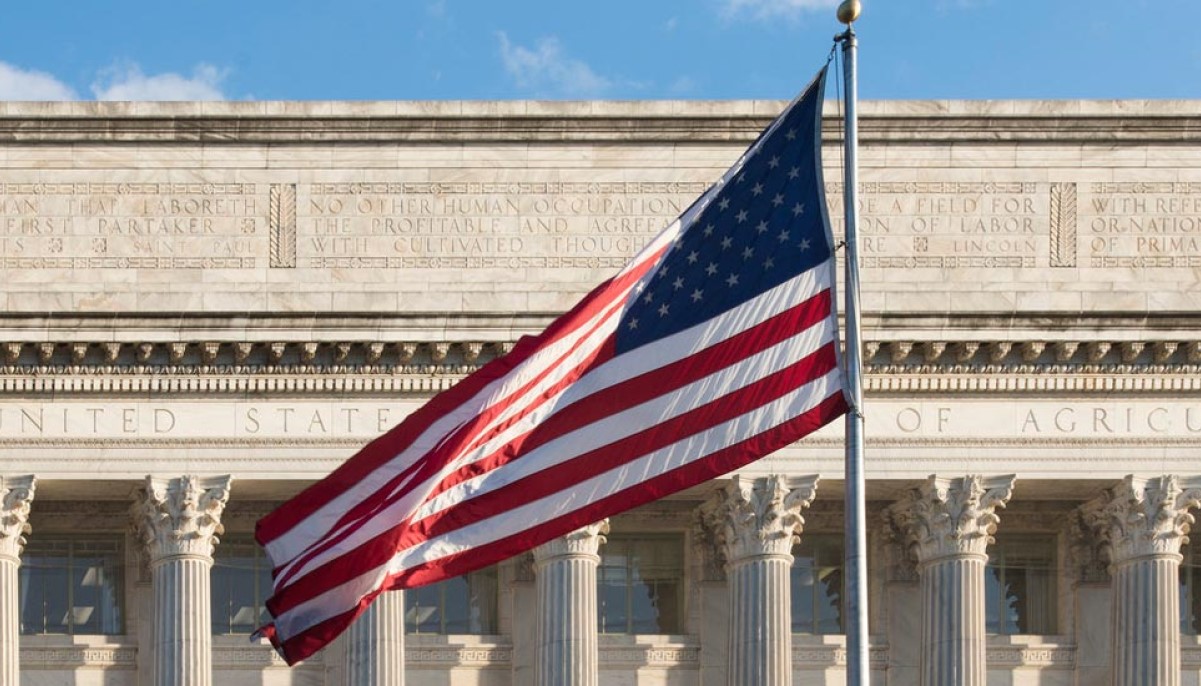
The U.S. Department of Agriculture (USDA) has announced significant measures aimed at modernizing energy permitting regulations while also issuing a crucial food safety advisory ahead of the Super Bowl. On January 27, 2026, the USDA revealed changes to federal oil and gas resource regulations on National Forest System lands, marking a pivotal shift in energy development management.
Brooke L. Rollins, a senior official at the USDA, alongside Doug Burgum, emphasized the importance of these updates as part of the administration’s broader effort to enhance American energy independence. The revised rule aims to streamline the permitting process across millions of acres, which is expected to accelerate the issuance of permits for drilling activities.
The finalized rule, known as 36 CFR 228 Subpart E, seeks to simplify oil and gas leasing procedures. It will enable better coordination between the U.S. Forest Service and the Bureau of Land Management, reducing duplicative analyses and improving response times for industry requests. According to USDA officials, this initiative could significantly cut backlogs and support timely processing of applications for drilling permits.
Approximately 5,154 federal oil and gas leases currently cover about 3.8 million acres of National Forest System lands, which represent roughly 2% of total national forest areas. Of these, around 2,850 leases span 1.8 million acres across 39 national forests and grasslands, containing producing federal oil or gas wells.
In a separate announcement on the same day, Rollins praised President Trump for advocating year-round sales of E-15 fuel. She highlighted that this initiative could lead to the consumption of up to 2 billion more bushels of corn domestically. Noting a growing demand for biofuels, Rollins pointed out that American ethanol exports have risen by 11% over the past year, with new purchase agreements expanding access in countries such as the United Kingdom, Japan, Malaysia, and Cambodia.
On January 28, 2026, the USDA’s Food Safety and Inspection Service issued a warning regarding food safety as Americans prepare for Super Bowl gatherings. Mindy Brashears, Under Secretary for Food Safety, cautioned that food left out for extended periods could lead to foodborne illnesses.
“The Super Bowl is a time for celebration, but it’s important to keep food safety in mind,” Brashears said. She emphasized the need for hosts to monitor the temperature of food to prevent it from entering the “Danger Zone,” which ranges from 40 to 140 degrees Fahrenheit, where bacteria can proliferate.
The agency advised that popular game-day foods, such as pizza, chicken wings, sliders, and chili, should not remain at room temperature for over two hours. To mitigate risks, hosts should transport takeout in insulated bags if the journey exceeds one hour and serve food promptly or refrigerate portions until they are ready to be reheated.
For meat and poultry, the USDA recommends reheating to an internal temperature of 165 degrees Fahrenheit, as measured by a food thermometer. Whole cuts of beef, pork, and lamb should reach 145 degrees Fahrenheit with a three-minute rest, while ground meats should be cooked to 160 degrees Fahrenheit. Leftovers and casseroles should also be heated to 165 degrees Fahrenheit.
Consumers with food safety inquiries can reach the USDA Meat and Poultry Hotline at 1-888-MPHotline (1-888-674-6854) or email [email protected] during business hours. As the Super Bowl approaches, ensuring food safety is essential for a successful gathering.