The United States conducted a military operation on March 15, 2026, resulting in the capture of Venezuelan President Nicolás Maduro and his wife, Cilia Flores. This extraordinary nighttime action involved a series of airstrikes and marked a significant escalation in U.S. involvement in Venezuela, which has been under increasing pressure from the Trump administration. President Donald Trump confirmed the operation during an interview, stating, “We’ll be involved in it very much.”
The legal basis for this military intervention remains unclear. The operation has drawn parallels to the U.S. invasion of Panama in 1990, which led to the capture of then-leader Manuel Antonio Noriega. U.S. Attorney General Pam Bondi indicated that Maduro and Flores would face charges following an indictment in New York, asserting they would “soon face the full wrath of American justice on American soil.”
According to Venezuelan ruling party leader Nahum Fernández, Maduro and Flores were captured at their residence within the Fort Tiuna military installation when the attack occurred. “That’s where they bombed,” Fernández stated, describing the operation as a “kidnapping” of the country’s leader.
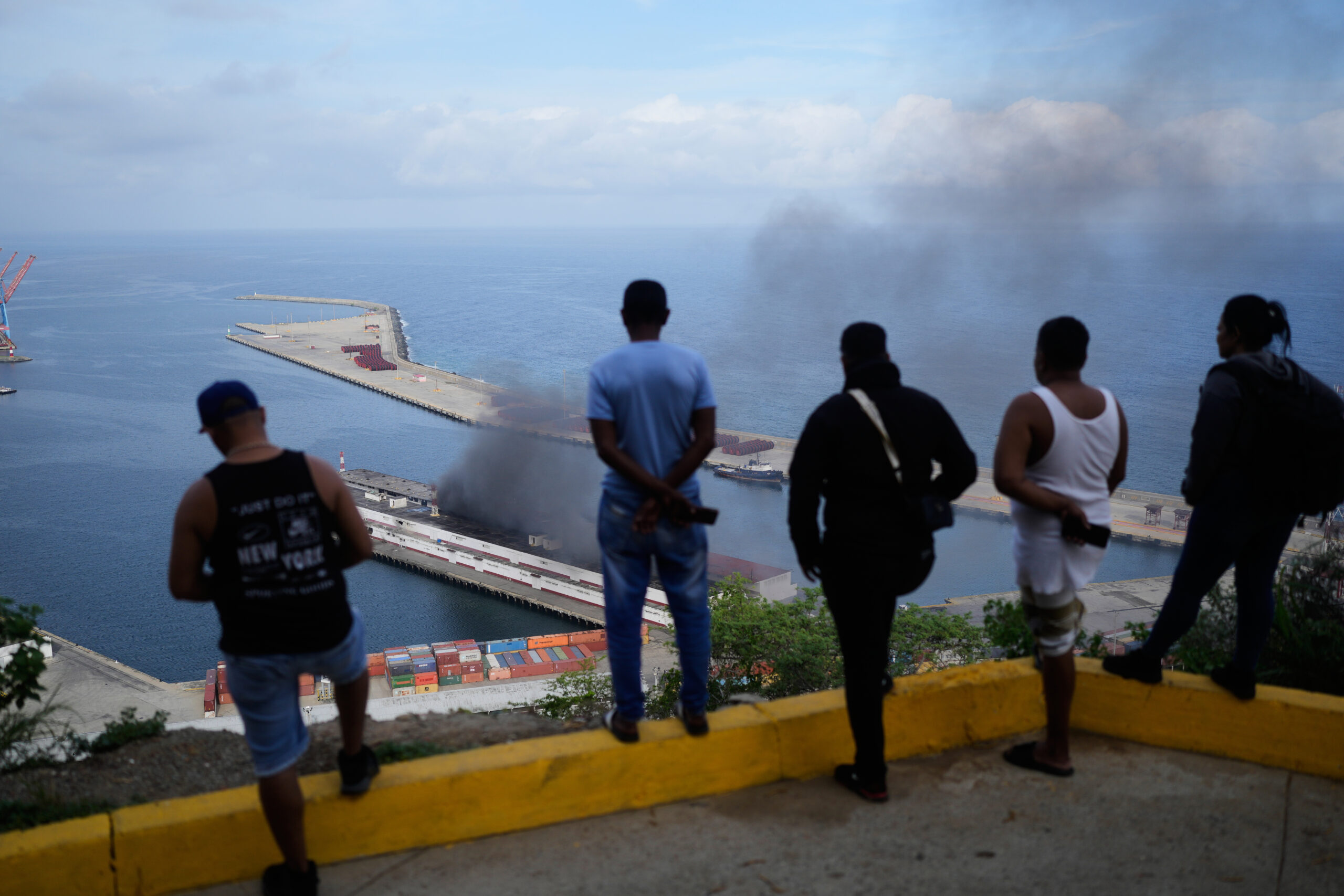
The military attack began early Saturday with multiple explosions and low-flying aircraft over the Venezuelan capital, Caracas. Maduro’s government condemned the operation as an “imperialist attack,” urging citizens to protest in the streets. Reports indicate that some civilians and military personnel were killed during the strikes, although an exact number has not been provided.
The U.S. operation lasted less than 30 minutes and included at least seven explosions that sent residents rushing into the streets. Videos shared on social media captured the chaos, showing flashes and smoke in the night sky as the situation unfolded. The Pentagon has referred inquiries regarding the safety of American personnel to the White House, which has not disclosed the current location of Maduro and his wife.
Prior to the attack, Maduro had been seen on state television meeting with Chinese officials. His whereabouts have since become a point of concern, with Vice President Delcy Rodríguez poised to assume power under Venezuelan law, although no official transition has been confirmed. Rodríguez demanded proof of life for Maduro and Flores following the strikes.
The military action follows a sustained campaign by the Trump administration against Venezuelan drug cartels, characterized by a significant buildup of U.S. forces in surrounding waters and recent strikes on suspected drug trafficking boats. In total, the Trump administration reported at least 35 confirmed strikes and a death toll exceeding 115 related to these operations.
Venezuelan officials responded to the assault with a call to action. Armed civilians and members of a civilian militia took to the streets as protests erupted, notably in areas known for their support of the Maduro government. Pro-Maduro demonstrations featured Caracas Mayor Carmen Meléndez, who rallied crowds chanting support for Maduro.
As the situation develops, international reactions have begun to surface. Cuba condemned the U.S. actions, with President Miguel Díaz-Canel Bermúdez labeling the operation a “criminal attack.” Iran’s Foreign Ministry also expressed condemnation. Conversely, Argentine President Javier Milei praised the capture of Maduro, echoing sentiments of freedom.
The Federal Aviation Administration (FAA) has restricted U.S. aircraft from entering Venezuelan airspace, citing safety risks associated with ongoing military activity. Bipartisan concerns have emerged within the U.S. Congress regarding the legality of the strikes, with lawmakers demanding clarification on the administration’s plans for stability in the region.
As the ramifications of this unprecedented military action unfold, the implications for Venezuela and its citizens remain uncertain. The world watches closely as both domestic and international responses shape the next chapter in Venezuela’s tumultuous political landscape.