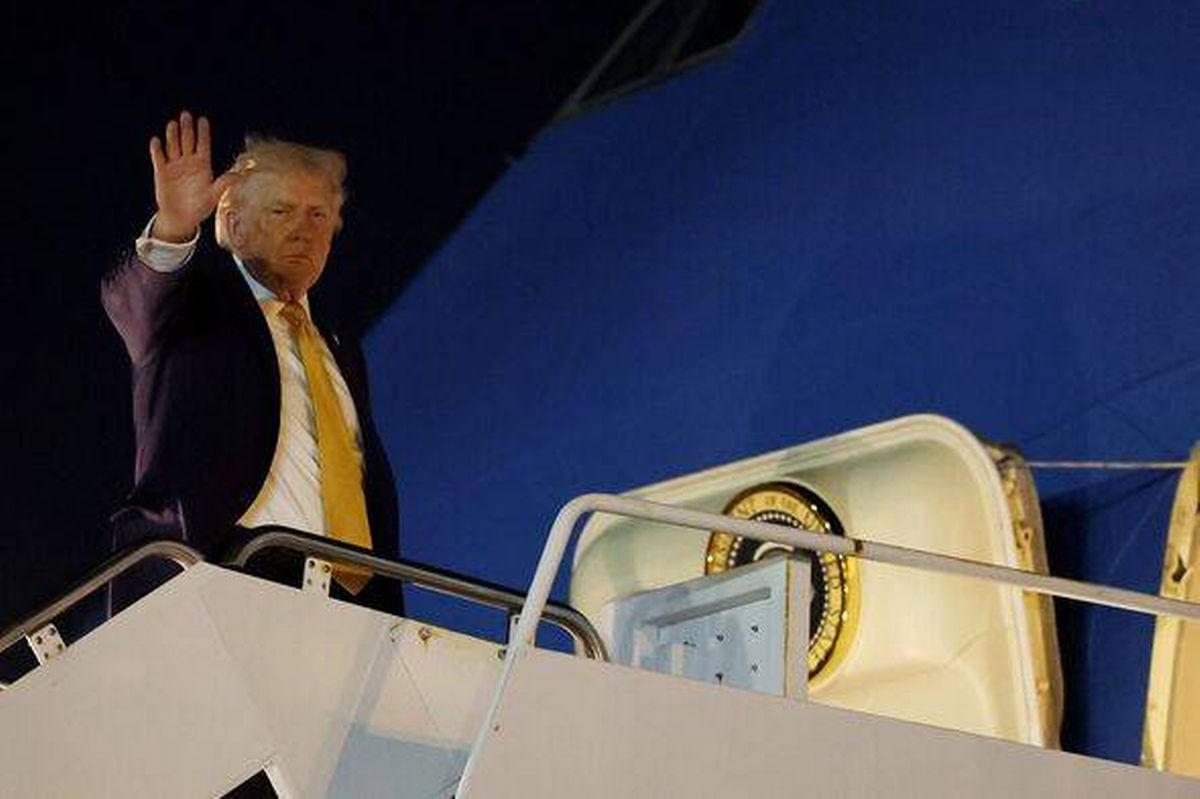
Tensions between the United States and Denmark have escalated following President Donald Trump‘s comments regarding Greenland and the recent capture of Venezuelan leader Nicolás Maduro. As Trump departed Palm Beach, Florida, aboard Air Force One, he outlined his administration’s goals, stating, “Don’t ask me who’s in charge because I’ll give you an answer and it’ll be very controversial.”
During the flight, Trump indicated that the U.S. is taking a proactive stance in Venezuela, suggesting a possible reopening of the American embassy in Caracas, saying, “We’re thinking about it.” His comments came amid a military assault that resulted in Maduro’s arrest on drug trafficking charges. The operation reportedly caused the deaths of approximately 40 civilians and military personnel, according to an official source cited by the *New York Times*.
Following Maduro’s capture, speculation arose about Trump’s intentions toward Greenland, a territory he has previously described as vital for U.S. security. Trump mentioned, “We’ll worry about Greenland in two months,” igniting concerns in Denmark and Greenland regarding the U.S.’s interest in the Arctic territory.
Denmark Responds to U.S. Threats
The situation intensified when Katie Miller, spouse of Trump’s Deputy Chief of Staff Steven Miller, shared a provocative post on social media that appeared to support the U.S. seizing Greenland. This prompted outrage among Greenlanders and Danes, who took to social media to defend their territory. Danish Ambassador to the U.S., Jesper Moller Sorensen, responded by reaffirming the close alliance between the two nations, stating, “Greenland is already part of NATO. The Kingdom of Denmark and the United States work together to ensure security in the Arctic.”
In light of Trump’s comments, Danish Prime Minister Mette Frederiksen condemned the threats, asserting Denmark’s commitment to its territorial integrity. In her New Year’s address, she remarked, “We are in full swing, strengthening Danish defense and preparedness.” Frederiksen emphasized that Denmark is rapidly enhancing its military capabilities and increasing its Arctic security measures.
Frederiksen’s remarks reflect a broader concern in Denmark about the implications of U.S. military actions in Venezuela and their potential impact on Greenland. She stated, “Never before have we increased our military strength so significantly. So quickly,” underscoring Denmark’s proactive stance in the face of perceived threats.
International Implications of U.S. Military Actions
The U.S. military operation in Venezuela has raised alarms not only within Denmark but across the international community. As the U.S. intensifies its efforts to combat drug trafficking and gang violence allegedly linked to Venezuela, the ramifications of this policy could extend far beyond Latin America. Frederiksen noted that Denmark has pledged $13.7 billion in 2025 specifically for Arctic and North Atlantic operations, highlighting their commitment to collective defense amid growing Arctic security concerns.
Frederiksen’s assertive stance against U.S. threats reflects a broader trend of nations reassessing their security strategies in response to shifts in U.S. foreign policy. “If we let one country fall first, then the way is paved for Russia to advance further into Europe,” she warned, indicating a growing apprehension regarding potential geopolitical shifts in the Arctic region.
As the situation unfolds, the international community will be closely watching the developments between the U.S. and Denmark, particularly as both nations navigate their complex relationship while addressing pressing security concerns. The dialogue surrounding Greenland and U.S. military actions in Venezuela may redefine alliances and influence geopolitical stability in the Arctic and beyond.