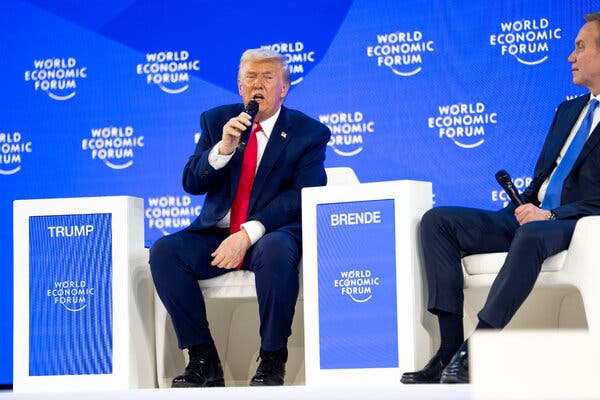
President Donald Trump ignited fresh turmoil in international trade discussions by threatening European nations over the potential acquisition of Greenland. Over four days, he suggested punitive measures against European countries if they did not comply with his demands related to the territory. This series of threats sent stock markets into a downward spiral and prompted urgent meetings among European leaders, who sought to address the escalating situation.
In the wake of Trump’s remarks, stock markets experienced significant declines, reflecting investor anxiety over the prospect of a trans-Atlantic trade war. European leaders convened emergency sessions, hastily contacting the U.S. president to discuss the matter. Compounding the chaos, these developments forced European officials to suspend negotiations on a trade deal they had carefully crafted just months earlier.
Shifting Positions and Market Reactions
As the situation unfolded, Trump took a step back from his aggressive stance. He announced that he had established “the framework of a future deal” concerning Greenland and the Arctic, although specifics regarding this agreement were sparse. Trump described the arrangement as potentially “great” for the United States and indicated that tariffs planned for eight European nations, scheduled to take effect on February 1, 2024, would no longer be implemented. Following this announcement, stock markets rebounded, highlighting the volatile nature of investor sentiment in response to Trump’s trade rhetoric.
While the president may have averted an imminent trade conflict with Europe, his actions left behind a wave of instability in global trade relations. These moments of unpredictability raise concerns about the effectiveness of cooperation with the U.S. under Trump’s leadership. Observers note that his approach may be driving countries closer together, creating a shift towards alliances with China rather than the United States.
Global Trade Under Pressure
As Trump enters the second year of his second term, he continues to have opportunities to reshape the global trading landscape. Yet, his inclination to disrupt established agreements remains apparent. Despite hopes from global businesses and foreign leaders that 2024 would bring an end to tariff uncertainties and a move toward predictability, Trump’s recent actions suggest a different trajectory. Instead of solidifying trade agreements, he seems poised to introduce further chaos into the international trading system.
With ongoing tariff ultimatums and threats to overturn existing trade arrangements, Trump’s approach has left many questioning the stability of the global market. The president’s unpredictable behavior complicates the very objectives he and his advisors aim to achieve, raising doubts about the future of international trade partnerships and the reliability of American leadership in global economic affairs.