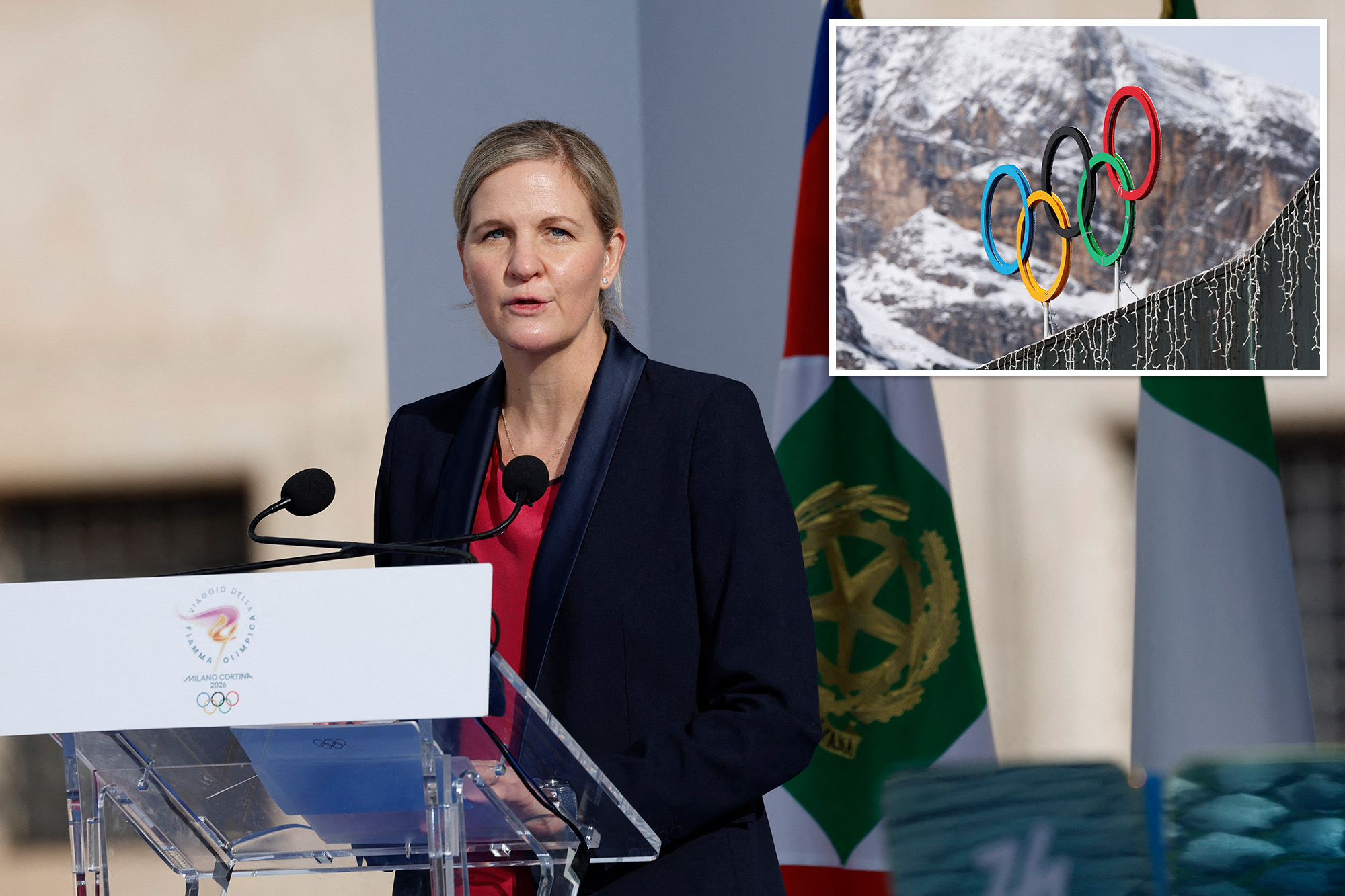
Russian athletes will remain prohibited from representing their country at the upcoming Winter Olympics in Milano Cortina, Italy, even if a peace agreement is reached regarding the conflict with Ukraine. The President of the International Olympic Committee (IOC), Kirsty Coventry, confirmed this restriction in an interview with the Italian newspaper Corriere della Sera on Friday.
Coventry stated, “At this stage, nothing would change the Committee’s decision.” The Winter Olympic Games are set to take place from February 6 to 22, 2026, and the IOC plans to uphold the sanctions imposed following Russia’s invasion of Ukraine in February 2022. These sanctions have been in place for nearly four years and will continue to restrict Russian and Belarusian athletes.
The ongoing ban means that athletes from Russia and Belarus can only compete as Individual Neutral Athletes (AINs). This designation prohibits them from representing their countries, utilizing national flags, anthems, or team uniforms. Additionally, they are not allowed to participate in team events or the opening ceremony of the Winter Games.
The IOC has indicated that whether AINs can partake in the closing ceremonies will be determined during the Games. This decision will consider that the closing ceremony is an event where all athletes participate collectively, rather than as teams. AINs have their own flag and anthem, the latter of which does not have any lyrics. During victory ceremonies, the AIN flag will be displayed, and the AIN anthem will be played in place of national representations.
In a related context, during the 2024 Olympic Games in Paris, 32 athletes holding Russian or Belarusian passports competed across 10 different sports without any reported incidents on or off the field. Nevertheless, the IOC has made it clear that athletes who support the war or are affiliated with the Russian or Belarusian military and national security agencies will be barred from competition.
Ukrainian President Volodymyr Zelensky has remarked that a US-backed peace deal is “90% ready.” He highlighted that Russia’s significant demands and its unwillingness to make substantive concessions remain the primary obstacles to achieving a resolution.
As the Winter Olympics approach, the IOC’s firm stance underscores the ongoing complexities surrounding international sports and geopolitical tensions. The implications for athletes and nations alike continue to evolve as the situation develops.