The Pentagon has initiated a formal review of the integration of women into combat roles, prompting concerns and accusations among female service members. This review comes more than a decade after the Department of Defense opened Ranger School and all combat positions to women in 2015, which marked a significant shift in the American military landscape.
According to the U.S. Army, at least 154 women have earned the esteemed Ranger tab, a symbol of their rigorous training and capability. Ranger School is notorious for its demanding physical and mental challenges, which include sleep deprivation and extreme physical tests. The Army has emphasized that the review is aimed at assessing the military’s ability to meet its rigorous standards. Defense Secretary Pete Hegseth stated, “We will not compromise standards to satisfy quotas or an ideological agenda – that is common sense.”
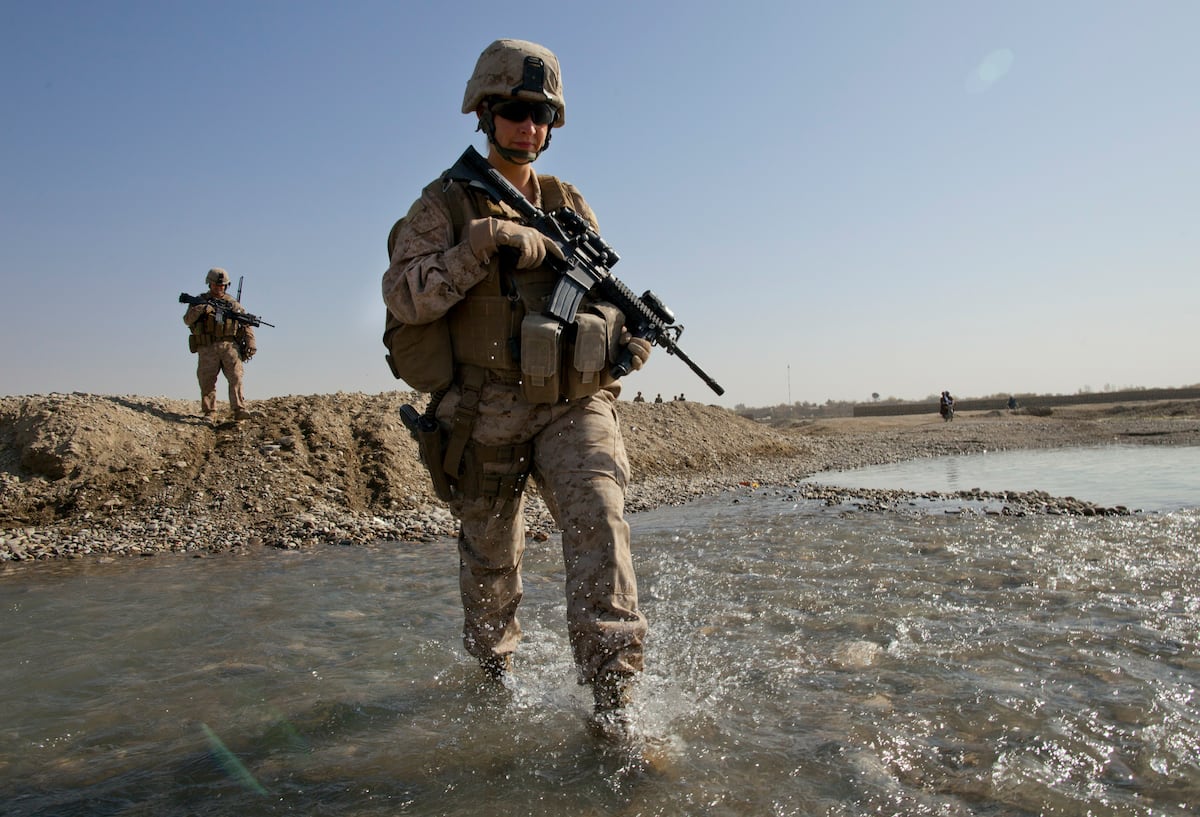
Critics argue that the review may be a pretext to question the role of women in the infantry. They cite the 4,594 female soldiers currently deployed in conventional combat units, a figure compiled by the Women in the Service Coalition. The Pentagon has not provided comments on this data, raising further suspicions among female troops.
Sue Fulton, Executive Director of the Women in the Service Coalition, expressed her concerns in an interview, suggesting that the review is designed to yield a predetermined conclusion. “The only reason to conduct a new study is if you want a different outcome,” she said. Fulton referenced Hegseth’s past remarks, which included a firm stance against women in combat roles. In a November 2024 podcast, he stated, “I’m straight up just saying we should not have women in combat roles,” citing a Marine Corps report that suggested all-male units performed better than mixed-gender ones during a 2015 test.
Despite Hegseth’s earlier criticisms, he appeared to soften his position during his confirmation hearing, asserting that if women meet established standards, they should be allowed to serve in combat. His recent comments at Quantico, Virginia, reignited fears among female service members when he indicated that “every requirement” for combat would revert to “the highest male standard only.”
Two women, who graduated from Ranger School and served in combat—both requesting anonymity due to potential repercussions—voiced their frustrations to Military Times. One of them, referred to as Emily, stated, “It is a slap in the face to all the accomplishments of the women who have been in the infantry.” She emphasized that they took the same physical fitness tests as their male counterparts, asserting, “We earned our spots.”
Another service member, Olivia, a field artillery officer with experience in multiple conflict zones, stressed the importance of equality in combat situations. “Combat is an equalizer,” she noted, highlighting that divisions based on gender become irrelevant when faced with the realities of warfare. “It matters that we are all part of the same fighting force,” she added, reinforcing her belief in the egalitarian nature of combat.
Since the integration of women into combat roles, the Army has implemented gender-neutral physical tests, a framework that Hegseth expanded in 2025 to include all combat arms positions. Female military personnel argue that their contributions have been significant and should be recognized, rather than diminished through the current review process.
As the Pentagon moves forward with this assessment, the implications of its findings could impact the future of women in the U.S. military. The ongoing debate underscores the challenges faced in achieving gender equality within the armed forces, raising questions about the standards that define success in combat roles.