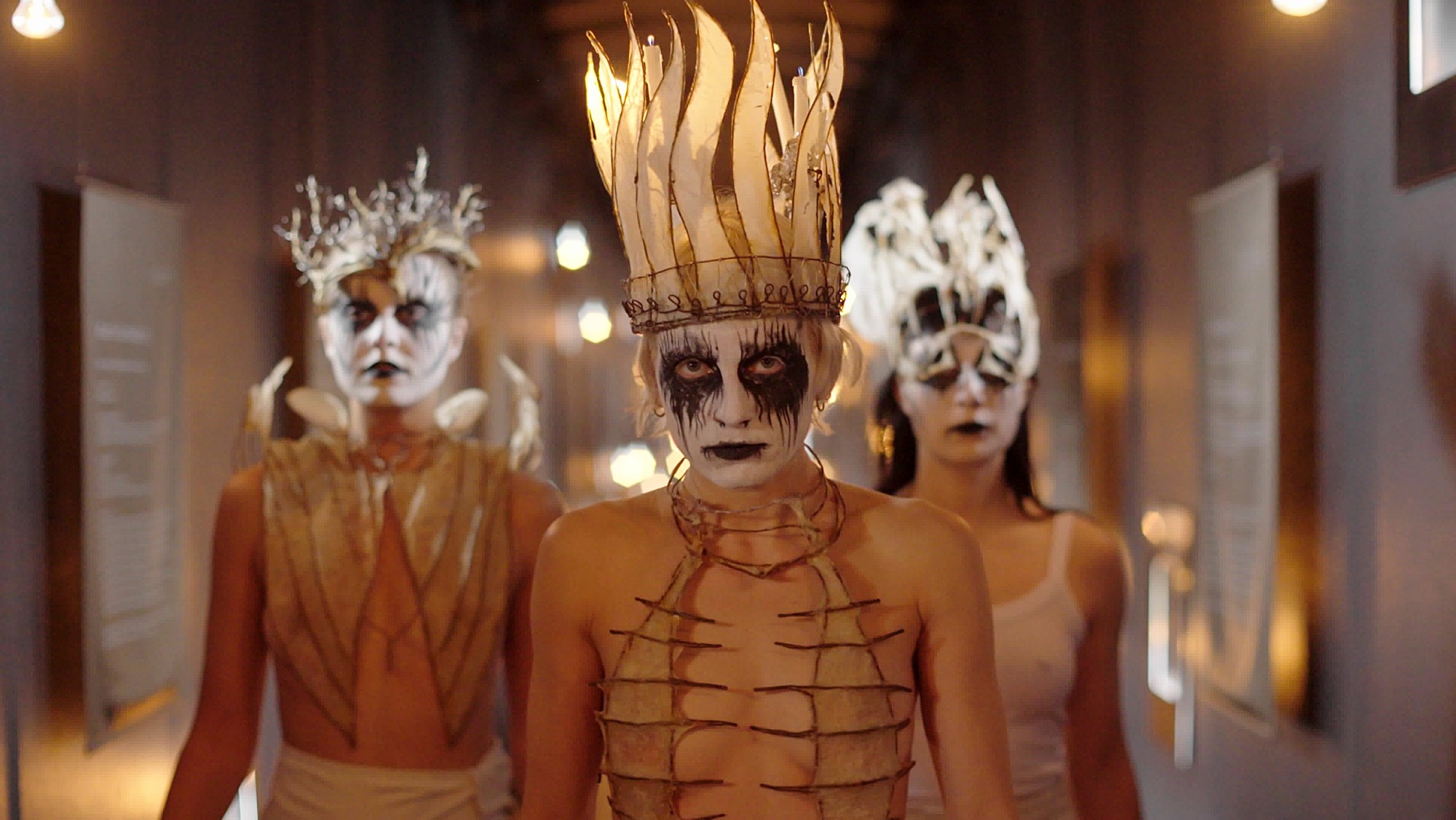
Three young women from Norway have broken into the male-dominated world of black metal with their band, Witch Club Satan. In a genre known for its grim aesthetics and predominantly male roster, Nikoline, Victoria, and Johanna are making waves by embracing their identities as musicians and feminists. Their journey is chronicled in the feature documentary Hex, directed by Maja Holand, which premiered on March 3, 2024, at the Thessaloniki Documentary Festival and will also be showcased at CPH:DOX in Copenhagen.
Despite their lack of musical experience, the trio quickly found themselves performing at major international festivals. They paint their faces, pick up instruments, and channel their frustrations into a sound that reflects their desire to shake up societal norms. Holand’s documentary not only highlights their rise as a band but also delves into the personal journeys of each member as they confront challenges and triumphs in the music industry.
In her conversation with THR, Holand shared her motivation for capturing the story of Witch Club Satan. As a new mother, she felt a sense of personal numbness and was drawn to the band’s mission to awaken from their own feelings of stagnation. “They called themselves witches, and their universe was bloody, primal, and grim,” Holand explained. “I had a strong feeling this extreme journey was the perfect film.”
The film explores several themes, including the struggles of breaking free from rigid societal norms. Holand was particularly intrigued by the historical context of witch trials, recognizing her own misconceptions about the term “witch.” She remarked, “For me now, being a witch is an honorary title – it means you have the power and courage to truly feel and live out who you really are.”
A notable aspect of Hex is its unique visual storytelling. To illustrate the resistance faced by the band, Holand devised a modern witch trial setting, where the band stands accused in a courtroom. This creative approach allows the audience to engage with the film’s themes without relying solely on text-based explanations. Holand stated, “It creates a powerful parallel between how we judge witches today and how they were judged in the past.”
The documentary emphasizes the personal empowerment of the bandmates as they navigate their identities in a male-dominated genre. Holand acknowledged that Witch Club Satan explicitly identifies as a feminist project. “They called themselves a feminist black metal band,” she explained, while also reflecting on her own experiences as a female cinematographer in a skewed industry.
Looking ahead, Holand hopes the film will resonate with fans of the band and those interested in the broader themes of female empowerment and the celebration of individuality. “I could imagine stepping back a bit and working more with shorter formats like music videos and short films,” she noted. “But I hope my strong cinematic intuition will return soon.”
As Hex continues its festival journey, it serves as a testament to the power of women in music and the importance of challenging societal expectations. Witch Club Satan is not just breaking through the noise; they are redefining what it means to be a woman in the world of black metal.