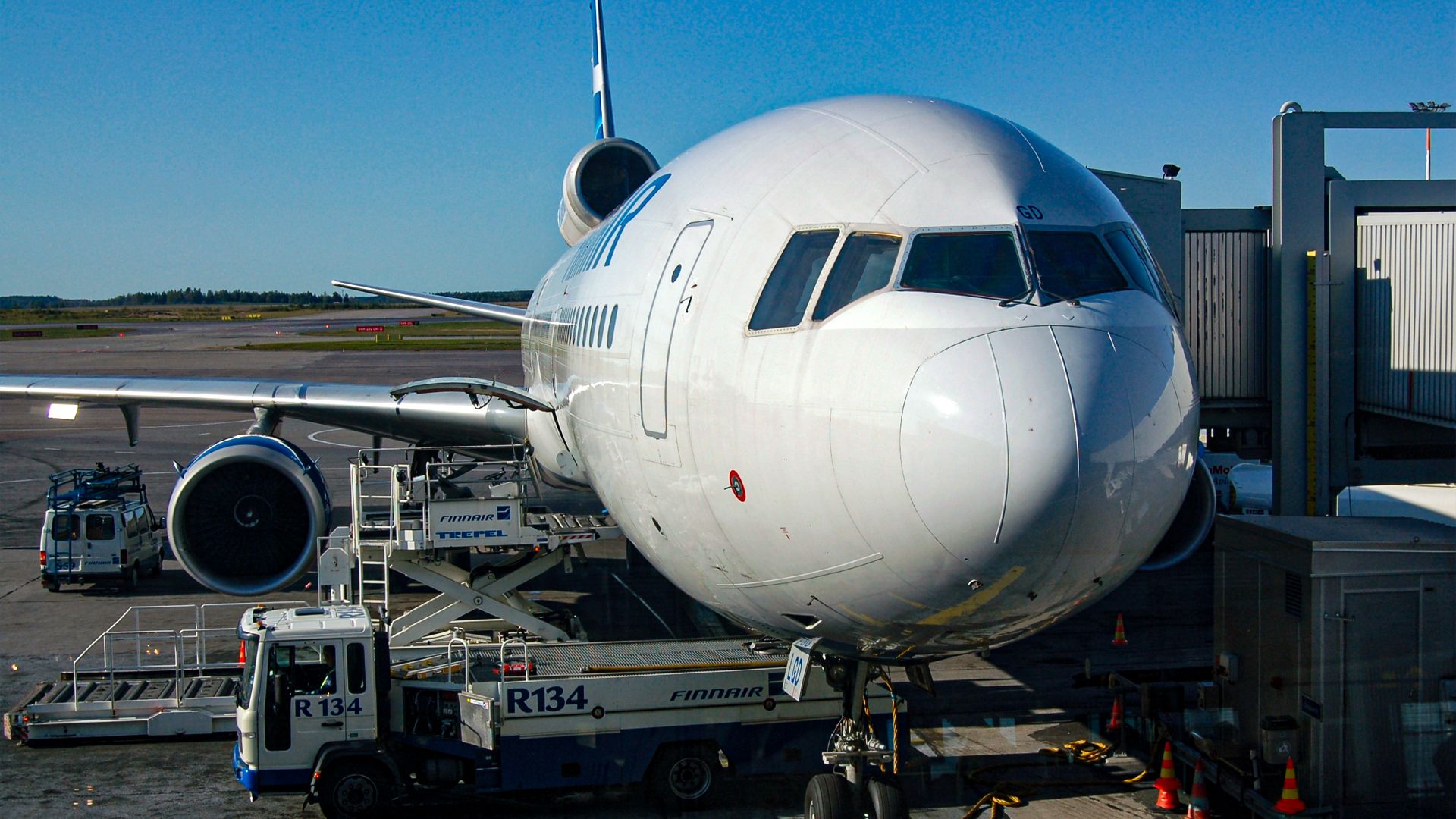
The McDonnell Douglas MD-11, a once-promising commercial aircraft, has a production history marked by ambition and challenges. Although only 200 MD-11s were built, the aircraft left an indelible mark on the aviation industry. Designed as a modern successor to the DC-10, the MD-11 aimed to provide longer range, improved efficiency, and advanced avionics during a pivotal time for long-haul travel.
This aircraft was introduced to the market on January 10, 1990, with Finnair taking on the role of launch customer. Despite its innovative features, the MD-11 struggled to find its footing in commercial service, leading to its eventual role as a successful freighter.
The DC-10 Legacy and the MD-11’s Evolution
The MD-11’s lineage can be traced back to its predecessor, the DC-10, which first entered service in 1971. The DC-10 was designed to fulfill the growing demand for widebody aircraft capable of medium- and long-haul flights. Its tri-engine configuration provided flexibility, enabling airlines to operate from shorter runways while still competing on intercontinental routes.
As the aviation market evolved, the need for greater fuel efficiency and improved performance became paramount. The merger of McDonnell Douglas prompted a redesign of the DC-10 platform into the MD-11. Key modifications included a lengthened fuselage, redesigned wings with winglets, and a modernized cockpit equipped with a two-crew glass flight deck.
Despite these advancements, the MD-11 faced stiff competition from twin-engine aircraft that offered similar range and lower operational costs. The shift in airline preferences became evident as the decade progressed.
Production Challenges and Market Response
MD-11 production took place at McDonnell Douglas’s Long Beach, California facility. Initially, the aircraft appeared well-positioned to attract long-haul operators. However, as airlines began to favor twin-engine designs, orders for passenger variants dwindled.
The top operators of the MD-11 included Varig, Swissair, and American Airlines, each operating fleets of 19 to 23 aircraft. Following the 1997 merger with Boeing, the MD-11 was largely sidelined in Boeing’s long-term strategy, and production ceased in 2000.
While the MD-11 struggled with its passenger service, it found new life as a freighter. Many of the originally built aircraft were converted or sold to cargo operators. Companies like FedEx and UPS Airlines relied on the MD-11F for its long range and substantial payload capacity.
The MD-11’s Second Act and Recent Developments
The MD-11’s performance in cargo service was commendable, as it quickly became a reliable workhorse for major express freight networks. However, this reputation faced a serious challenge following a tragic incident on November 4, 2025. A UPS-operated MD-11F crashed shortly after takeoff from Louisville Muhammad Ali International Airport, resulting in the loss of 14 lives.
In response to this tragedy, the Federal Aviation Administration (FAA) grounded all MD-11 aircraft pending thorough inspections. UPS subsequently decided to retire its entire MD-11 fleet in January 2026, marking a significant shift in the operational landscape for the aircraft.
Despite these recent developments, the MD-11’s legacy remains significant. While only a modest number were produced, its design reflected a transition in commercial aviation toward more efficient and automated operations. The aircraft is remembered not only for its innovative features but also for its adaptability as a freighter.
The story of the MD-11 encapsulates both the aspirations and realities of aviation history. Its journey from a promising passenger aircraft to a successful freight solution underscores the dynamic nature of the industry, ensuring that the MD-11 will be remembered as an iconic, albeit complex, part of aviation heritage.