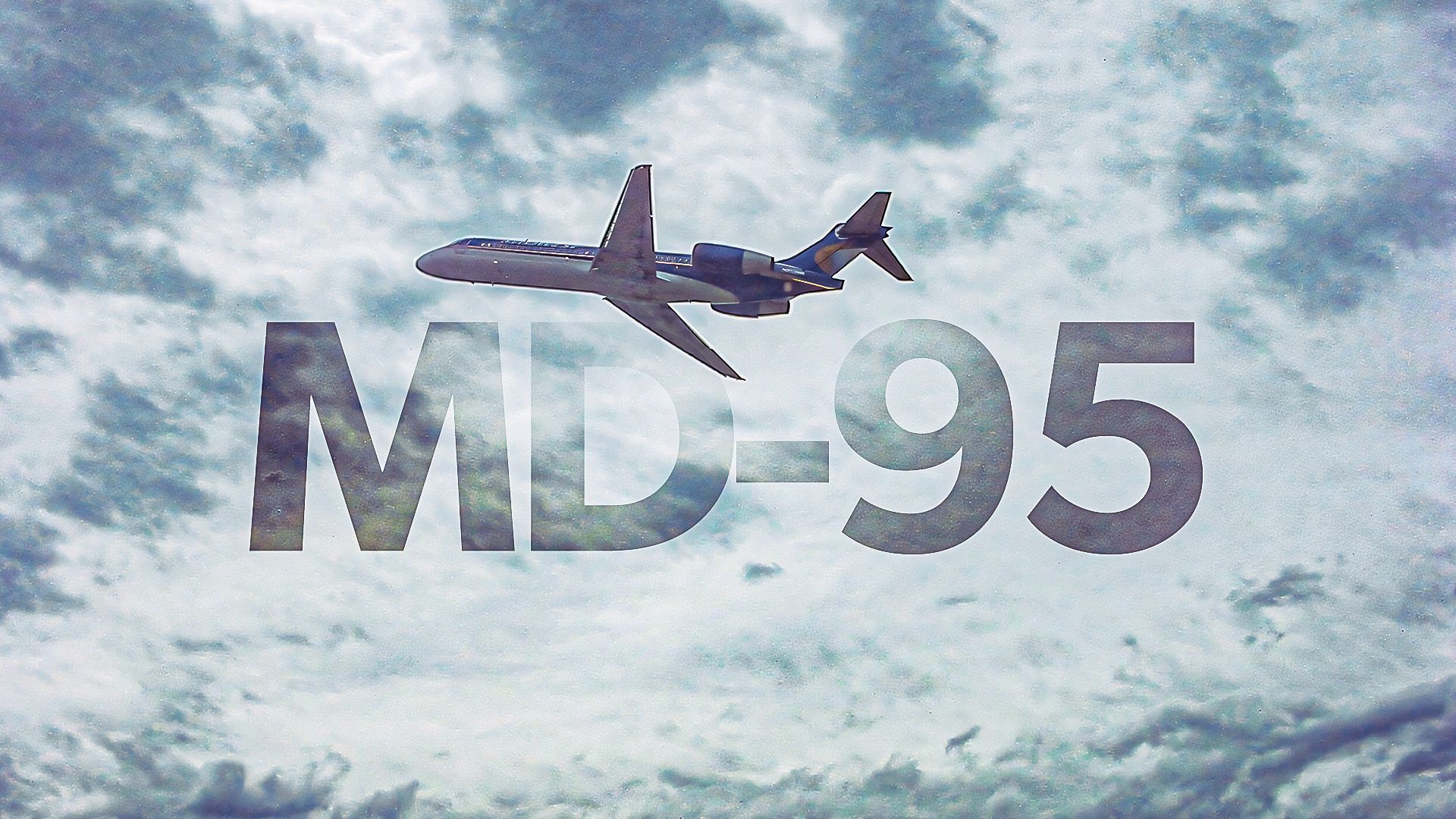
In the early 1990s, McDonnell Douglas sought to create a modern successor to its DC-9 family, leading to the development of the MD-95, designed for the 100-seat short-haul market. This clean-sheet aircraft aimed to fill a gap left by larger jets like the Boeing 737 and Airbus A320. However, by the time the MD-95 was ready for flight, the aviation industry had undergone significant changes. Following the company’s merger with Boeing in 1997, the MD-95 was rebranded as the Boeing 717, a name that would become synonymous with a quieter operational legacy.
The MD-95 emerged from a long-standing ambition to provide a contemporary version of the DC-9. Initially conceived in the 1980s as the DC-9-90, the project was shelved in favor of the smaller MD-87. By 1992, McDonnell Douglas revived the concept, presenting the MD-95 at the Paris Air Show as a modern replacement for aging DC-9s. The program gained traction when low-cost carrier ValuJet placed an order for 50 aircraft in October 1995, valued at over $1 billion. ValuJet opted for the MD-95 after McDonnell Douglas successfully addressed concerns regarding break-even load-factor guarantees, which Airbus had not committed to.
Despite this early success, the MD-95 struggled to secure additional orders, and it had not commenced full-scale production when Boeing finalized its acquisition of McDonnell Douglas on August 1, 1997. The merger, one of the most pivotal events in aviation history, positioned Boeing as a dominant player in both commercial and military aircraft markets, consolidating its portfolio with established models like the 737 and 747.
Following the merger, the MD-95 was rebranded as the Boeing 717, the only McDonnell Douglas commercial aircraft to survive the transition. Boeing aimed to fill the niche left vacant in the 100-seat market, even as the smaller 737-600 also focused on this segment. The Boeing 717 made its inaugural flight in 1998, followed by FAA certification and initial deliveries to AirTran Airways in 1999. The aircraft quickly established itself as a regional workhorse, known for its efficient Rolls-Royce BR715 engines and rapid turnaround times.
Despite these advantages, the Boeing 717 faced challenges, particularly following the profound industry downturn after the September 11 attacks. Boeing’s hesitance to market the 717, due to its competition with the flagship 737 family, further limited its orders. Ultimately, production of the Boeing 717 ceased in 2006, with only 156 aircraft built during its lifetime.
The Boeing 717’s operational history is marked by its commitment to short-haul routes, entering service with AirTran Airways in October 1999. Designed for dense, high-frequency markets, the aircraft gained a loyal following thanks to its lineage from the DC-9 family and modern engineering. However, the aircraft never achieved widespread success, leading to its production halt in 2006.
After AirTran was absorbed by Southwest Airlines, the Boeing 717 fleet transitioned to Delta Air Lines, marking a significant chapter in the aircraft’s operational life. Delta’s first flight with the Boeing 717 occurred in October 2013, allowing the airline to replace smaller regional jets and enhance its domestic network. As of January 2026, 91 Boeing 717s remain operational, with Hawaiian Airlines also utilizing a fleet of 19 for inter-island flights.
Looking ahead, the successor to the Boeing 717 is not a single aircraft but rather a range of jets designed for similar operational needs. Delta Air Lines appears to favor the Airbus A220 as the most fitting replacement, offering comparable capacity for short-haul routes with enhanced efficiency. Meanwhile, Hawaiian Airlines is evaluating potential replacements for its fleet, with suggestions indicating that aircraft like the Boeing 737 may be considered, although models like the A220 or Embraer E2 could serve inter-island needs more effectively.
In conclusion, while the Boeing 717 may not have achieved the commercial success of its larger counterparts, it leaves behind a legacy marked by reliability and operational excellence. The aircraft’s journey reflects the complexities of a rapidly evolving industry and the impact of corporate mergers on product development. As the aviation landscape continues to change, the Boeing 717 stands as a reminder of a time when smaller aircraft played a vital role in connecting communities.