The death toll from ongoing protests in Iran has surged to at least 544, according to the U.S.-based Human Rights Activists News Agency. As reports of violent crackdowns against demonstrators escalate, U.S. President Donald Trump stated on Sunday that Iran has expressed interest in negotiating with the United States.
In a statement aboard Air Force One, Trump indicated that following his threats of military action against Iran, the nation reached out to propose talks. “Iran wants to negotiate,” he said, while cautioning that his administration may need to act preemptively due to the rising violence against protesters. Trump’s comments come as the Iranian government continues to arrest demonstrators amid reports of increasing casualties.
The Pentagon is evaluating various military responses, including potential cyberattacks and direct strikes, as tensions simmer in the region. Trump remarked, “The military is looking at it, and we’re looking at some very strong options.” He reiterated that any threats from Iran would be met with severe consequences, saying, “If they do that, we will hit them at levels that they’ve never been hit before.”
Despite Iran’s silence on the proposed negotiations, the climate remains charged. Iranian authorities have detained over 10,600 individuals since protests erupted on December 28, 2023, primarily in response to the deteriorating economic conditions exacerbated by international sanctions. The Human Rights Activists News Agency reported that of the confirmed fatalities, 496 were protesters and 48 were security personnel.
Growing Civil Unrest and International Reactions
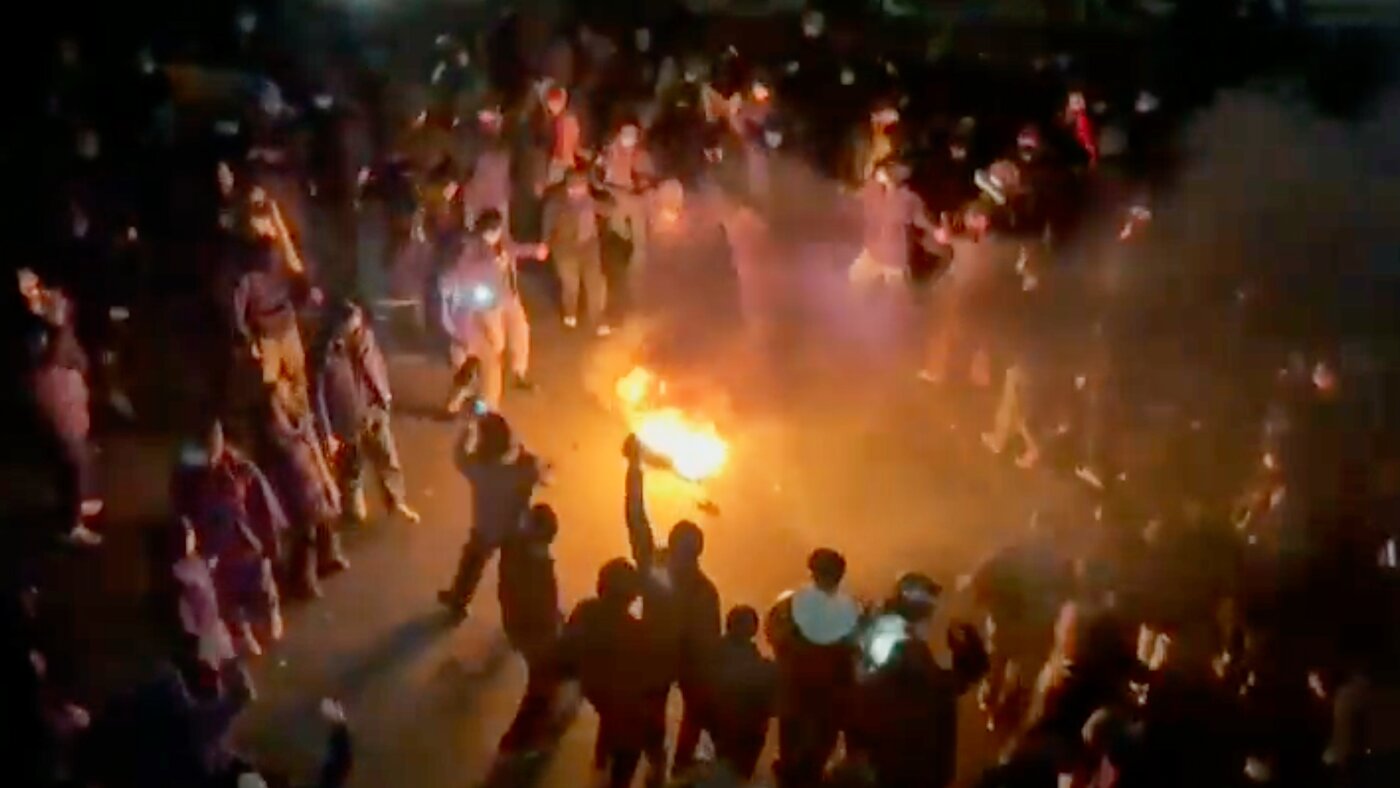
As the internet remains largely shut down in Iran, communication with the outside world is severely hindered, complicating efforts to verify the situation on the ground. Activists fear that the information blackout could embolden hard-liners in Iran’s security apparatus to intensify their crackdown. Demonstrations have been reported in major cities, including Tehran and Mashhad, with footage showing protesters defying police orders and confronting security forces.
The Iranian parliament has also reacted strongly to U.S. actions, with Speaker Mohammad Baagher Qalibaf issuing threats against U.S. military bases and Israel during a recent session. He declared, “In the event of an attack on Iran, both the occupied territory and all American military centers, bases and ships in the region will be our legitimate targets.” Lawmakers joined in, chanting, “Death to America!”
In response to the escalating violence, various international leaders have voiced their concerns. Pope Leo XIV urged for dialogue and peace, stating, “I hope and pray that dialogue and peace may be patiently nurtured in pursuit of the common good of the whole of society.” Meanwhile, United Nations Secretary-General Antonio Guterres expressed his shock at the violence resulting in numerous deaths and called for maximum restraint from Iranian authorities.
Economic and Political Context
The protests have evolved from initial outrage over the collapse of the Iranian rial, which trades at over 1.4 million to $1, to broader calls challenging the country’s theocratic regime. As unrest continues, the Iranian government has yet to release overall casualty figures, further complicating the narrative surrounding the protests.
The situation remains fluid, with the U.S. military maintaining a posture in the Middle East to defend its forces and interests. In June, U.S. forces were targeted at Al Udeid Air Base in Qatar, indicating the potential for direct confrontations if tensions escalate further.
The world watches as the crisis unfolds, with the possibility of negotiations looming against a backdrop of violence and uncertainty in Iran.